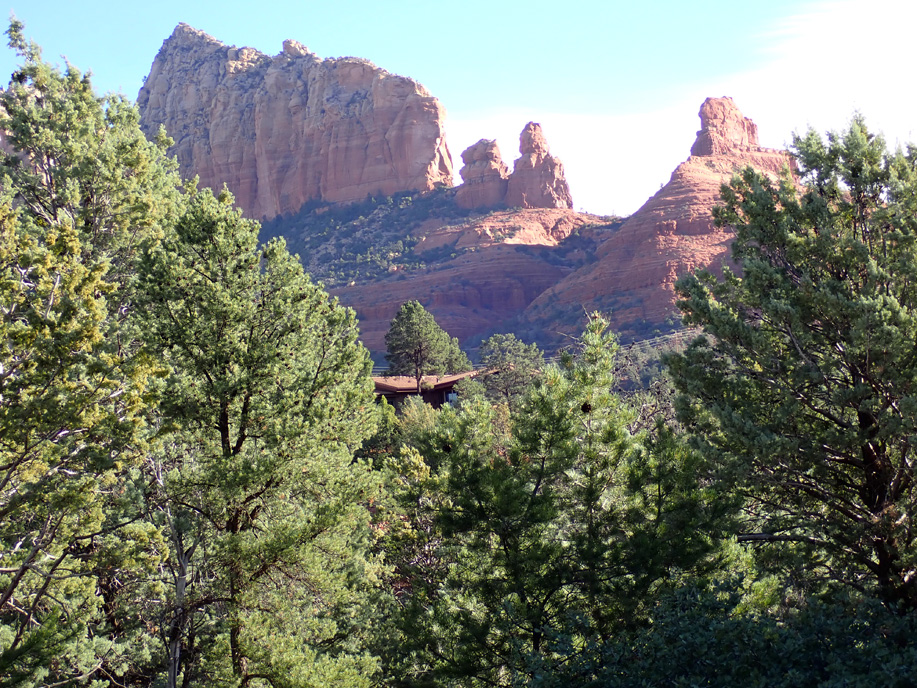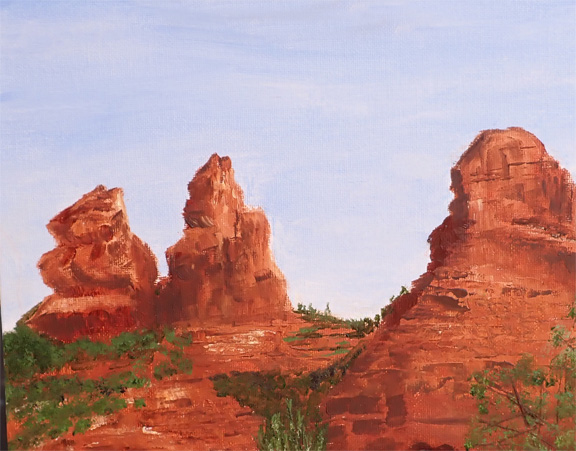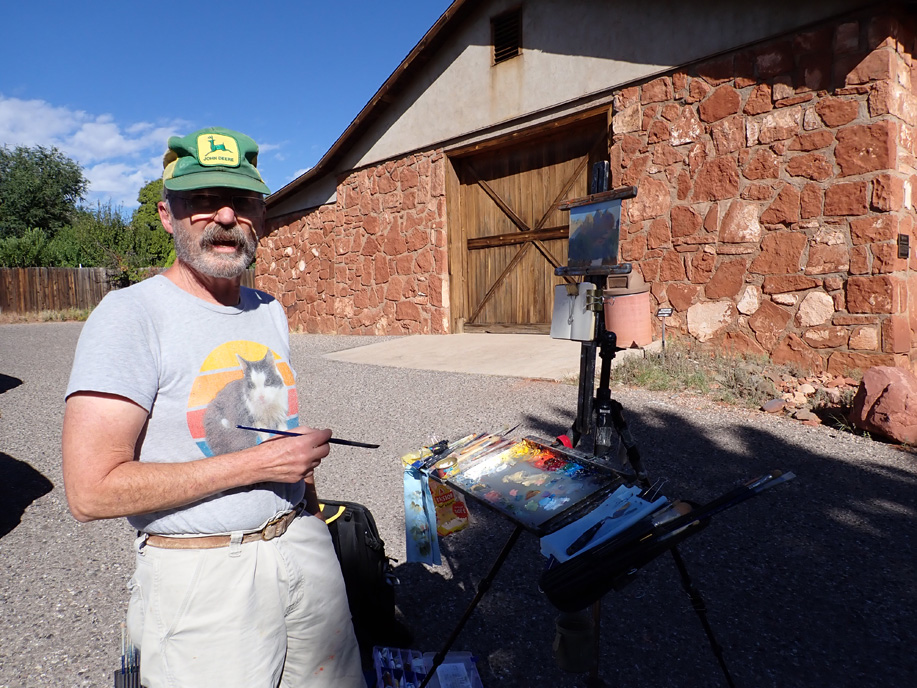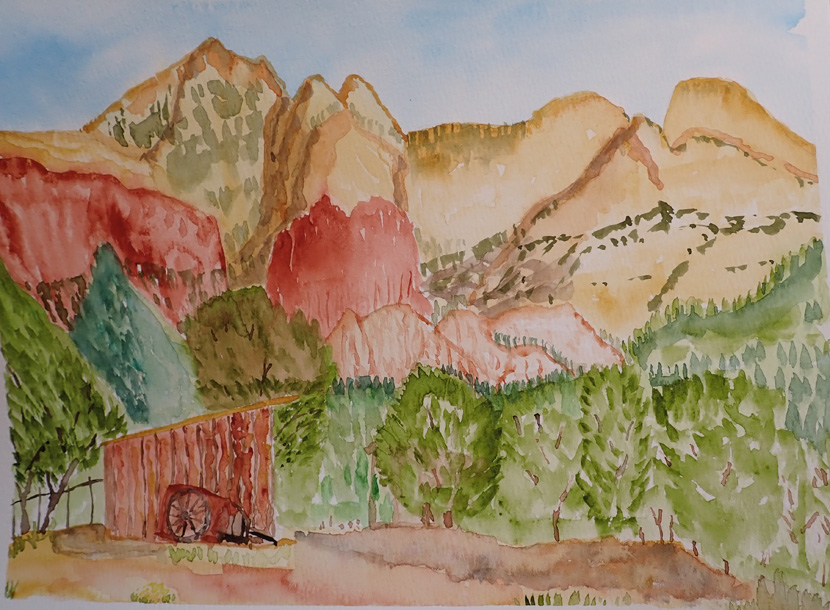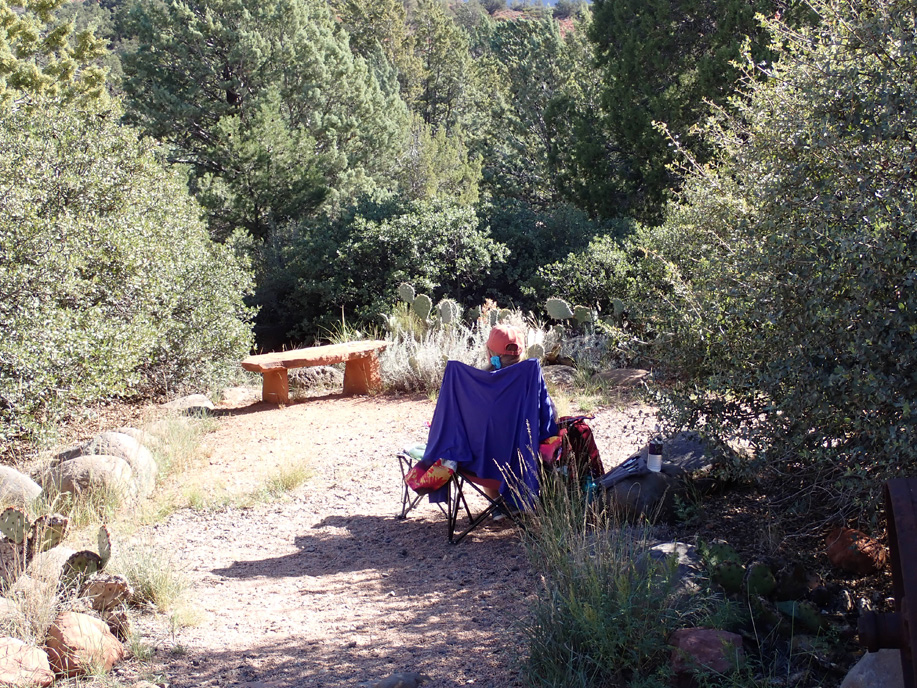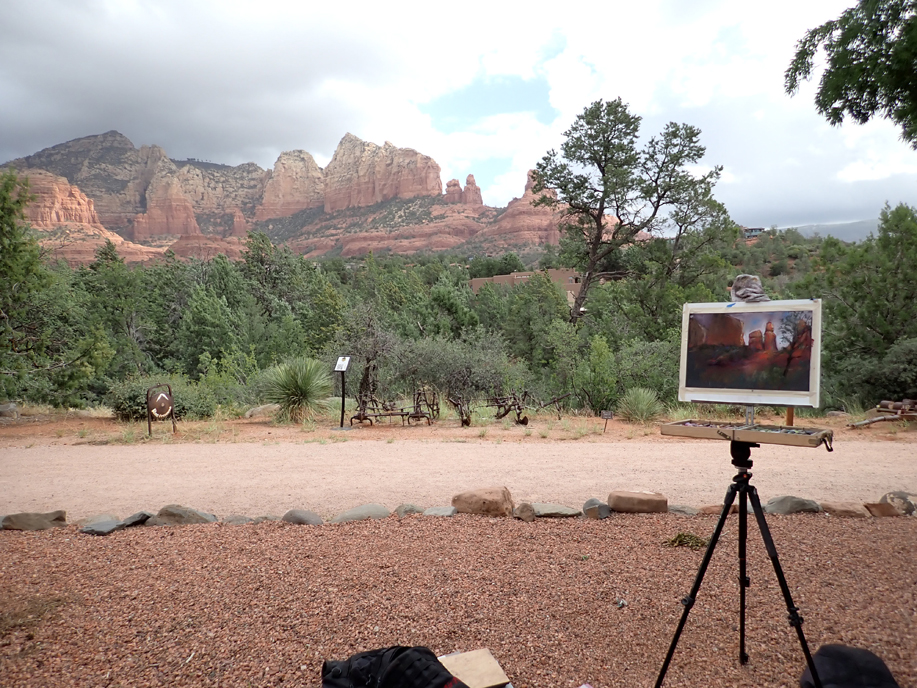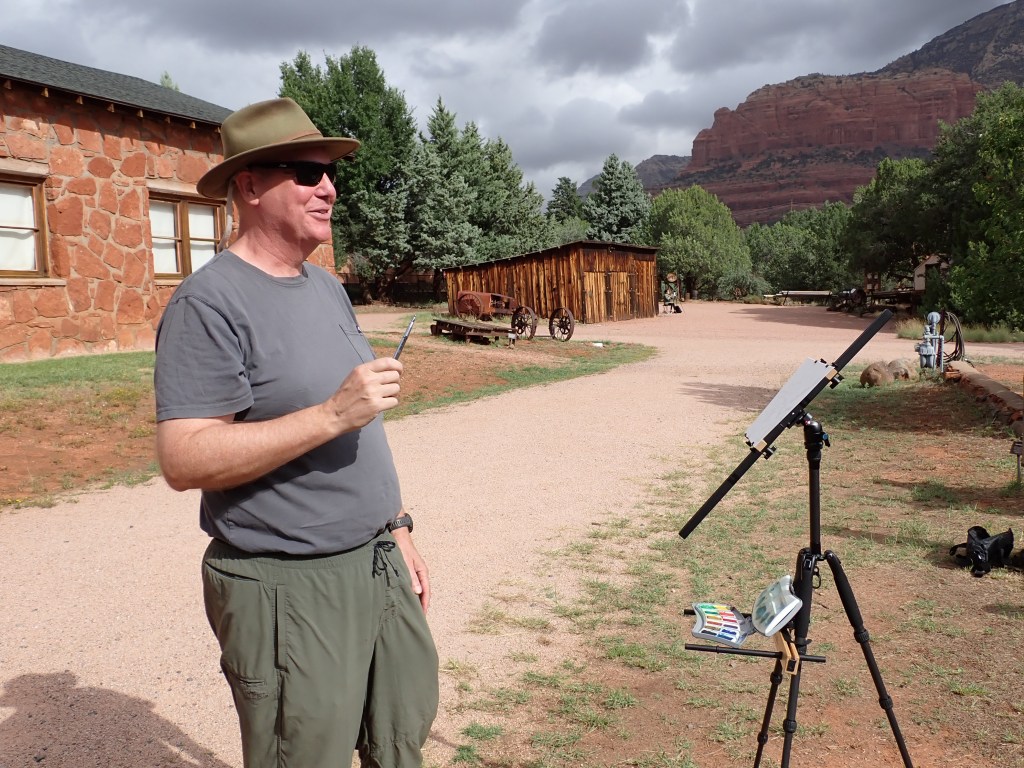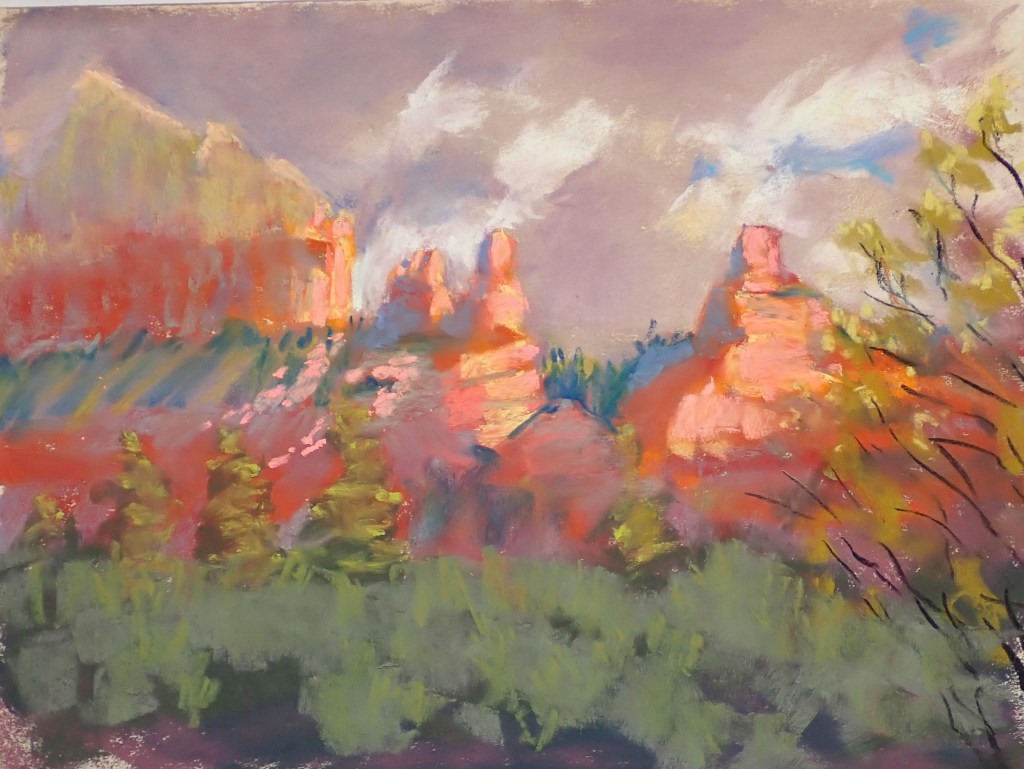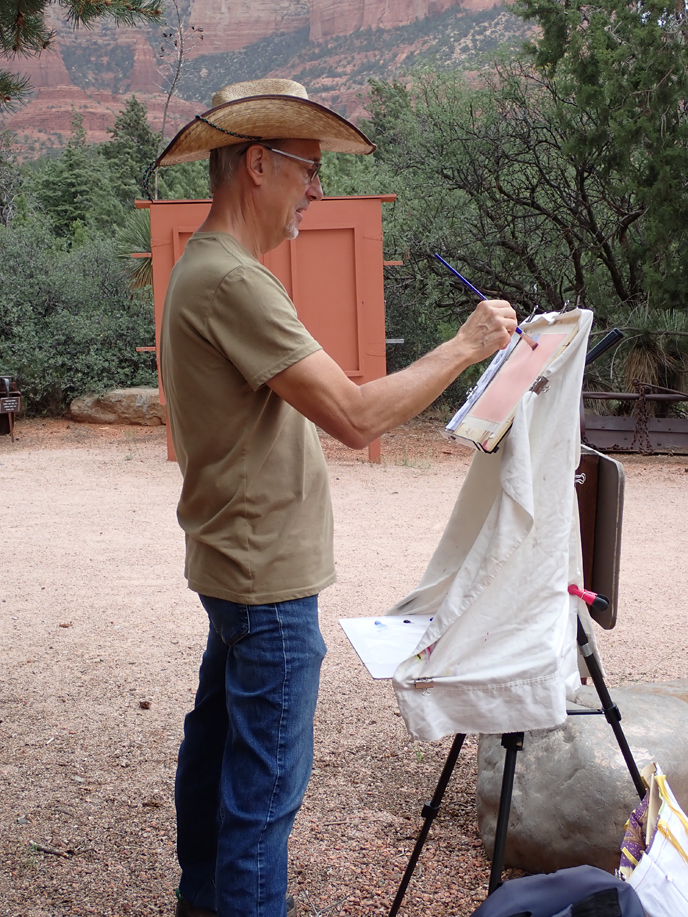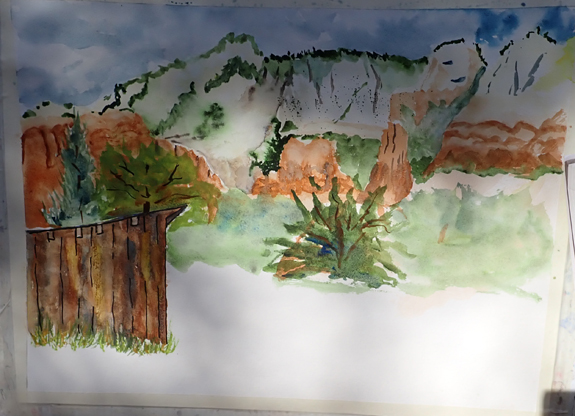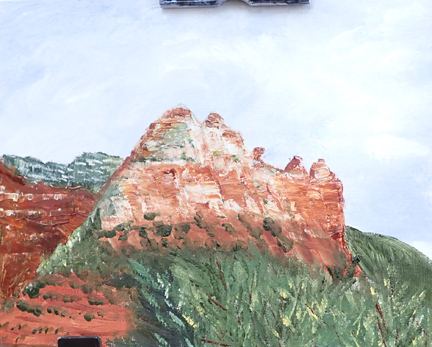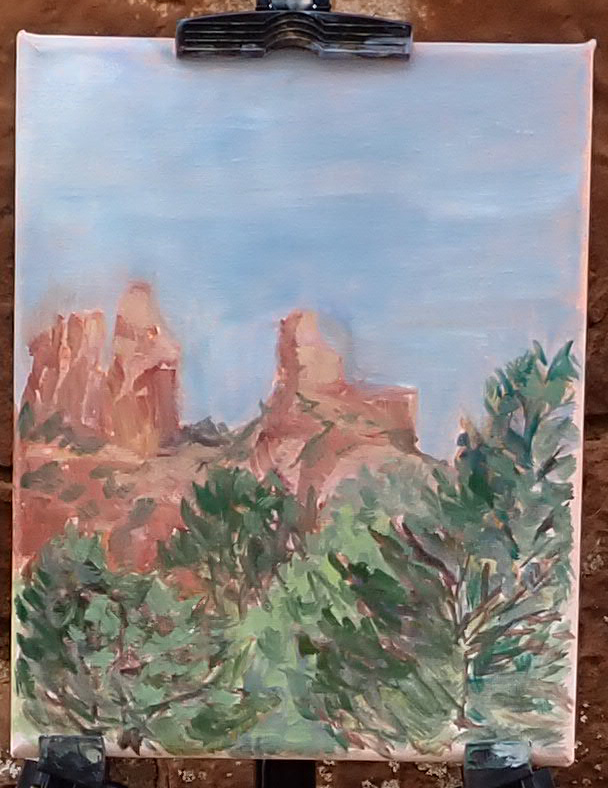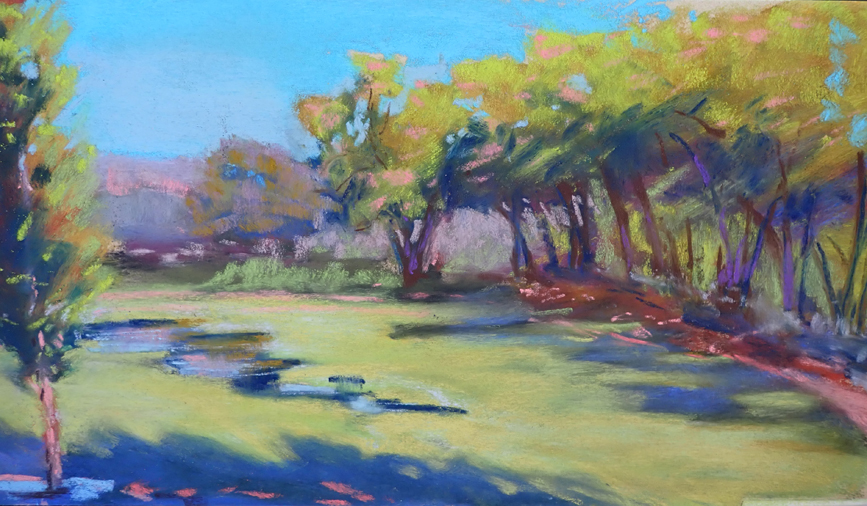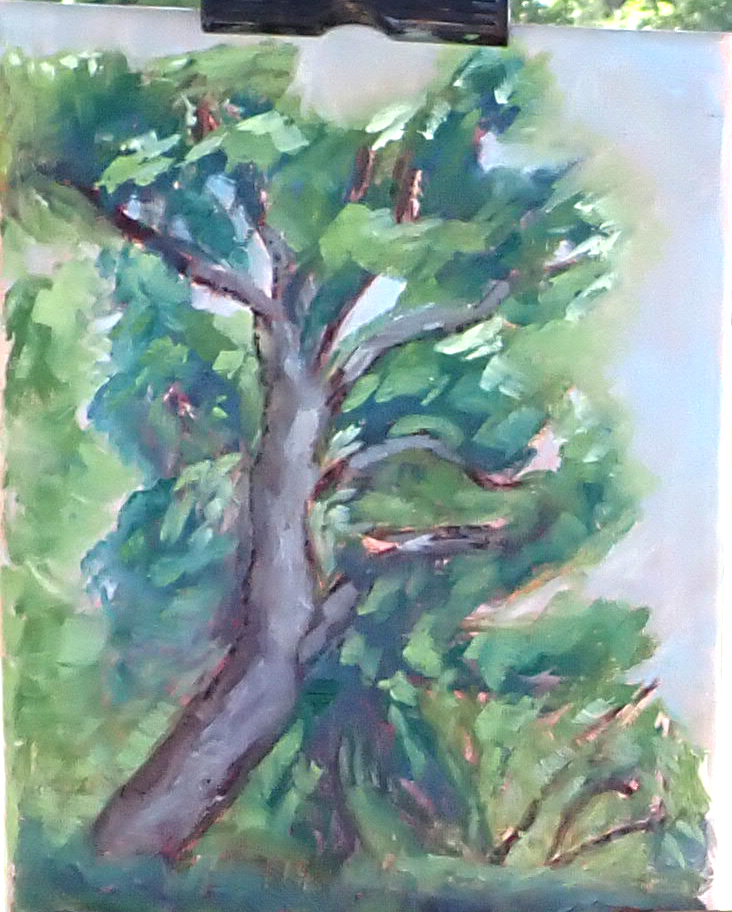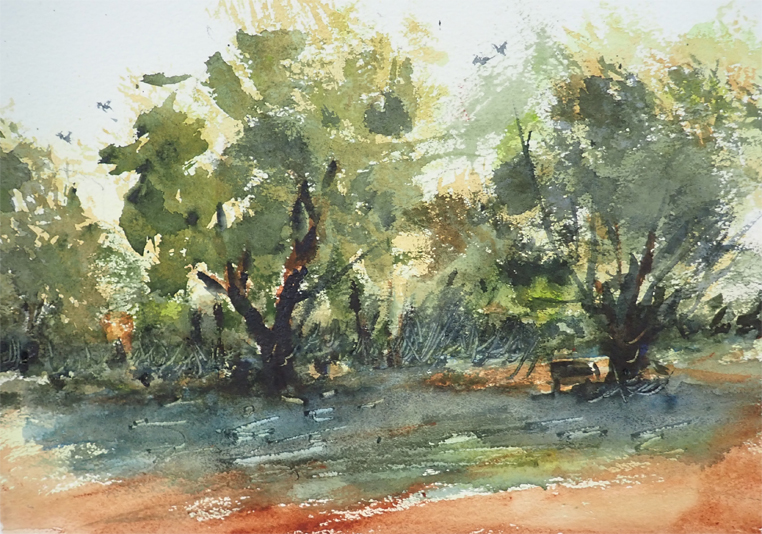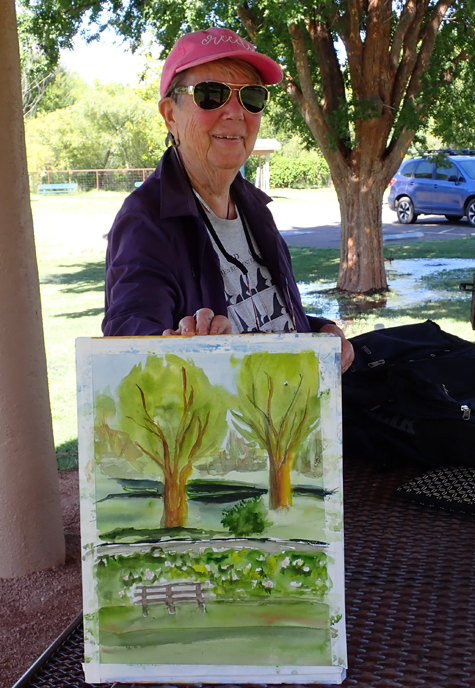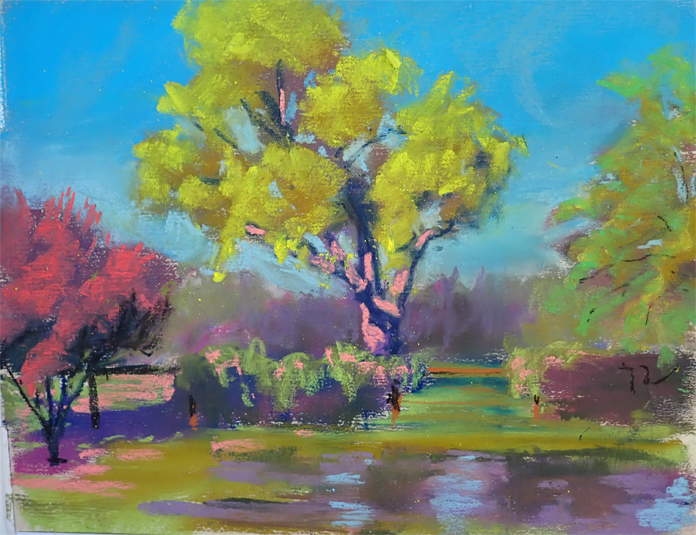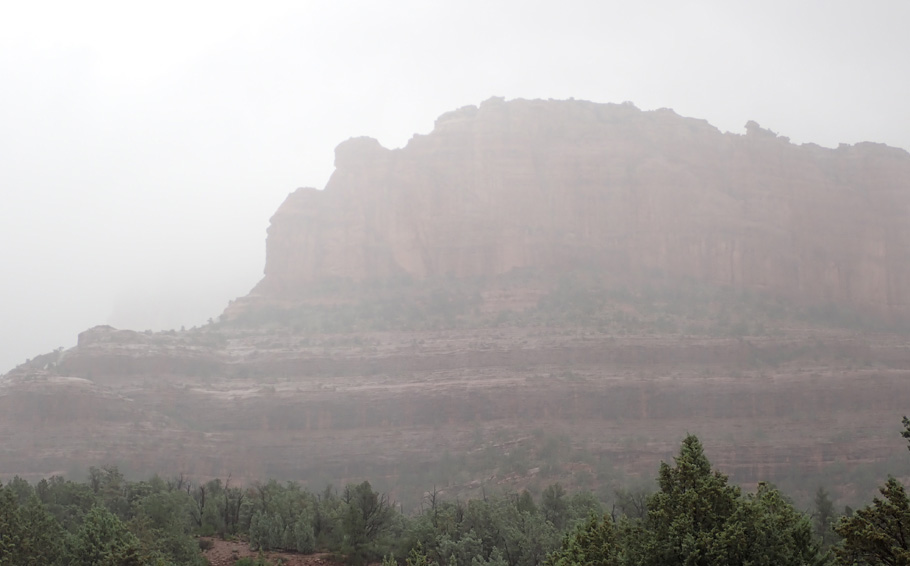
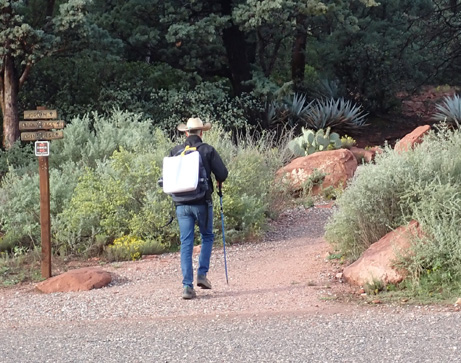
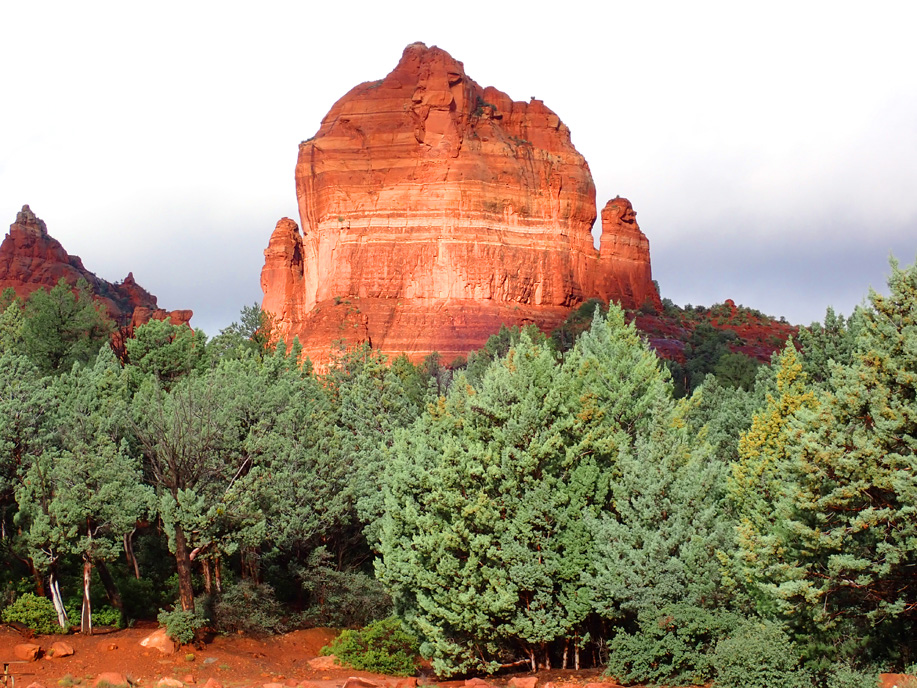
• When I arrived at Jim Thompson trailhead, the clouds were starting to close in, sunlight fleeing across the palm of The Mitten. Pete headed up the trail to Cibola Pass in search of the perfect view.
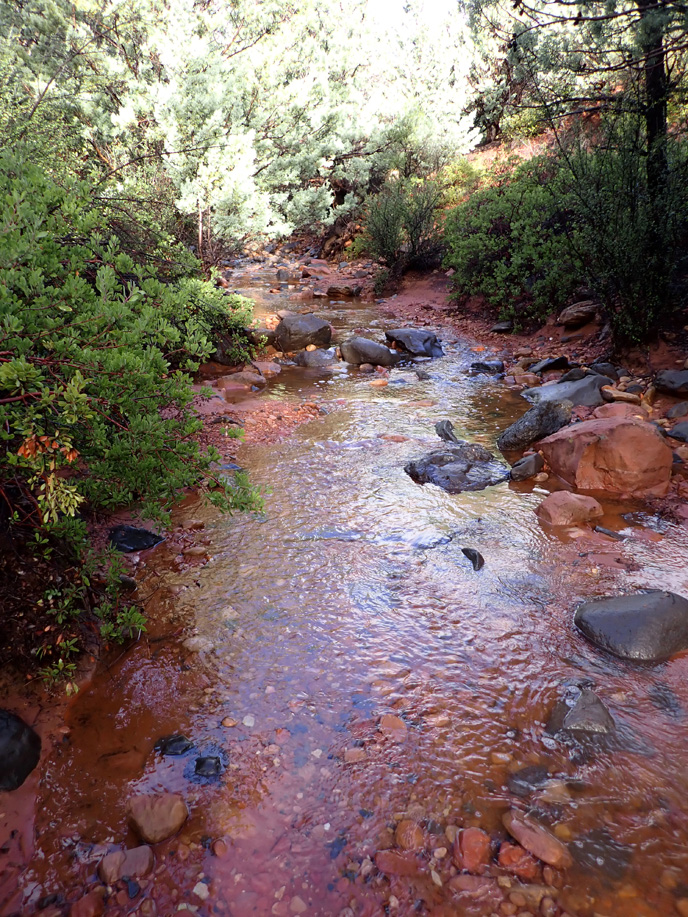
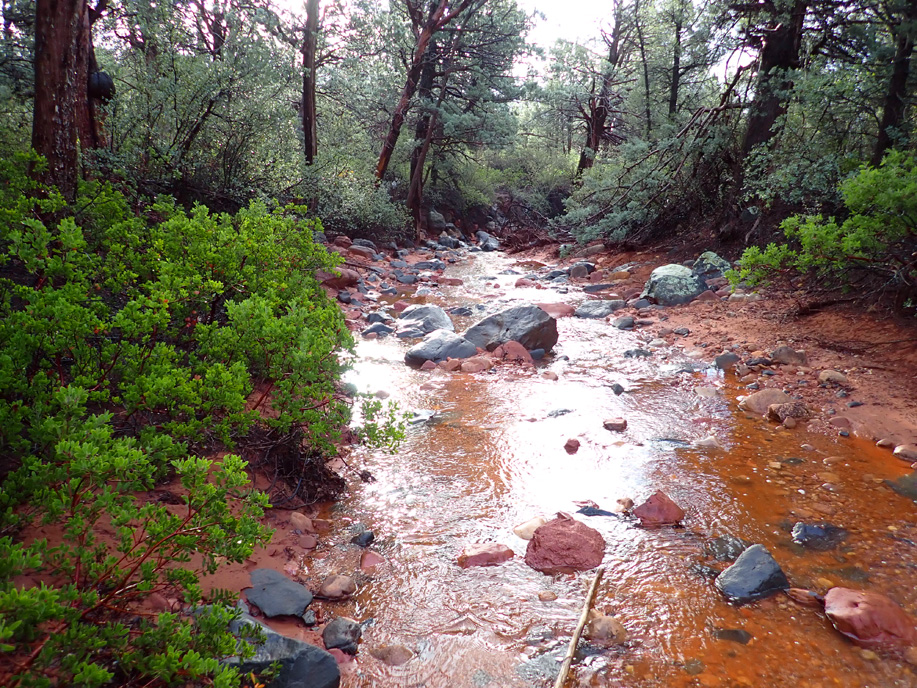
    Below the parking lot, the dry wash had turned into a stream, wide enough to require rock hopping to cross (my shoes are drying out on the patio).

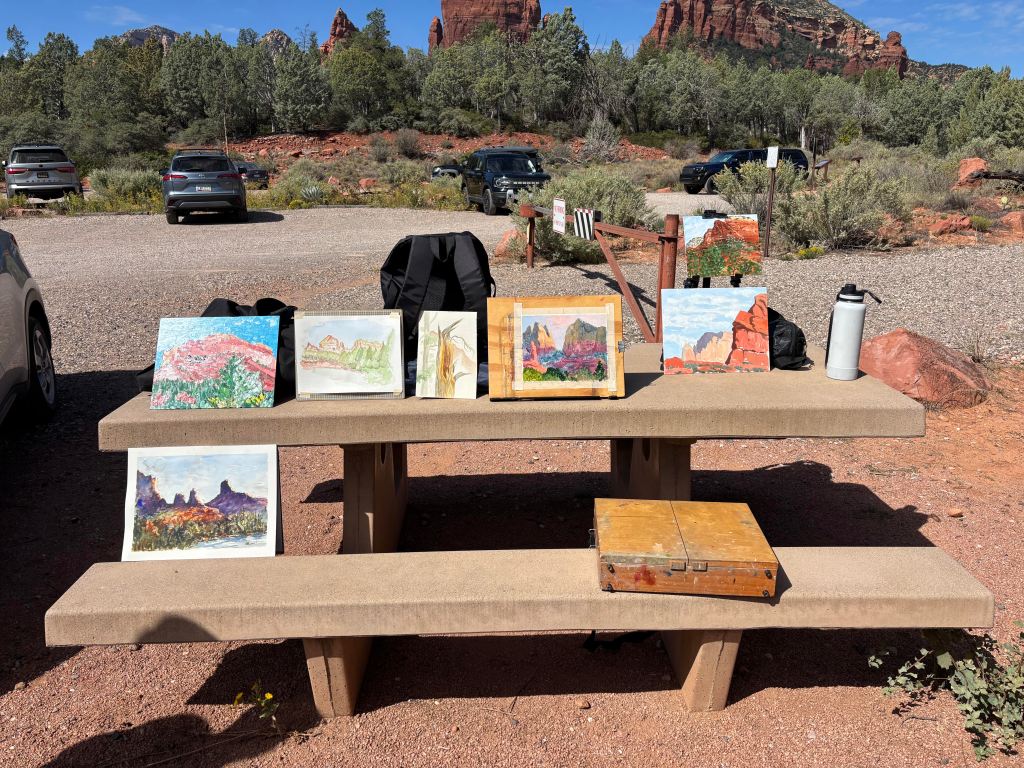
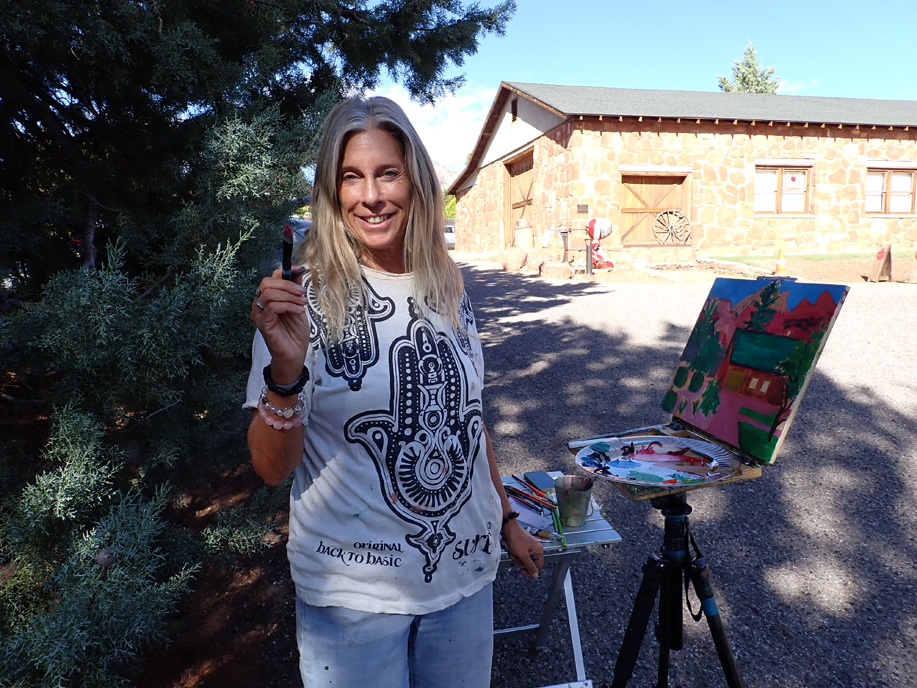
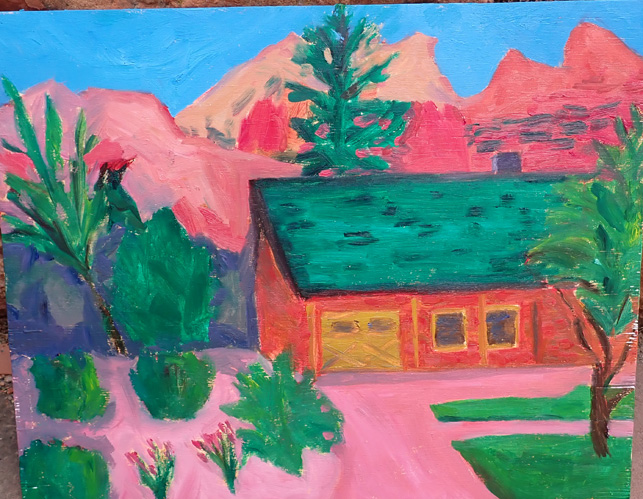
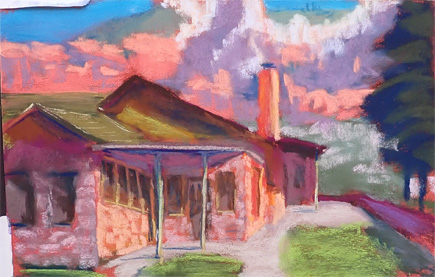
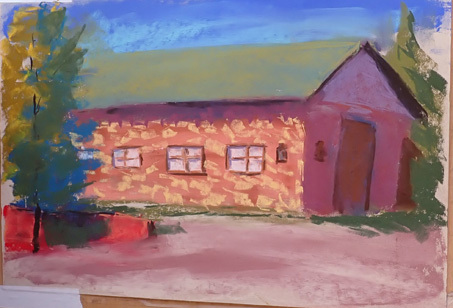
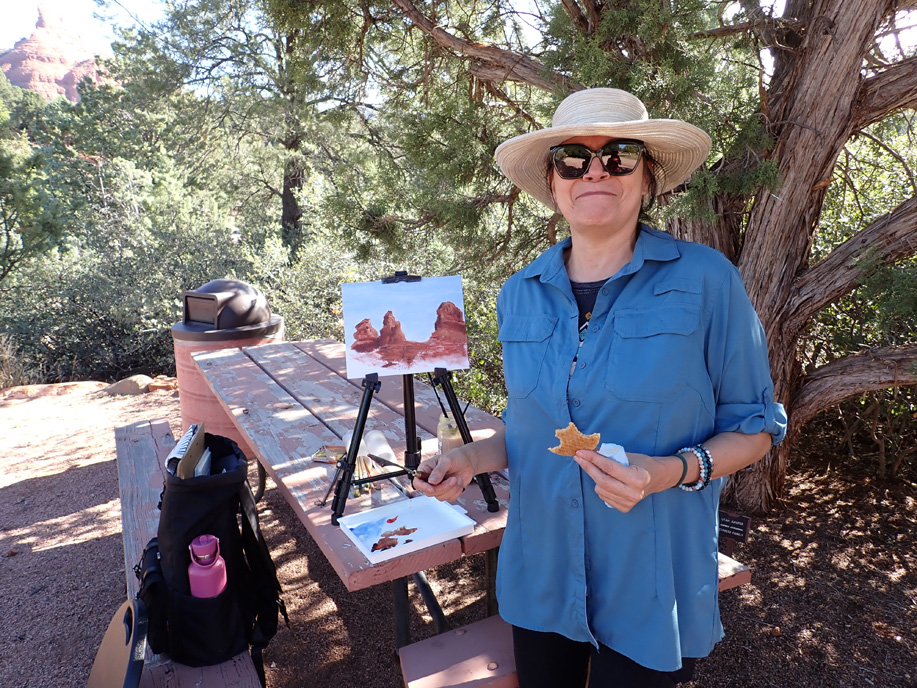
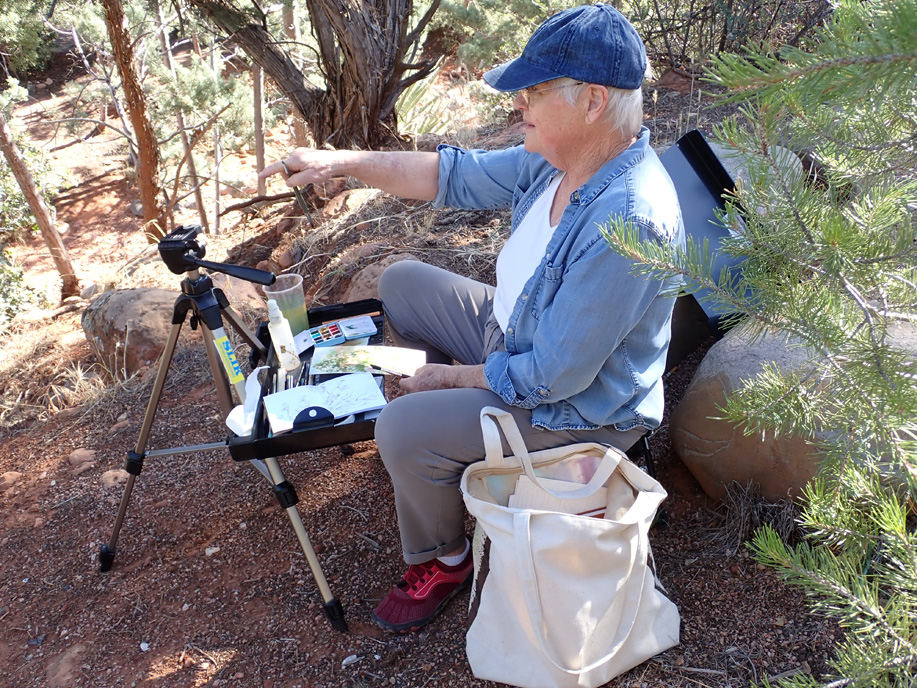
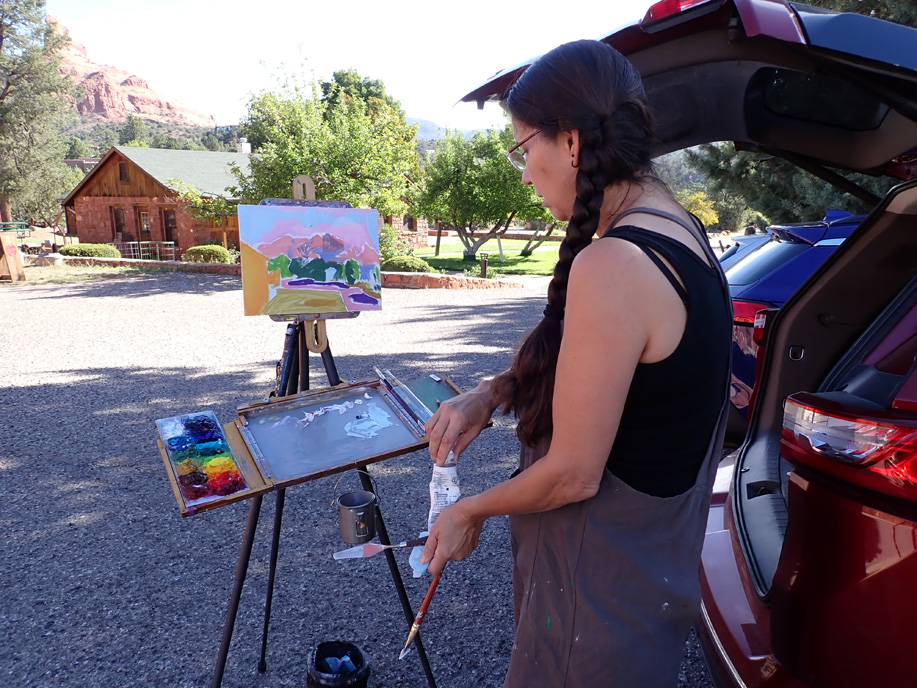
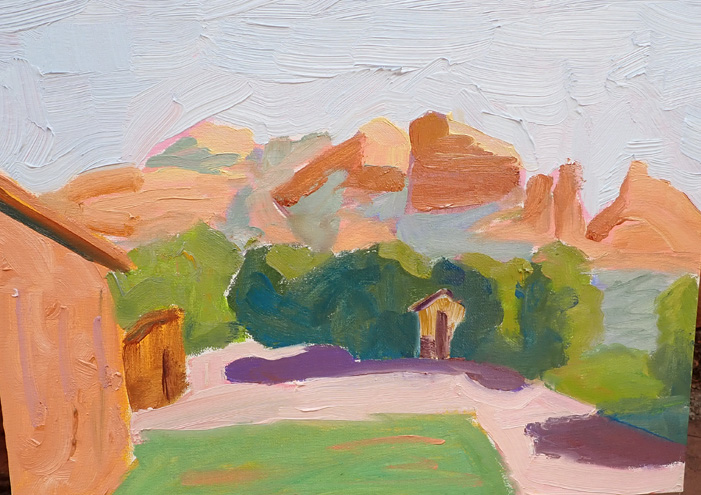
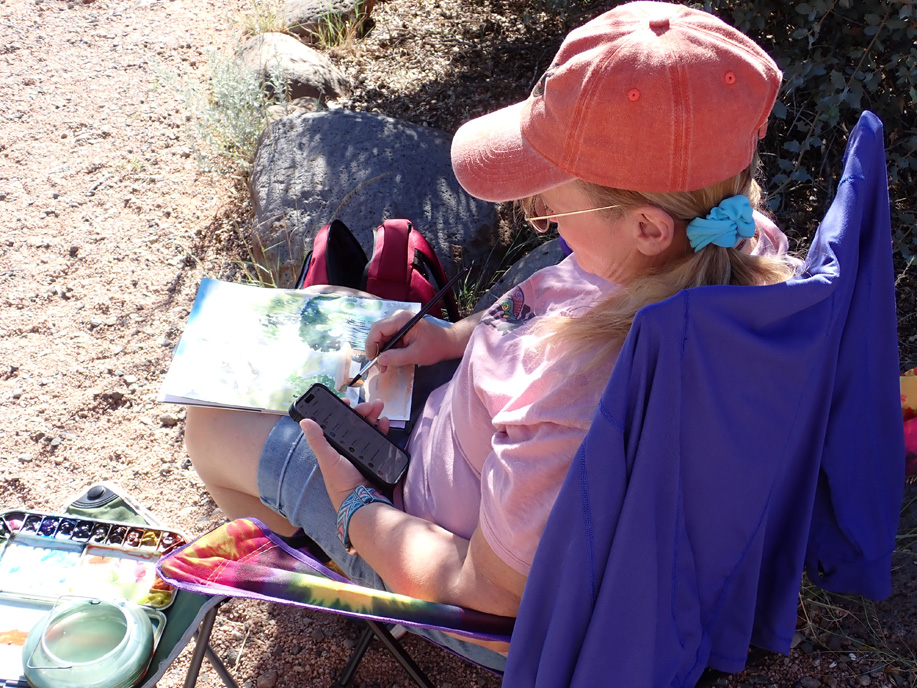
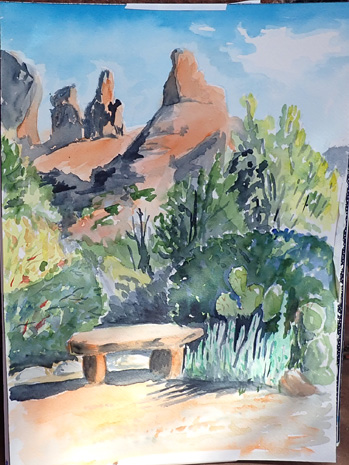
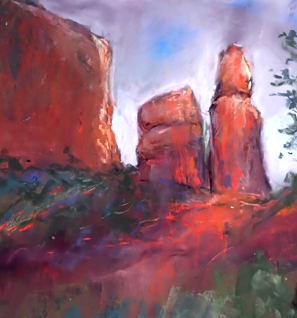
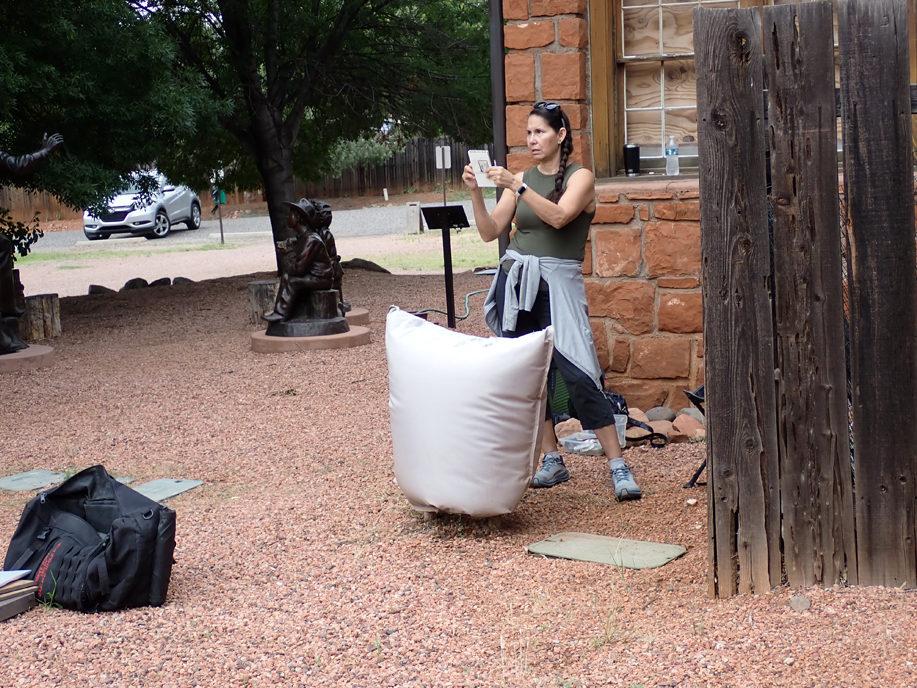
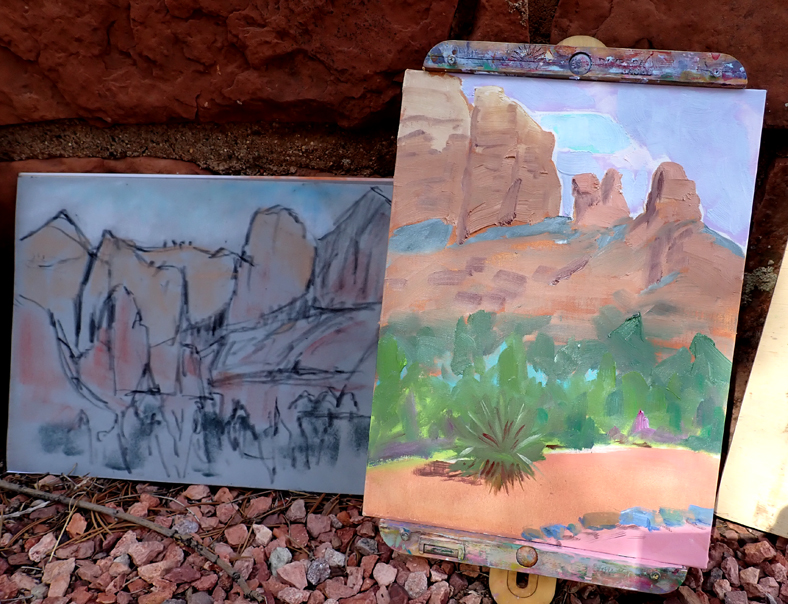
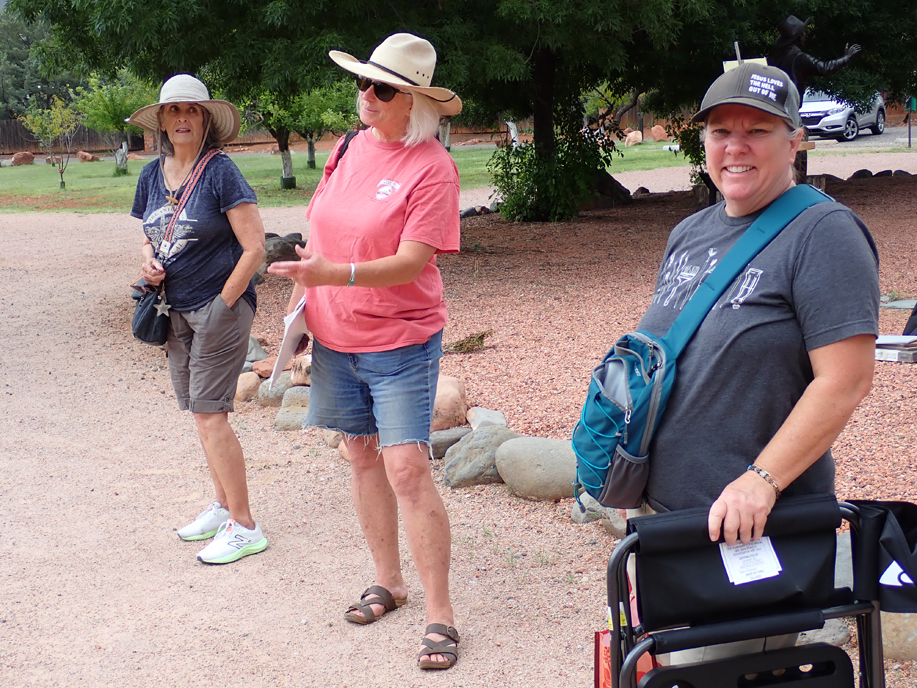
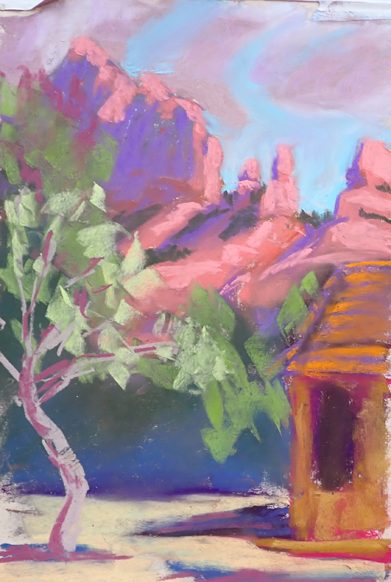
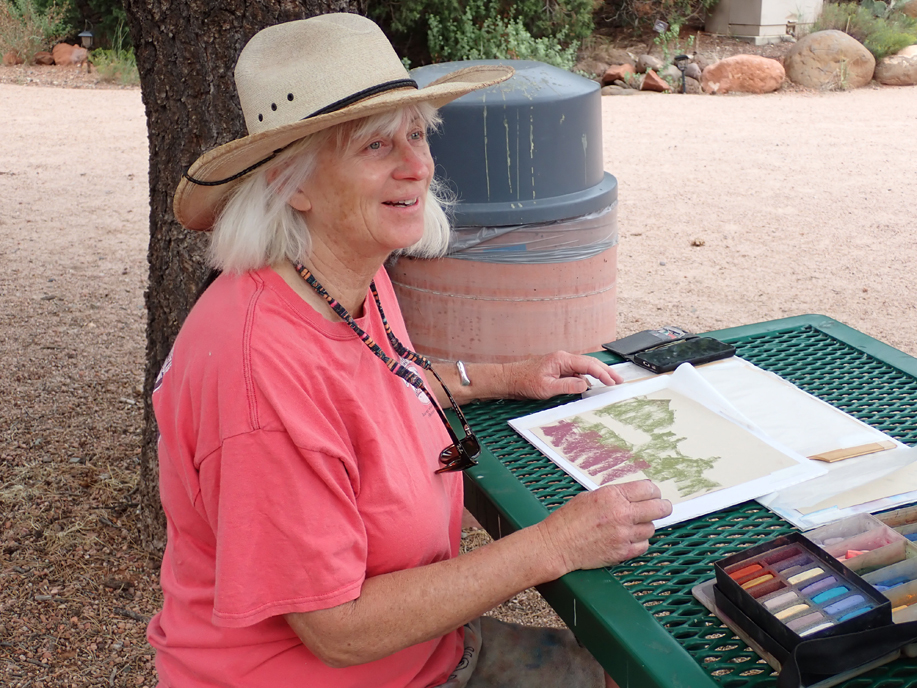
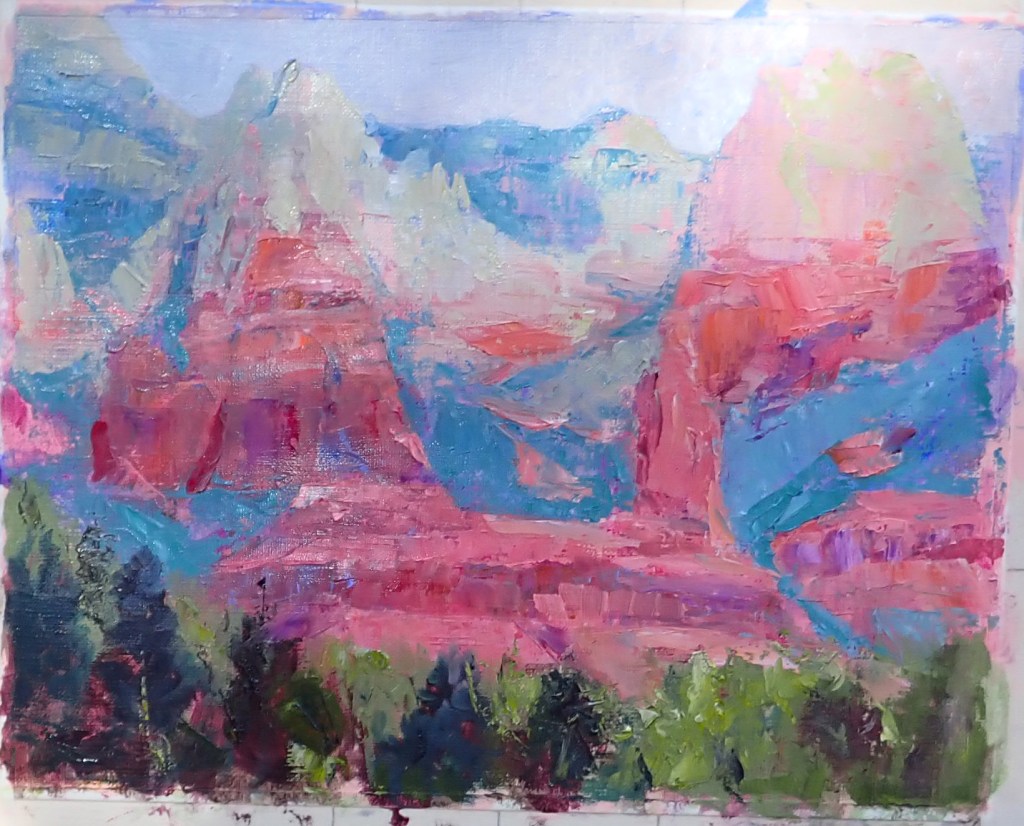
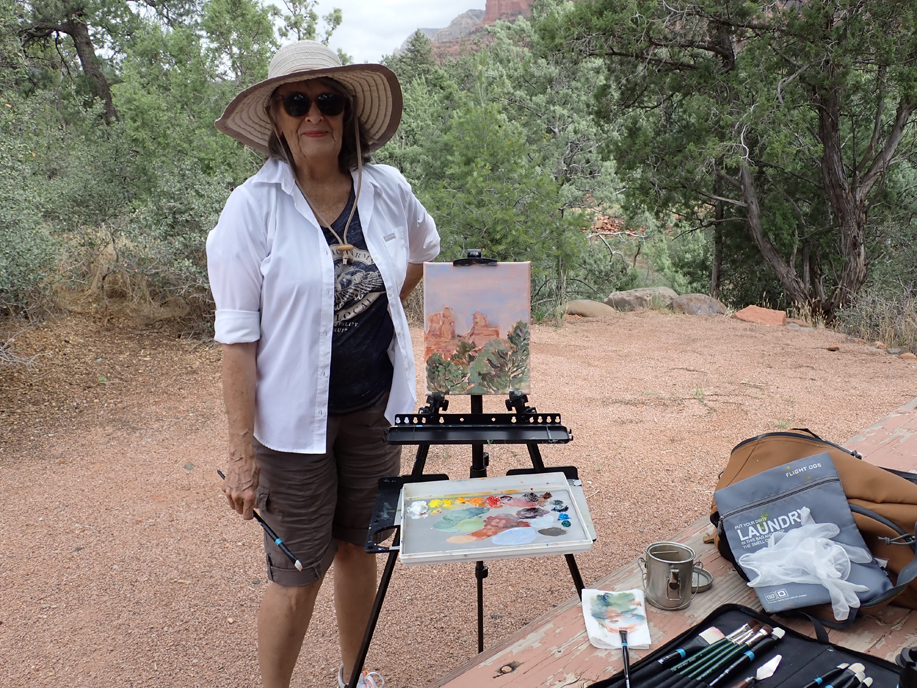
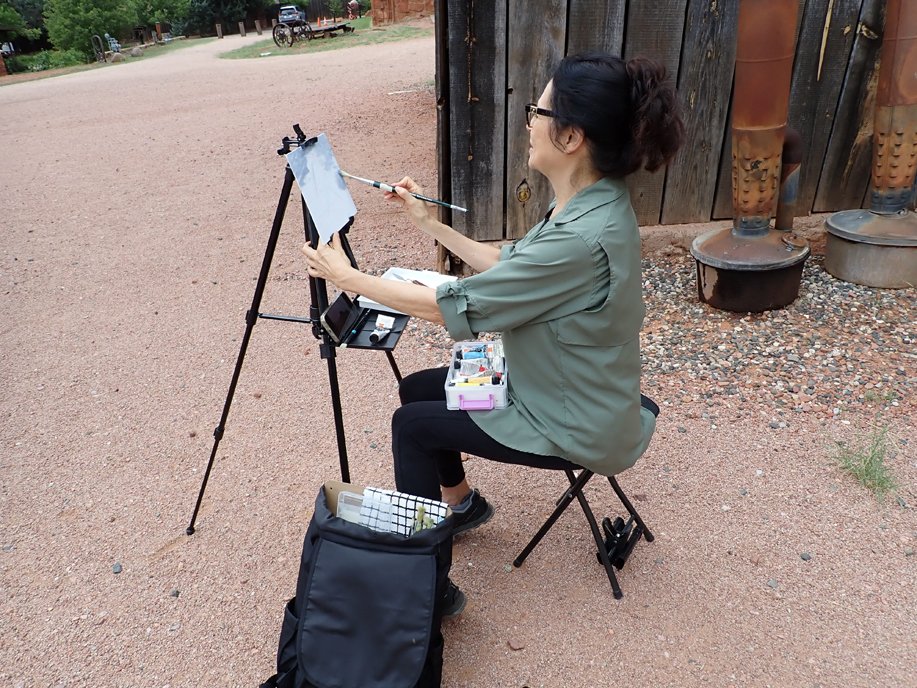
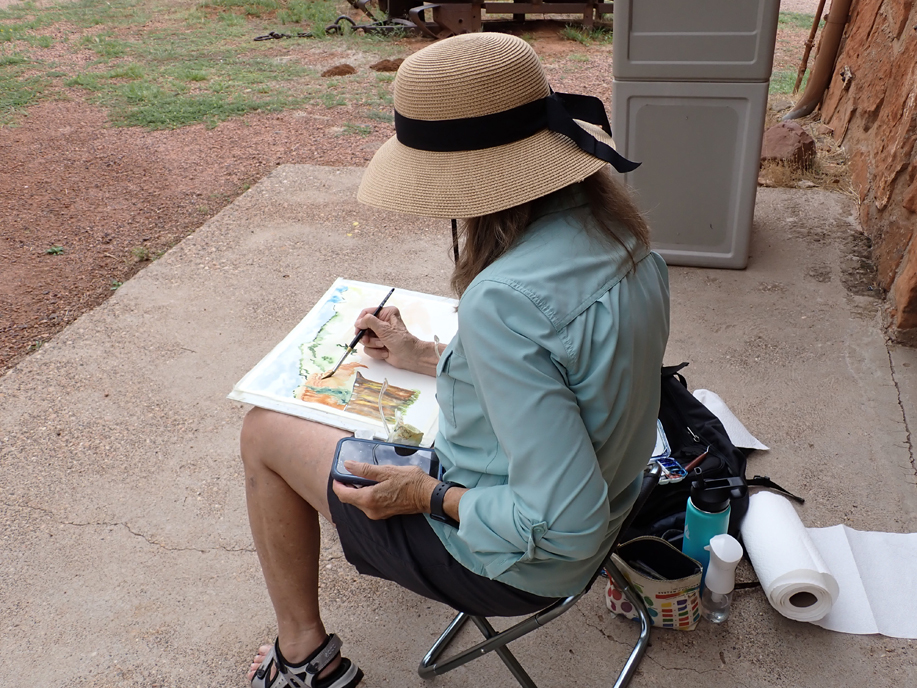
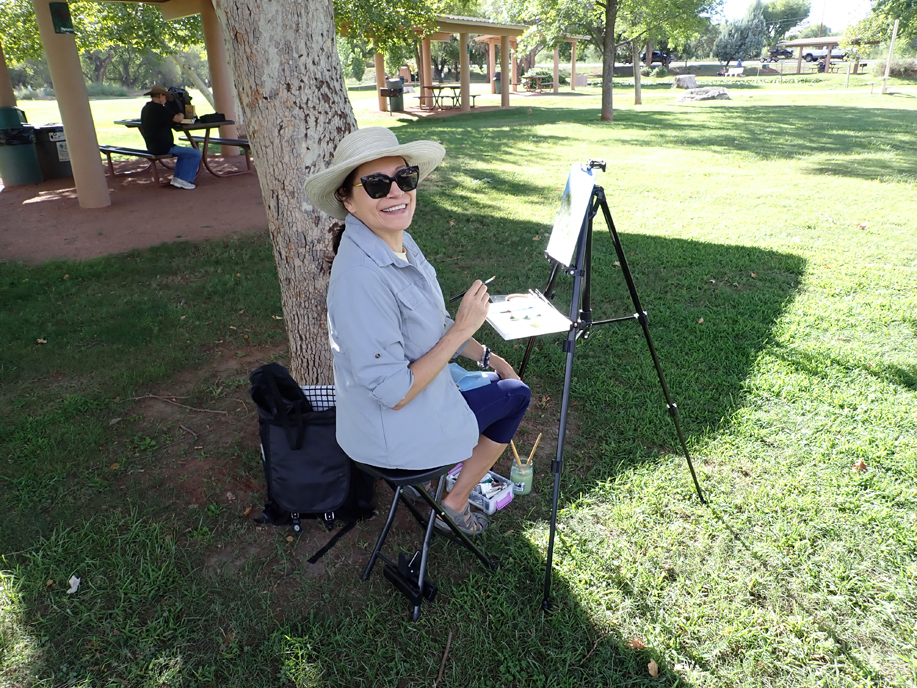
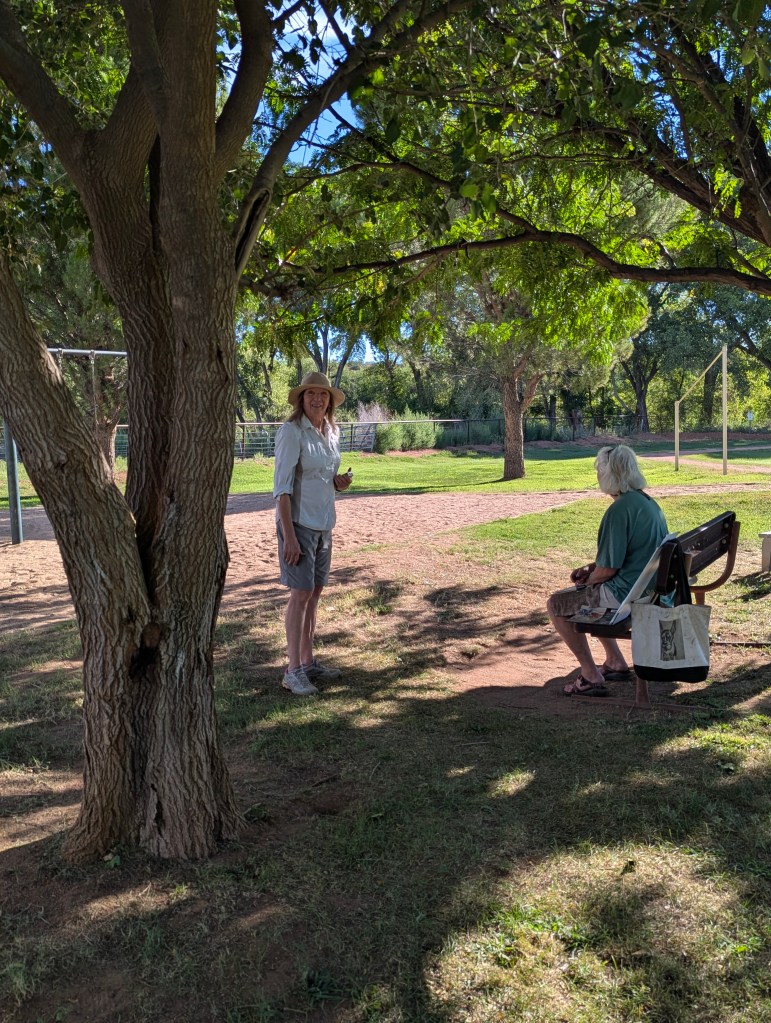
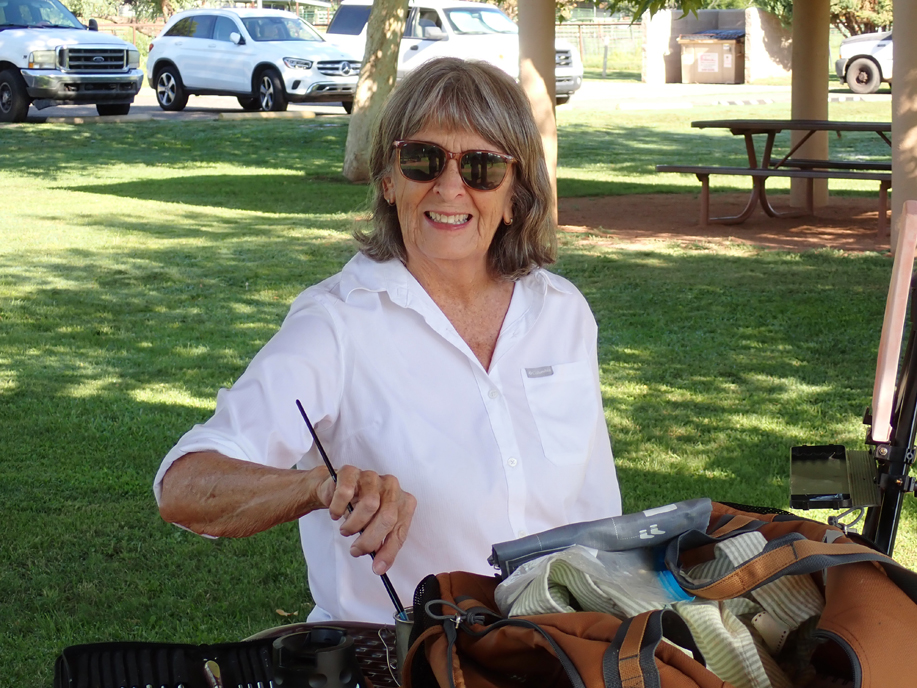
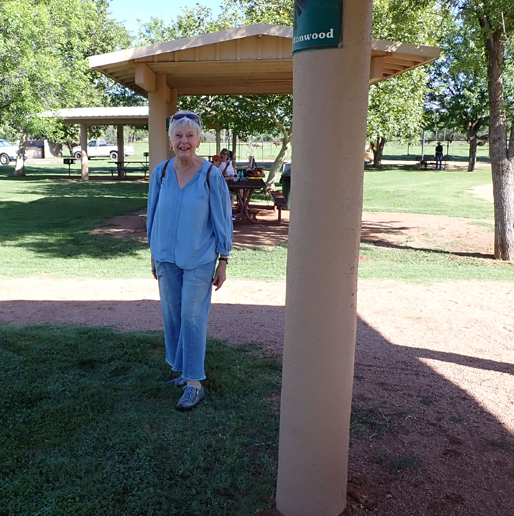
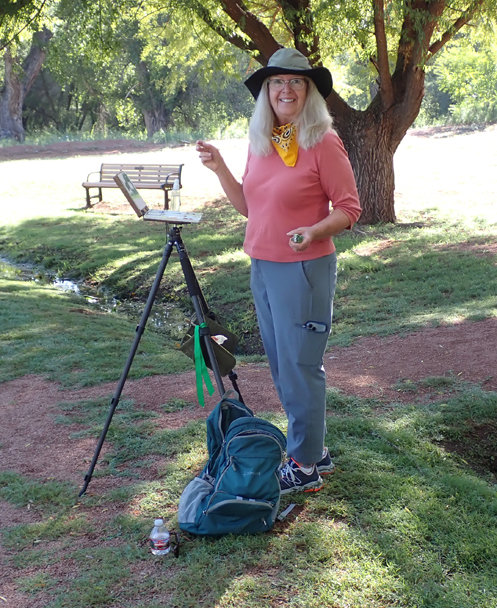
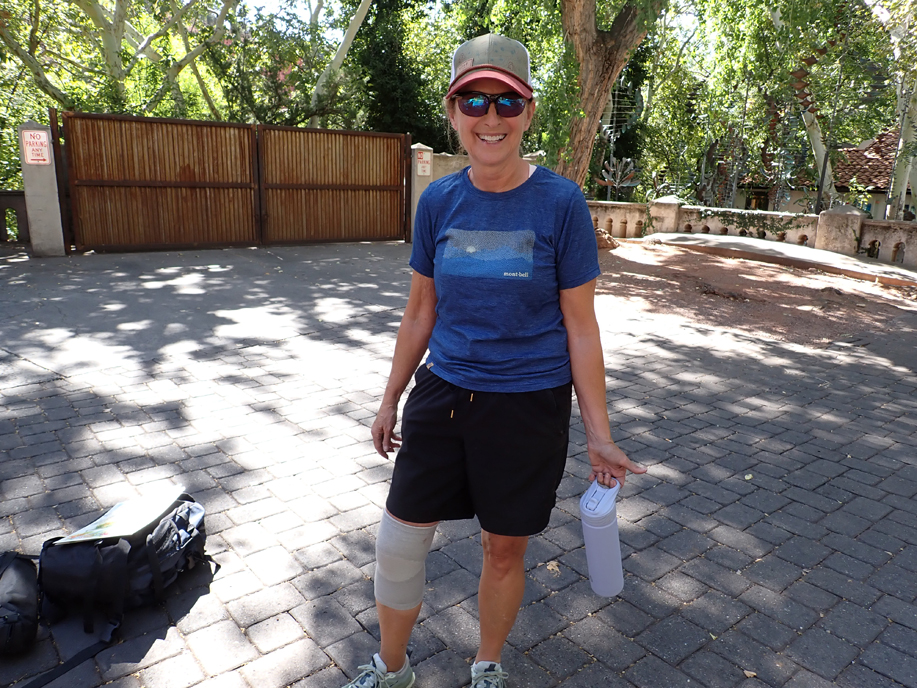
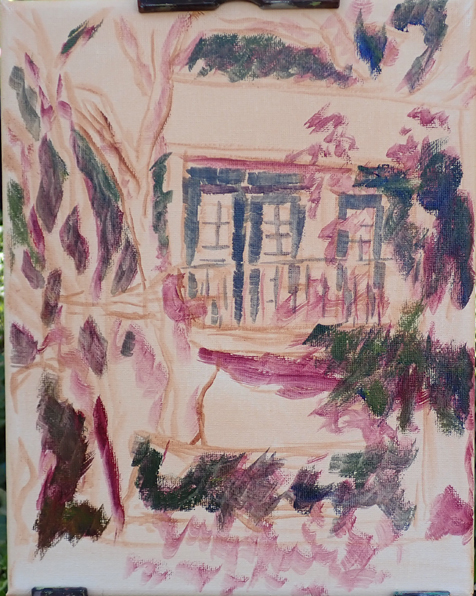
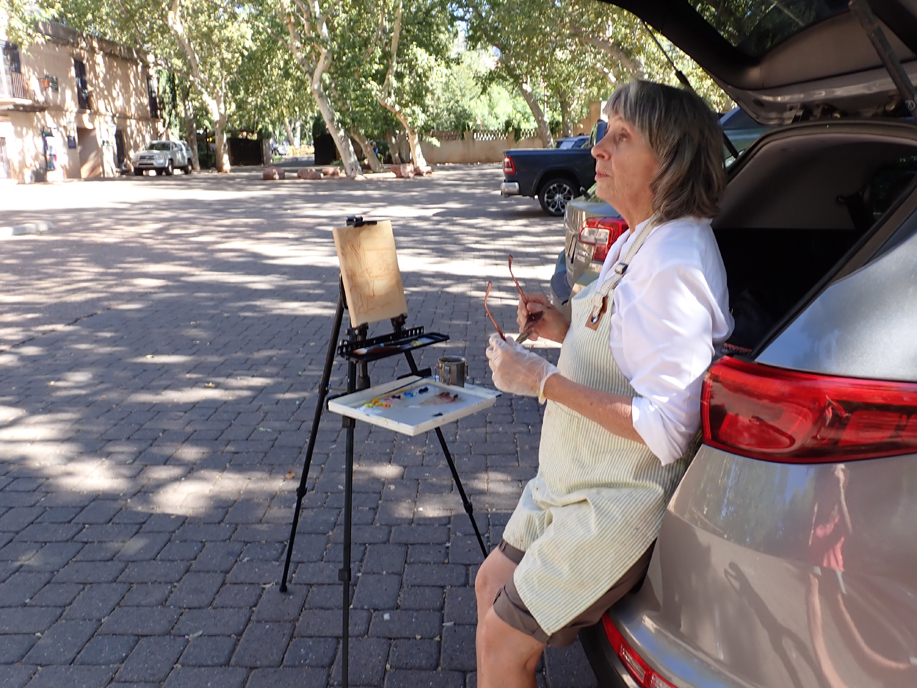
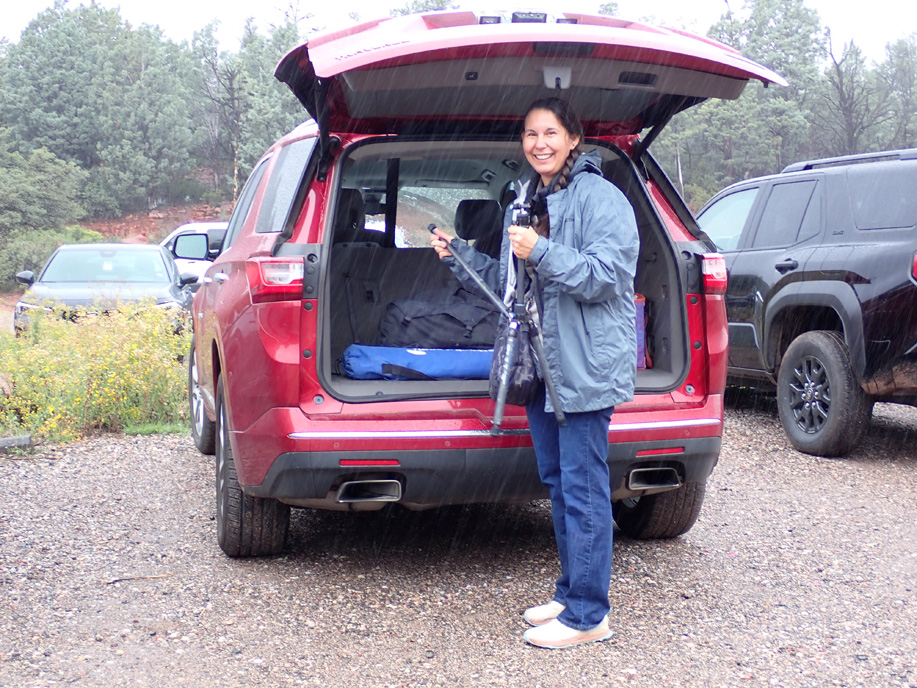
    Michele and I set up our easels to paint The Mitten, but misty rain soon dripped on my panel and threatened to turn my pastels into mud. Michele, standing there like a rained-on flower, planned to paint under an overhang—possibly the tailgate of her car.
    We’re done with Jim Thompson, the old coot, and are changing our paint out location to “Behind the Sign” 9:00, on October 20th. The site is where the National Forest signs are, off of 179 near Beaverhead Road intersection.

    Another plein air opportunity is Sedona Plein Air Community Paint out on Saturday, October 24. All ages and skill levels are welcome to join in this fun, all-inclusive paint-out on the SAC campus and lower lot. For a $15 registration fee, participants can create artwork on-site, sell their finished pieces during the event, and be considered for prizes. Artists may price and sell their work during the event. A 25% commission on sales will go toward supporting the ongoing mission of Sedona Arts Center.

    Community Painters have until 12 noon to paint before judging. Awards and sale starting at 12:30 p.m.

    You can register for the event at https://sedonaartscenter.org/product/sedona-plein-air-festival-community-paint-out-2026/
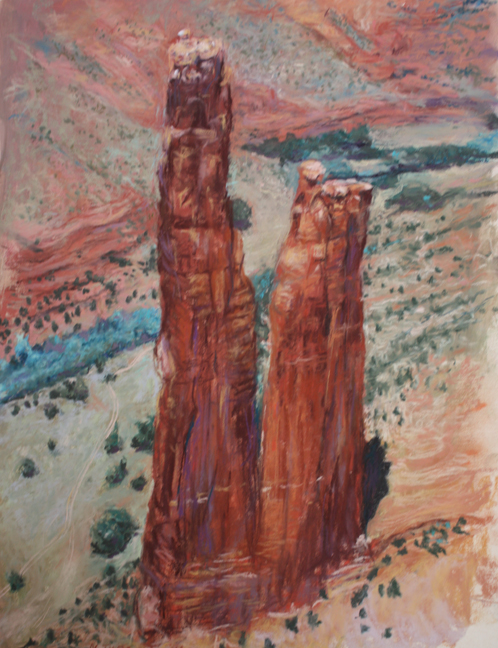
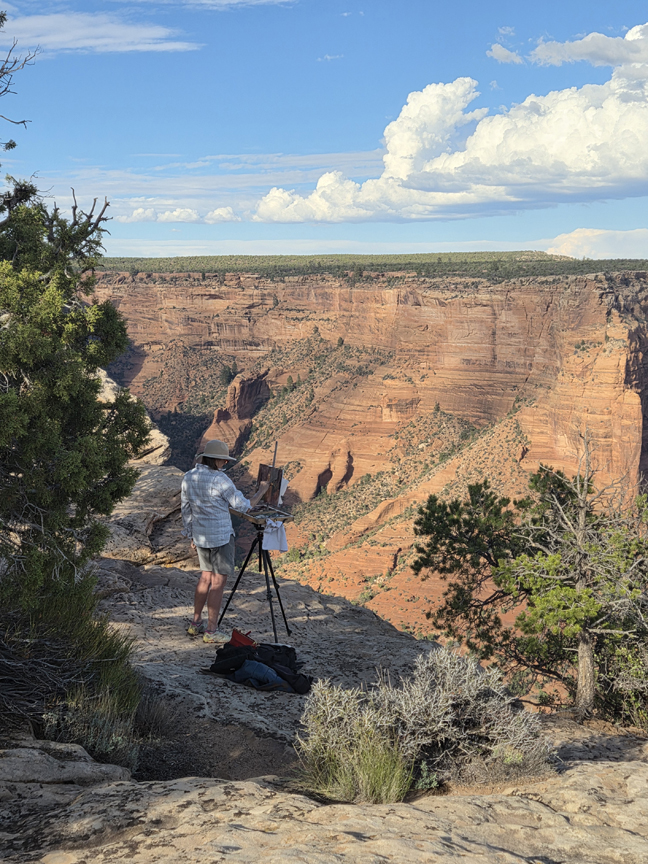
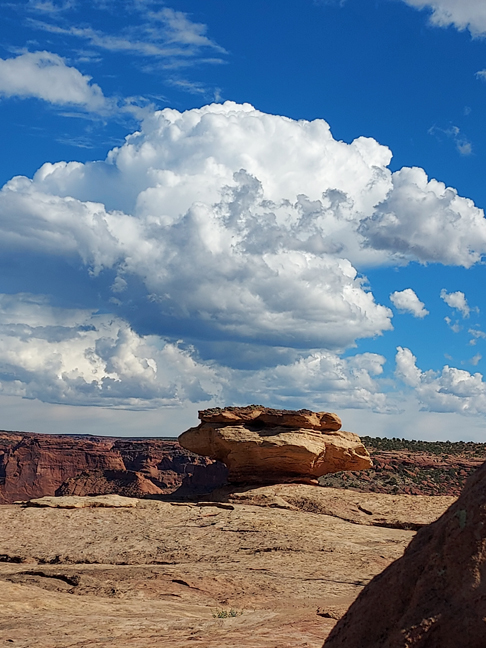
  • Leila put together a 3-day plein air painting trip to Canyon de Chelly with members of Arizona Pastel Artists Association and Arizona Plein Air Painters. Tuesday afternoon we painted iconic Spider Rock, watching the shadows crawl up the spire, until, as we were packing up, the canyon filled with purple and the top of the spire was golden glory for 5 minutes.

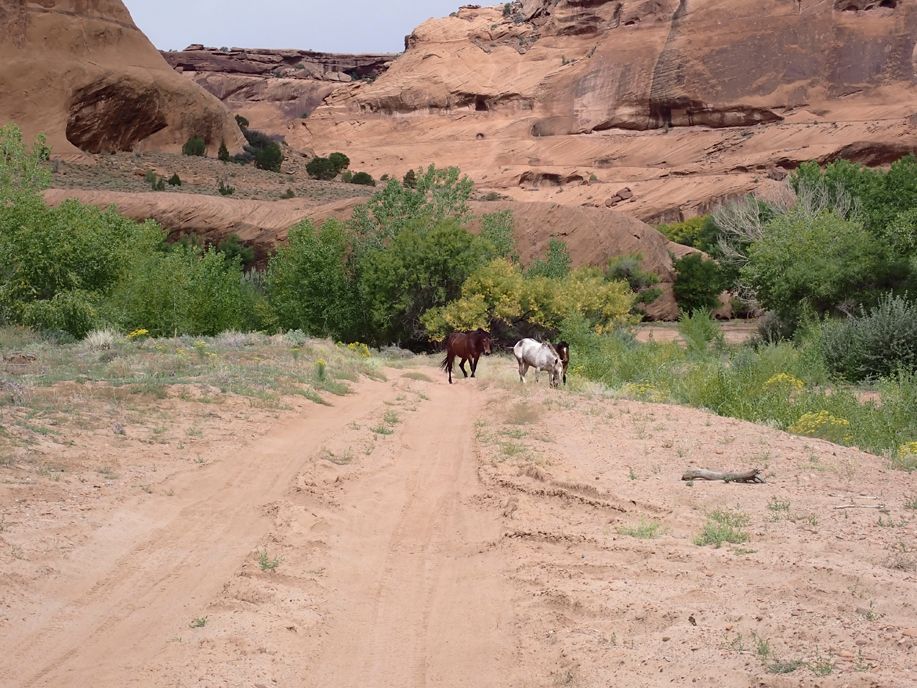
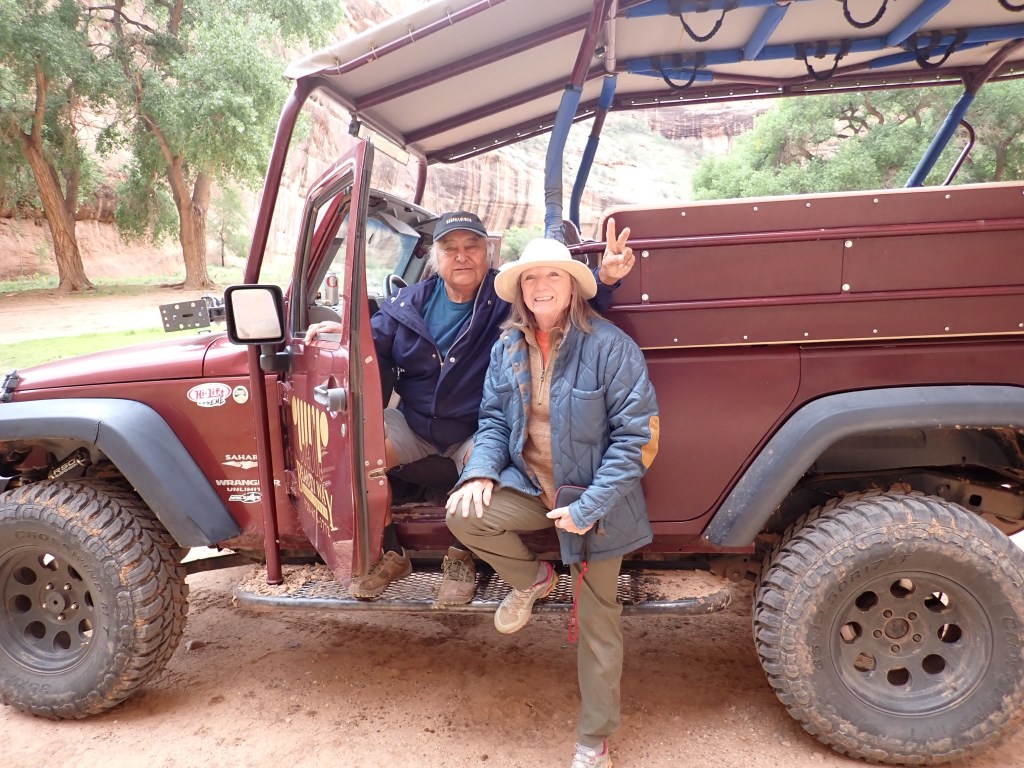
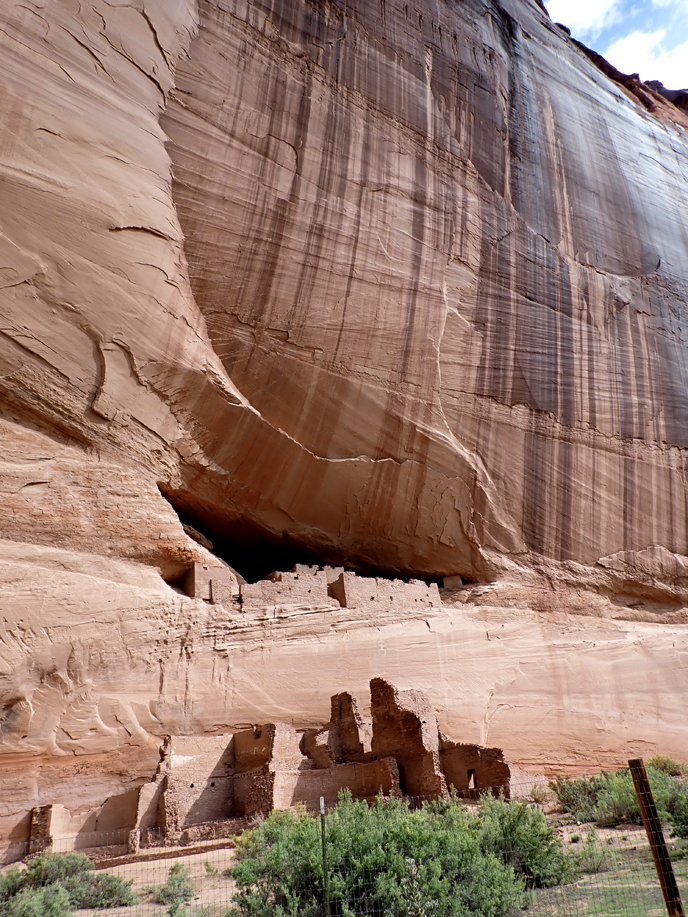
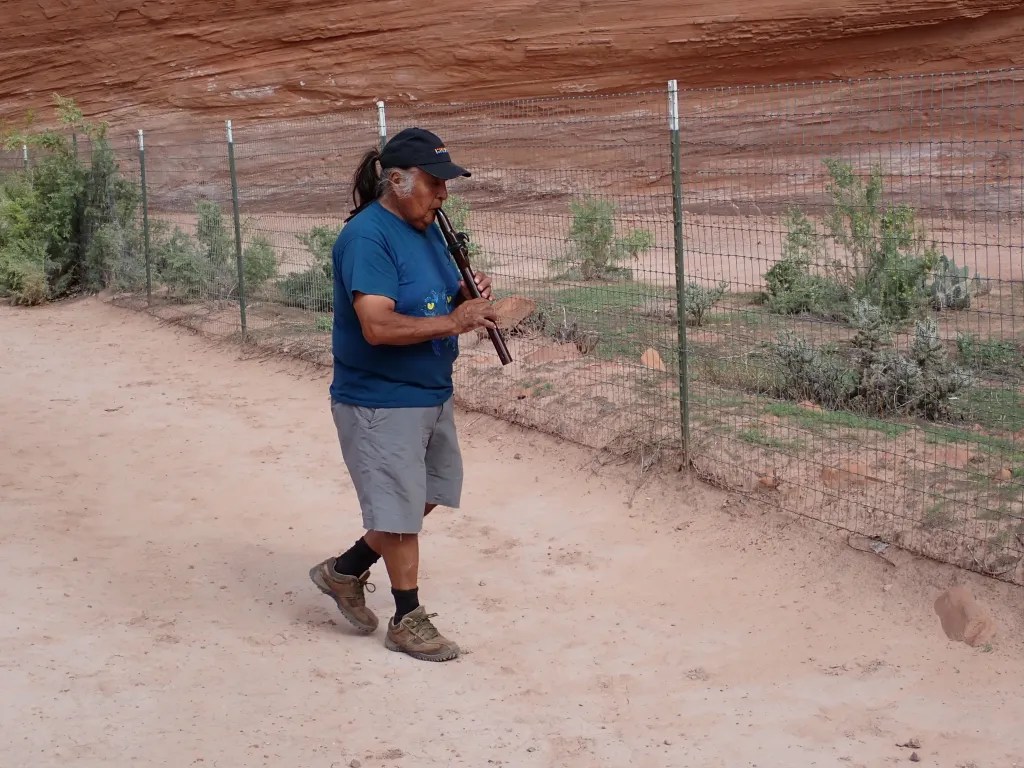
    Next day we went into the canyon with Daniel, our Diné guide, plowing his jeep through deep, sandy ruts in the creek bed. The light was too overcast for painting, so we toured the quiet canyon, driving through Gothic arches of cottonwoods and tamarisk, shooing horses off the track, and admiring ancient architecture and pictographs. At White House, Daniel played his flute.

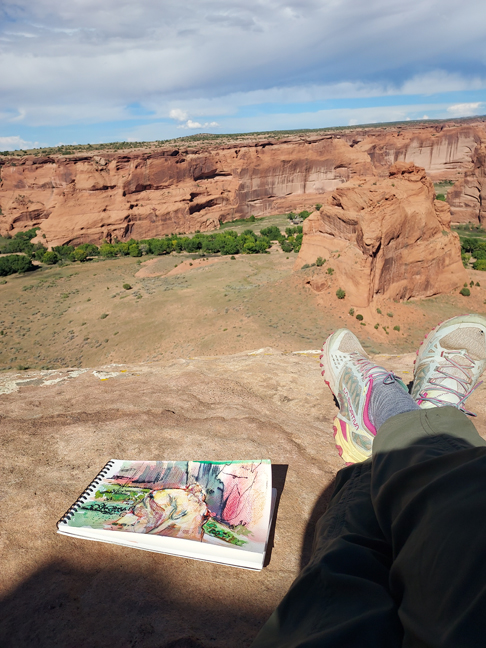
    Back on the rim that afternoon, the sun came out and I went back to the South Rim to paint with my feet hanging over the cliff edge, warm air fragrant with the smell of early fall wafting up.

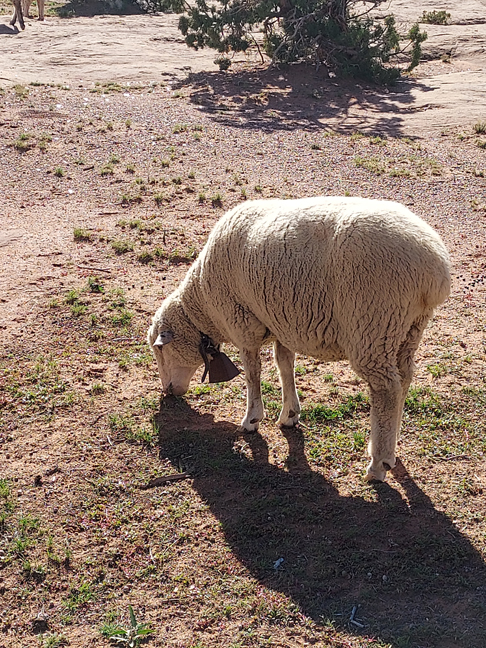
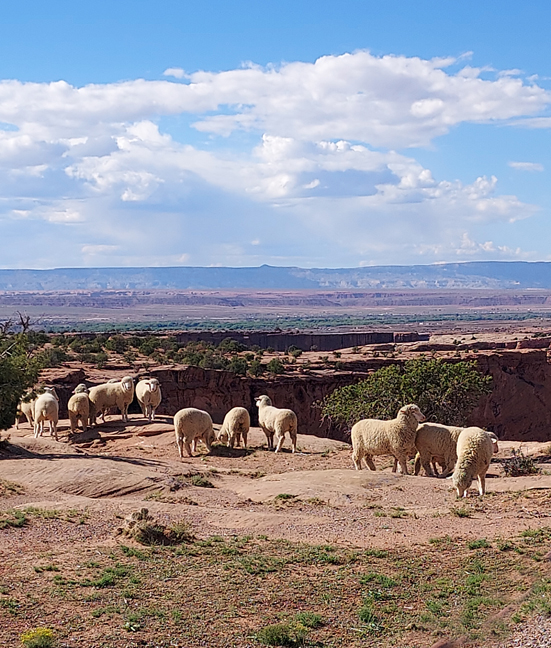
    At Ledge House overlook, there were sheep, and sheepdogs doing their jobs.

    Tuesday, October 13th, we’ll head back to Jim Thompson trailhead. I’m getting there at 8:00 since it will be hot, and David said hikers are out if full force, making parking a challenge.

    Great paintings from the site–thanks, Dan, for sending it. I’m inspired! See you on Tuesday.

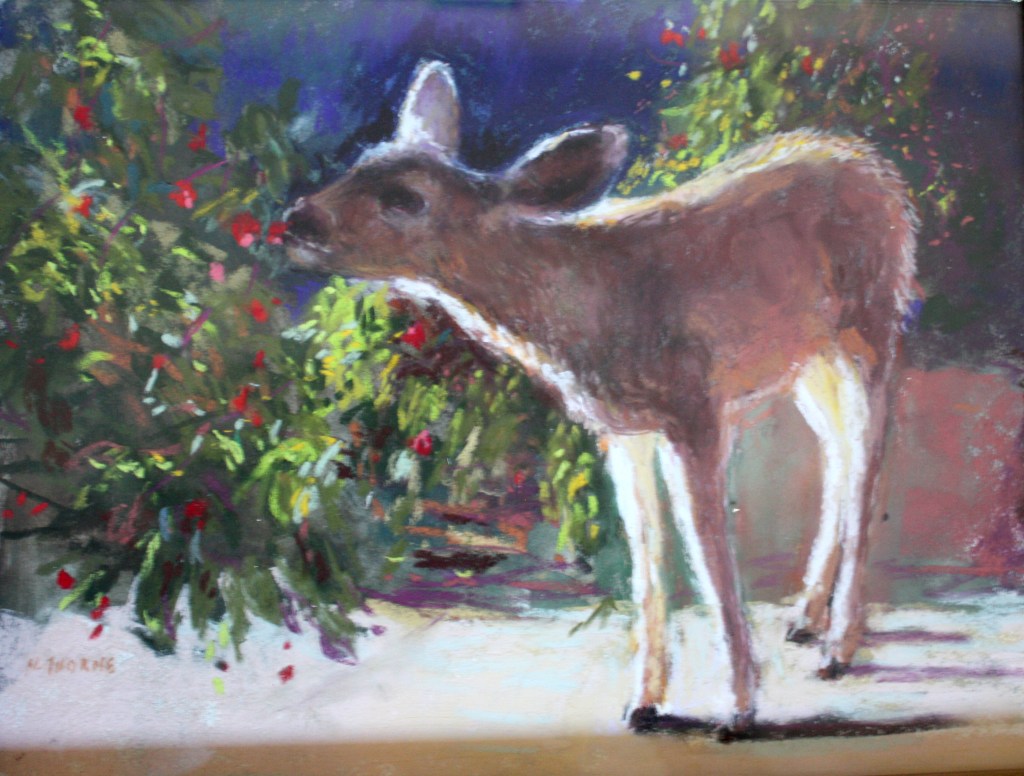
  • In the heavy monsoon downpour, under the Lady Banks rosebush, a young velvet buck stood with a stolid, put-upon expression that didn’t change when the cat and I opened the screen door. His name is Snippy, and I’ve known him ever since he was a fawn, trimming the hedges on my front patio. When the rain slackened, he left, sadly sodden, to find his posse.

    The rain and flooding kept our Tuesday plein air group in our studios. Next week we’ll try again, same place, but at 9:00 now that the weather is getting cooler. I will be painting for a few days at Canyon de Chelly, so I’ll catch up with the group on the 13th.

  • Tubac Center for the Arts hosted a reception for the “I Hear Music” exhibition. Artists portrayed their love of music with paintings, interactive sculptures and textiles. One 3-D artist created a multi-armed rainstick wall sculpture, while another created a playable ensemblage of feathers, soundbox and strings.  Each artwork had a Q-Code that could be scanned to hear its companion musical offering.  My accordion player, looking very self-satisfied with his award, is playing a cheesy version of Cielito Lindo.  You can click his smug mug and hear a 15 second sound clip.

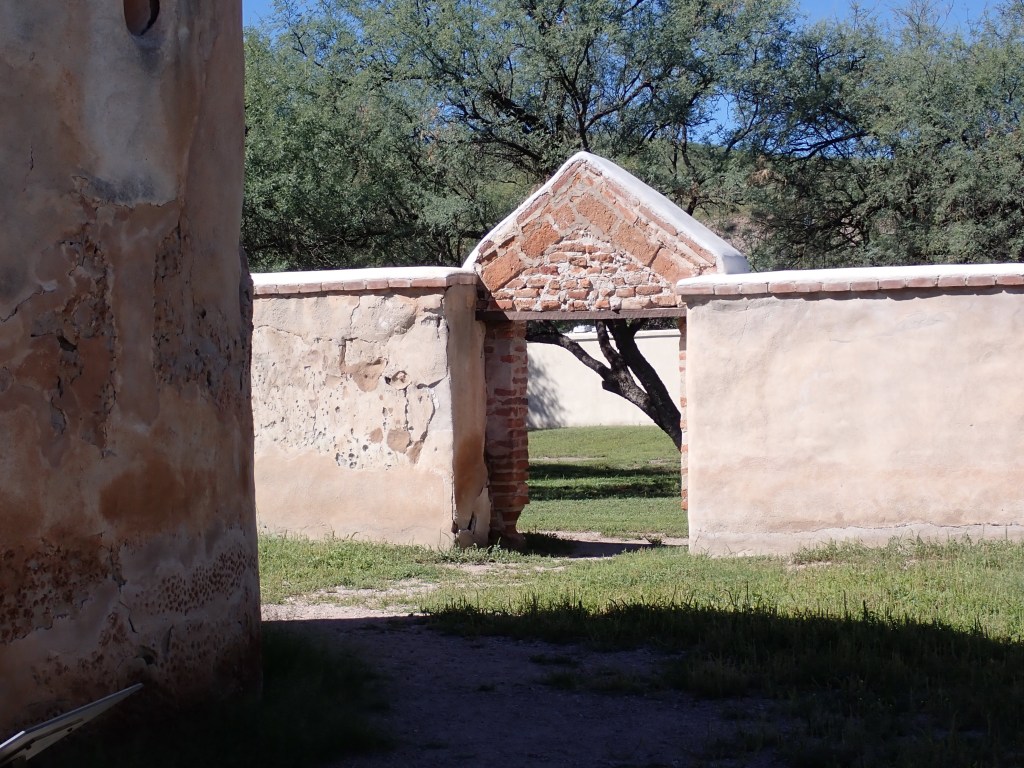
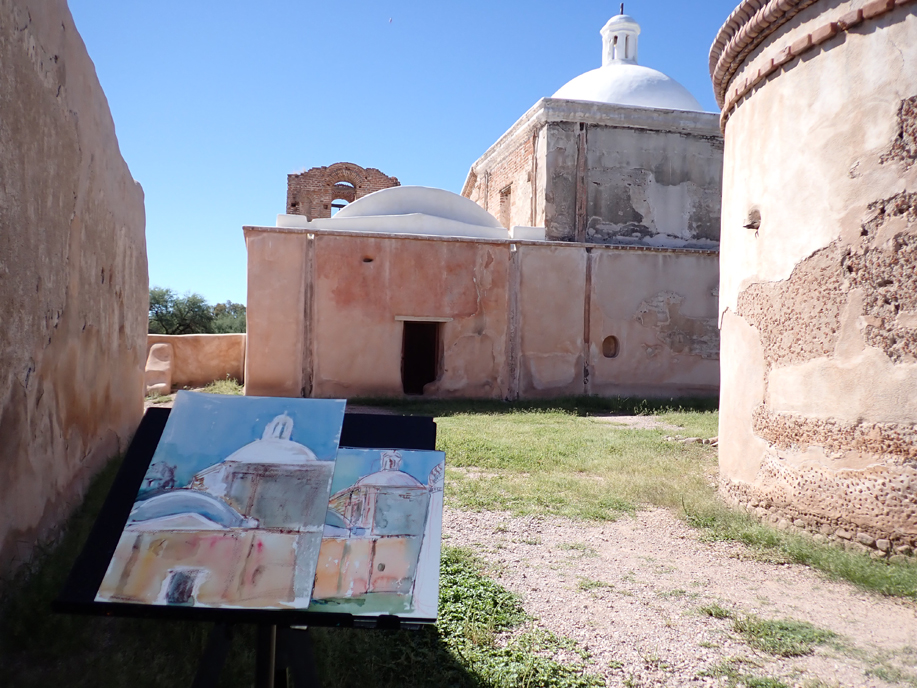
    The next morning I headed to Tucumcacori Mission to paint the crumbling brick walls and aging adobe masonry. The chapel dome is still blindingly white, and provided a perch for a mourning dove who sang hymns, accompanied by a hawk’s soprano counterpoint. Ants ruled in the cemeterio and chased away tourists and gawkers, but left me alone.

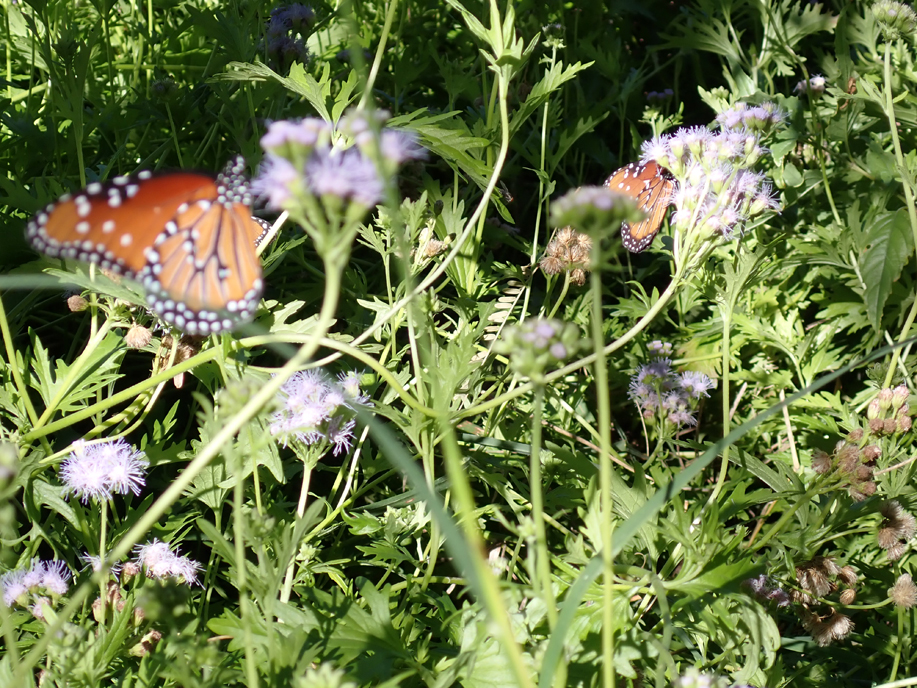
    Monarchs crowded butterfly bushes planted especially for their annual migration.

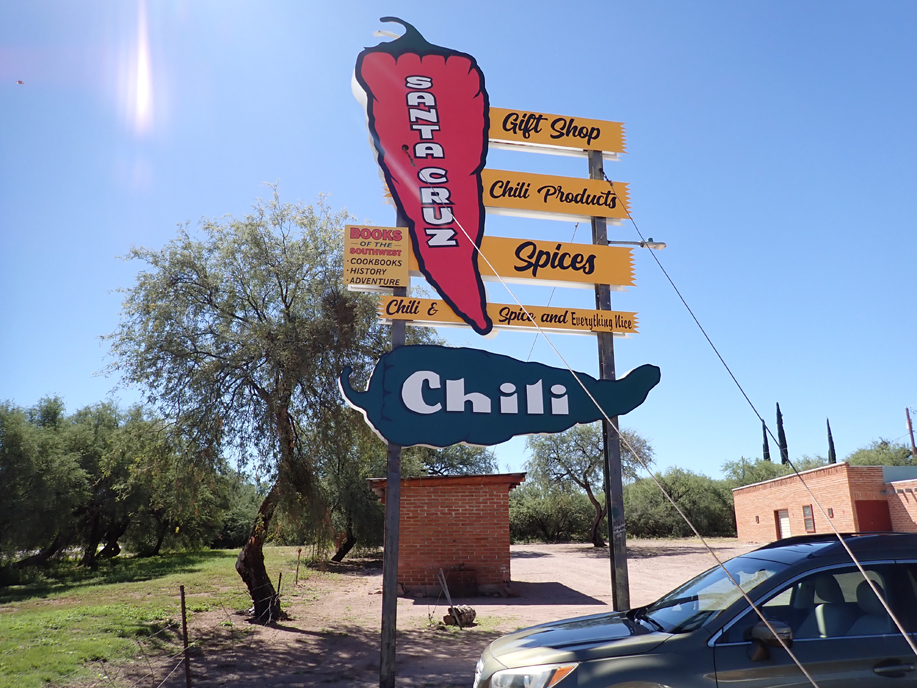
    Of course, you have to stop at Santa Cruz’ Chile Shop that was redolent with the spicy odors of freshly ground chile and cinnamon.

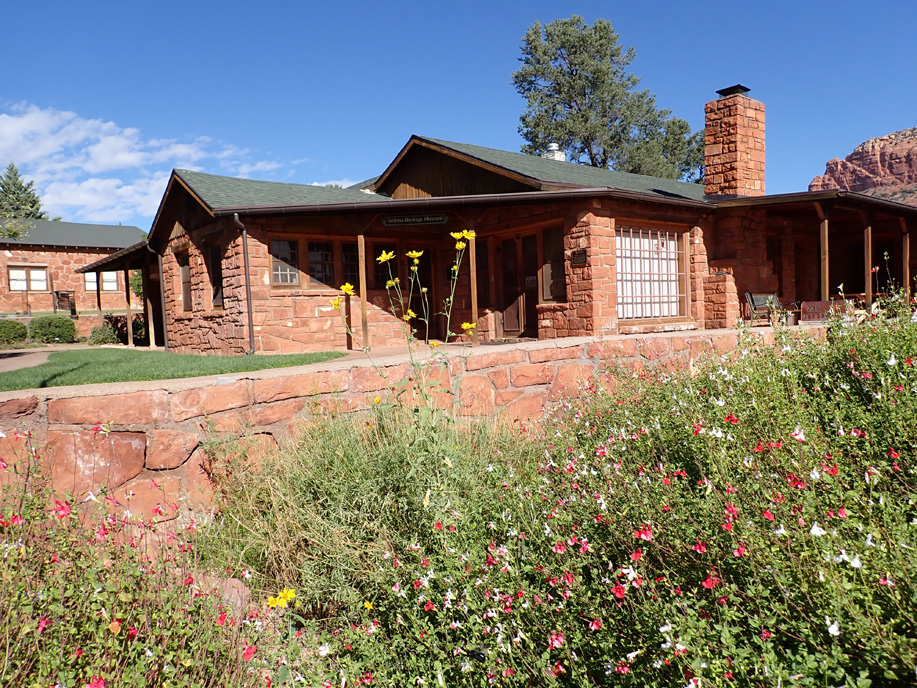
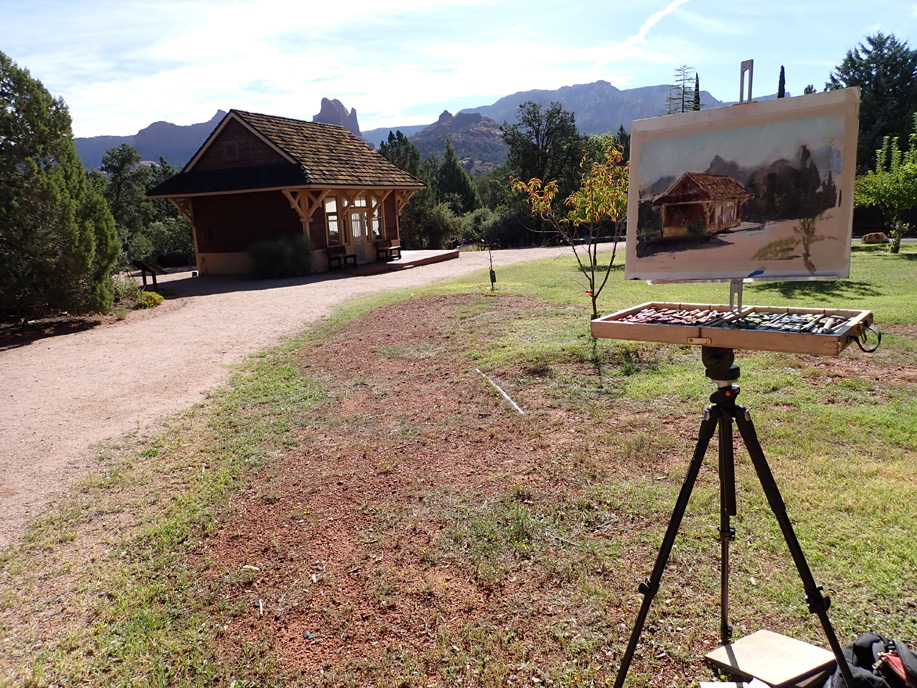
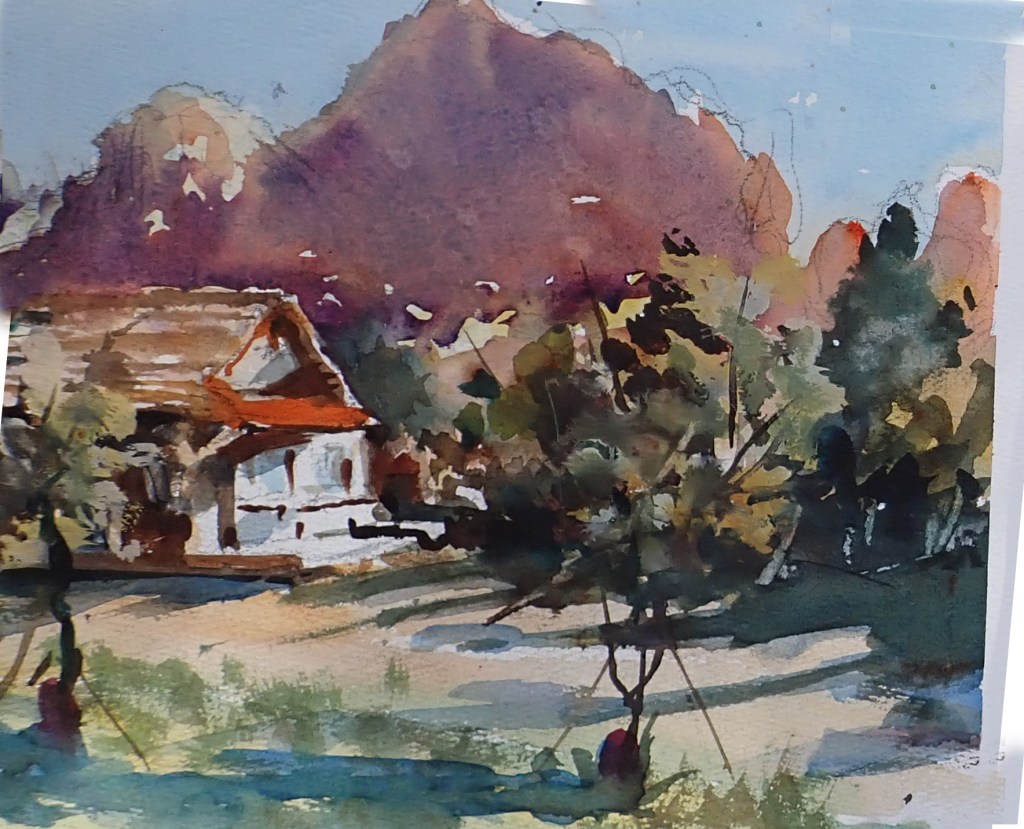
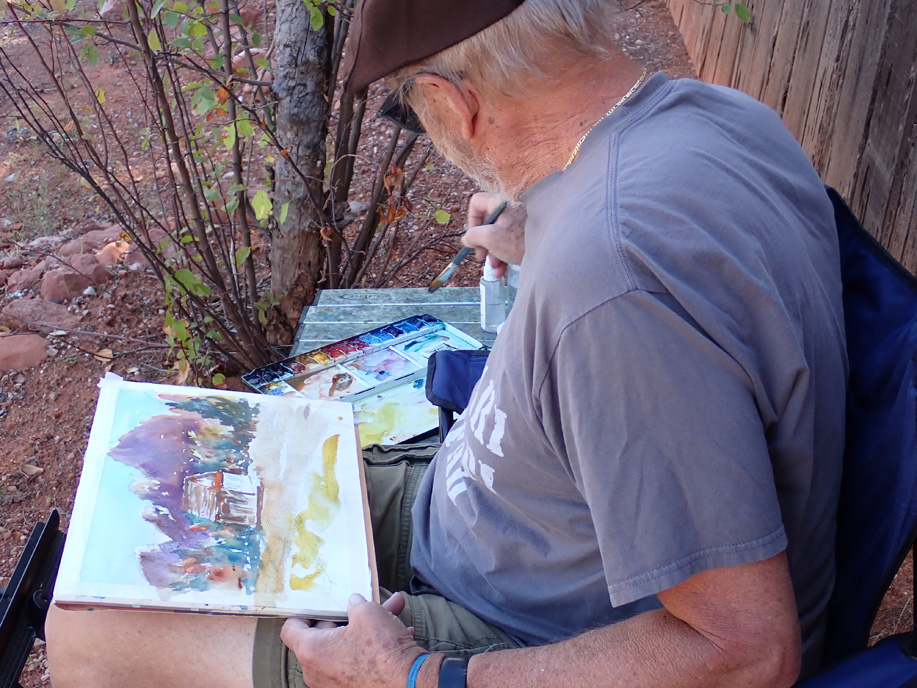
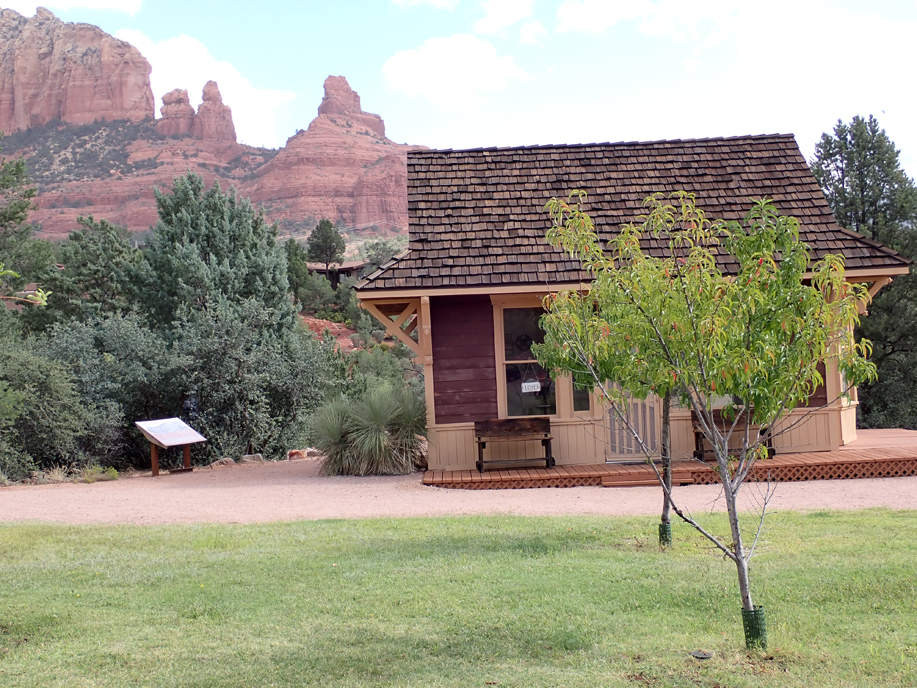
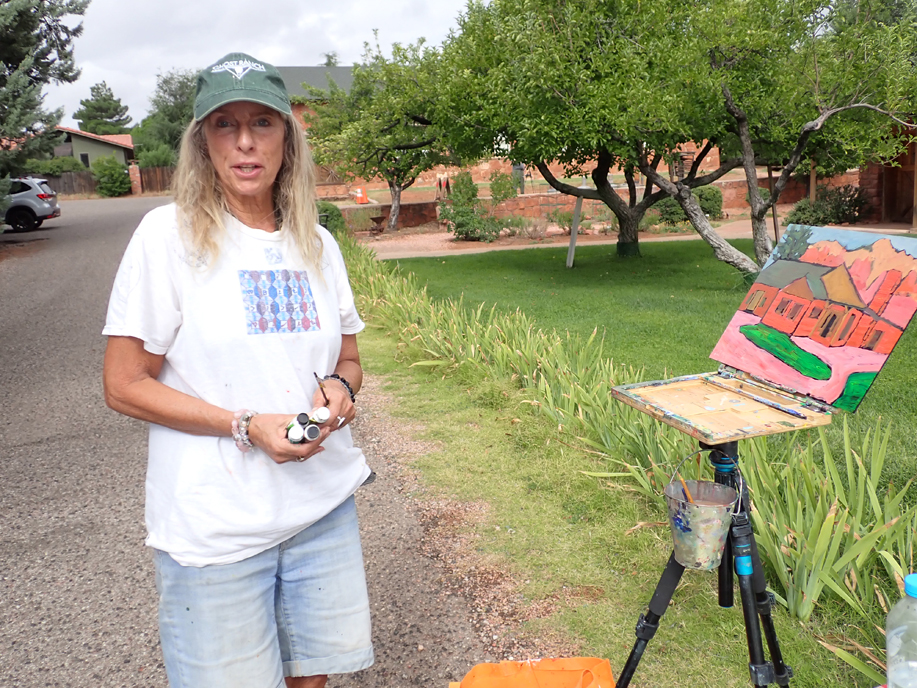
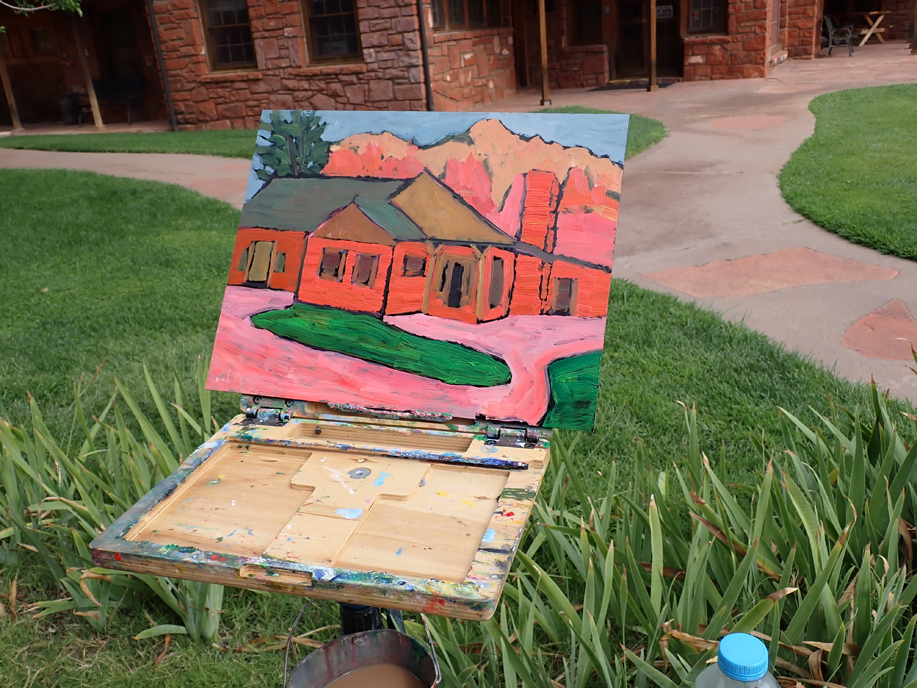
  • Our second day of painting at the Sedona Heritage Museum was bright and sunny, with sharp shadows—so unlike our overcast Day 1.  Mike and I painted the little Victorian train station. He sensibly set up in the shade, unlike me, who soon became horribly hot, sweaty, and grumpy.

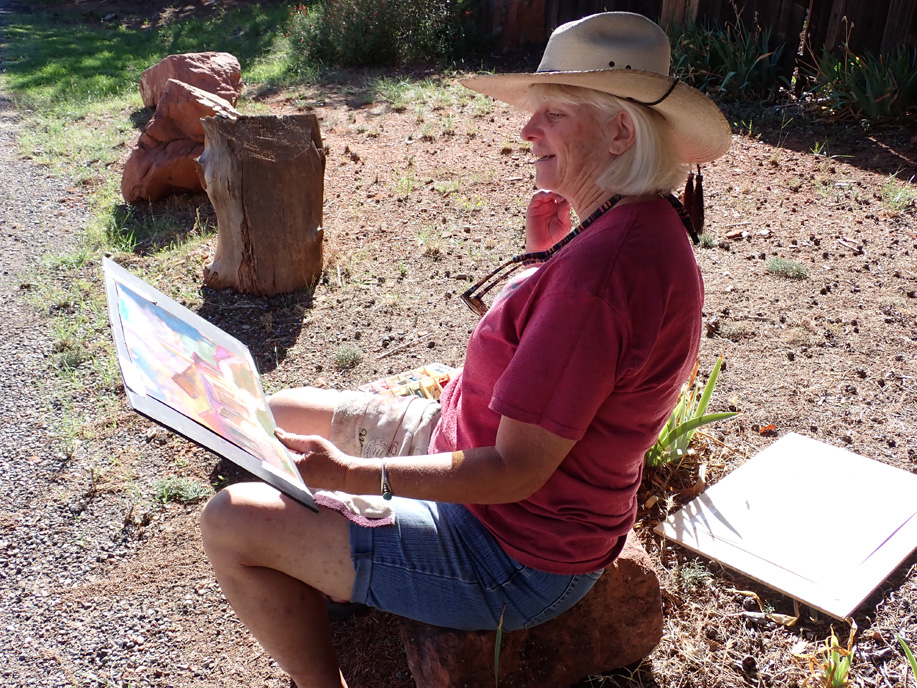
    Our two Fauvists, Karen and Liz, created vivid architectural renderings of the old buildings. Liz entitled her’s, “Candyland.”

    Janel, inspired by the “Mother Coyote Teaching Her Babies to Howl at the Moon” rock formations focused in on the threesome.  She refused, however, to howl along with them.

    Nita perched on the edge of an arroyo, and painted the cypress and pinyon pines whose fragrance wafted up from below.

    David unexpectedly joined us because his campsite near Kingman went up in flames, cutting his plein air adventure short. He reported no injuries and his eyebrows and mustache were intact.  He and Michelle beautifully depicted the distant red rock landscape in oil.

    Wendy and LeAnne also captured the changing light on the rocks and cactus.

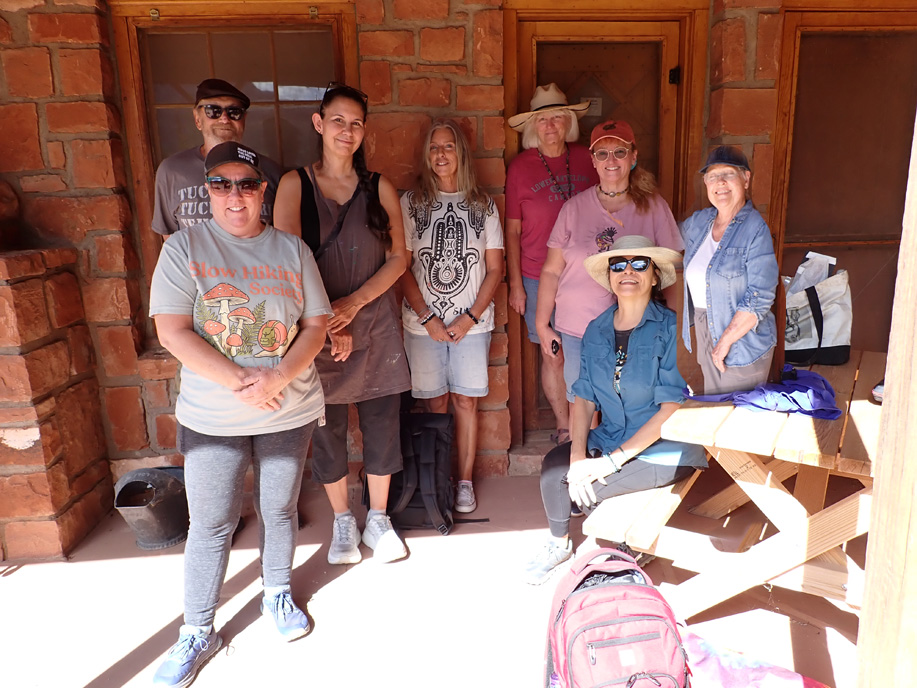
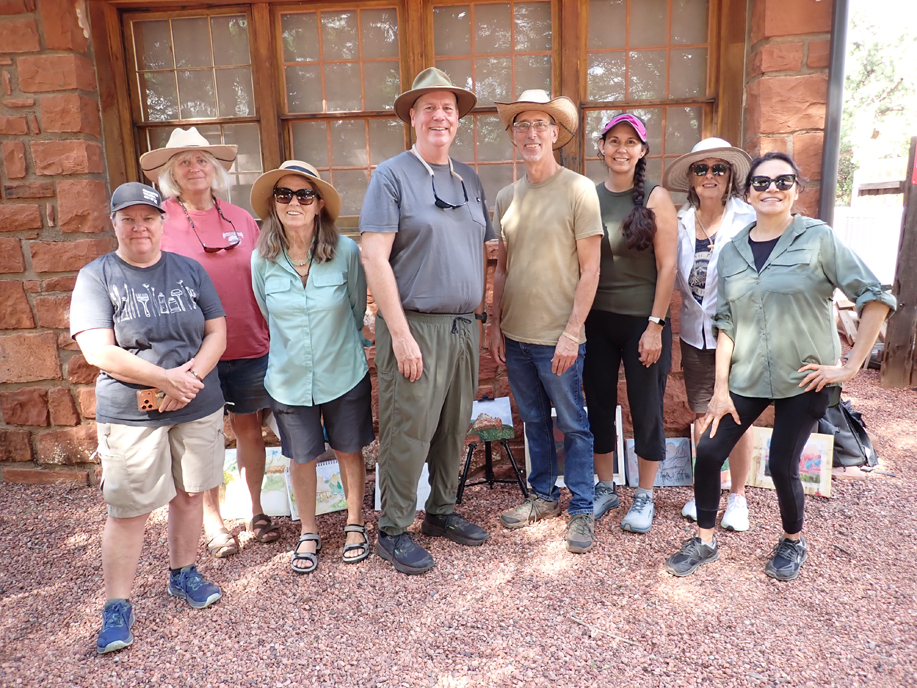
    Left to right: Wendy, Mike, Michelle, Liz, Karen, LeAnne, Janel, and Nita.

    Next week, September 29, we’re heading to the Jim Thompson/Brins Mesa trailhead (8:00) to paint the outstanding red rock views. Directions are on the page, “Outings and Directions.”

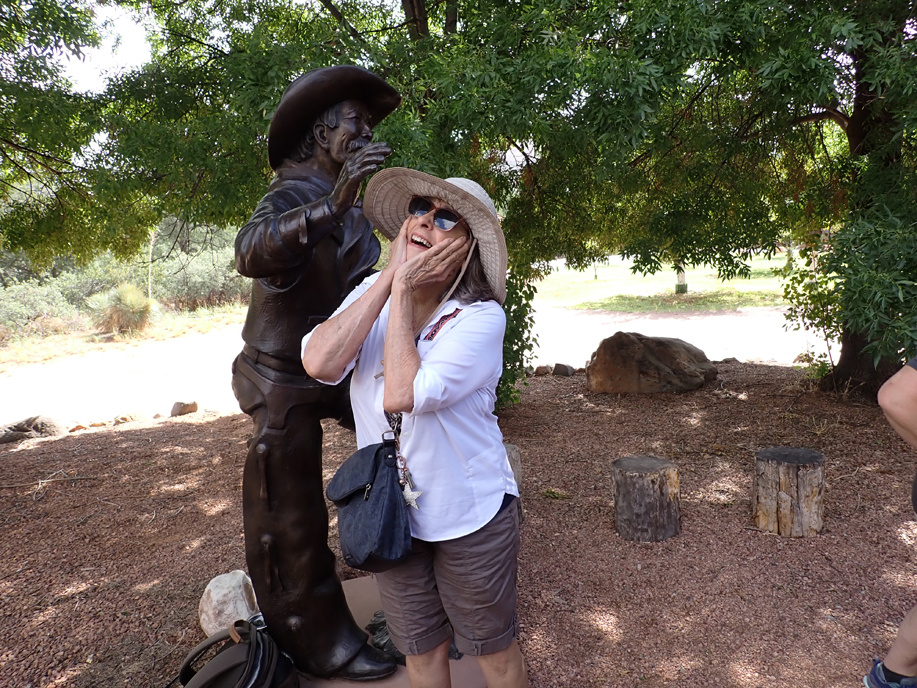
  • Above: Gail gets a pat on the back from a passing cowboy.

    The early morning sun hid behind fog and ragged rainclouds that promised to soak my pastels, but only thirteen drops of rain fell, and we chased the fleeting shapes of light and shadow across the red rock.  Karen and Gail disputed the names of the distant rock formations, but my favorite (and undisputed) was “Mother Coyote Teaches Her Children to Howl at the Moon.”

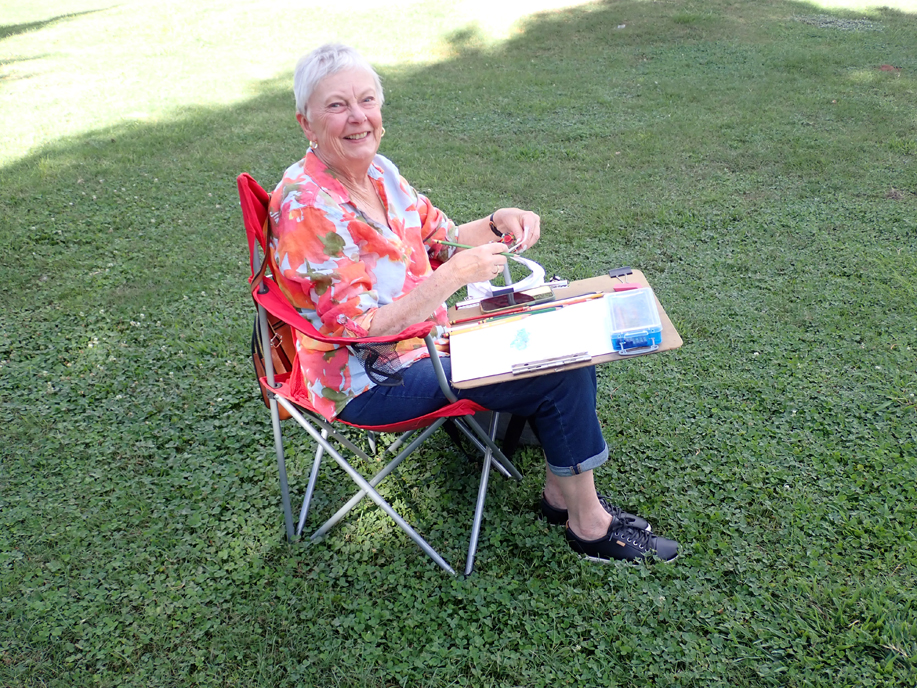
    Michelle and I painted from the vantage point of the old museum’s agave garden.  I fought my pastel surface, finally resorting to Hannemulle Velour, which was exactly like painting on shaved monkey butt.

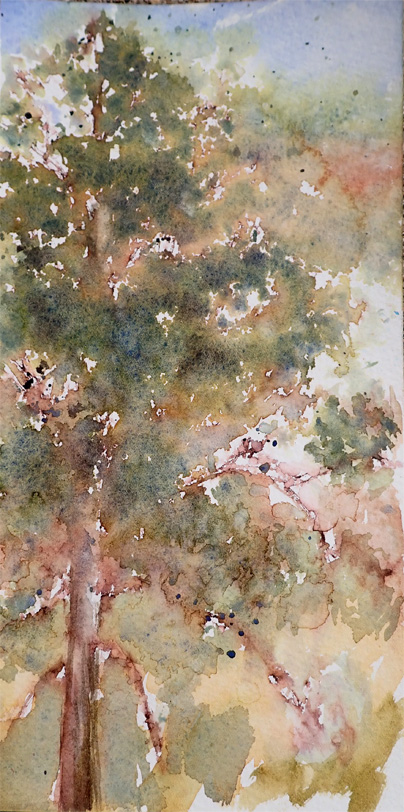
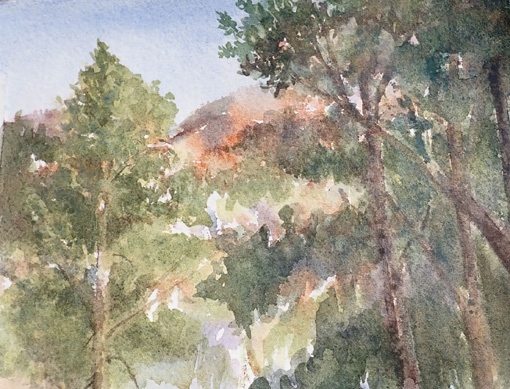
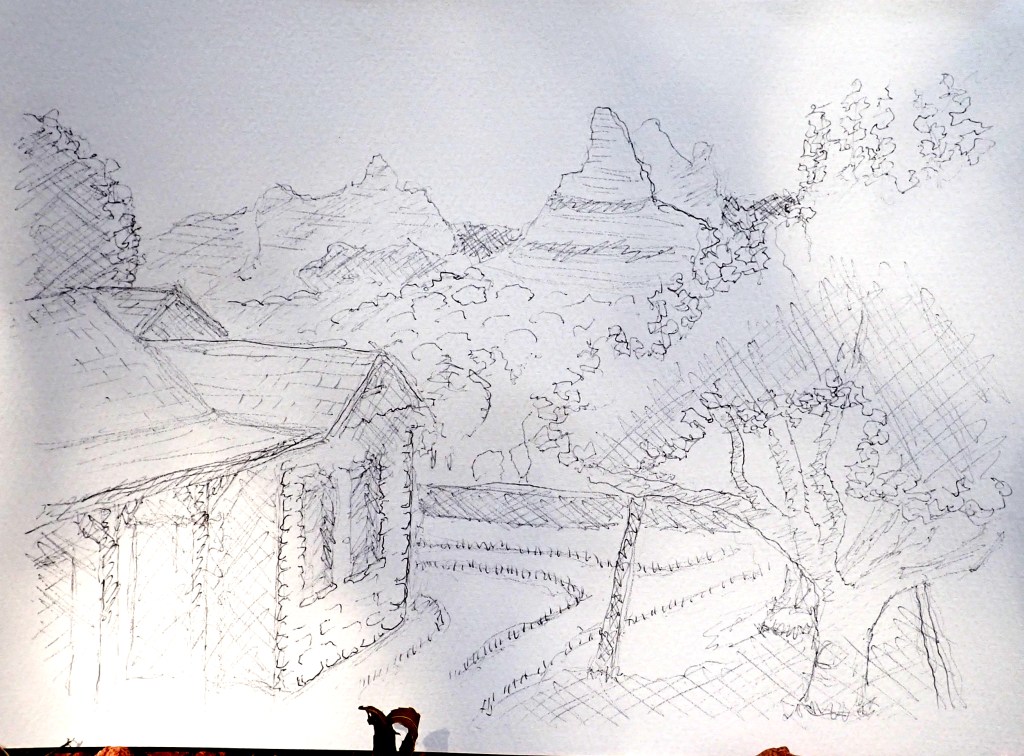
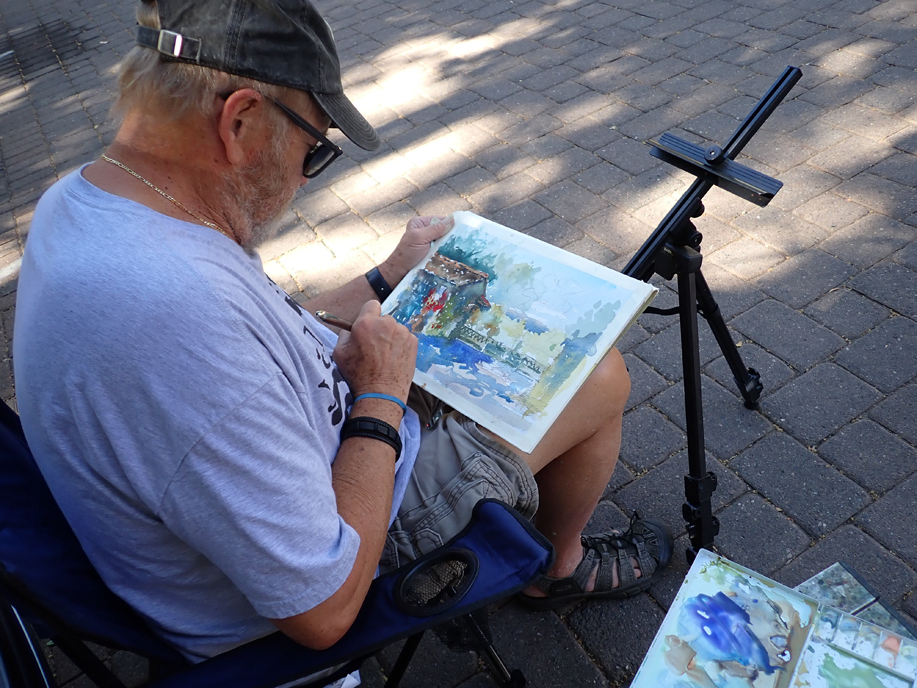
    Dan joined us and took the Zen approach of less is more since he forgot his watercolor brushes and instead created a charming sketch with his tiny little silver ballpoint pen.

    Fellow pastel painter, Karen, finished two terrific pastel pieces before we left, and was last seen in a rocky gulley, working on a third.

    Pete, practicing for the Escalante Plein Air festival next week, worked his magic in oils.

    Gail painted the howling red rock pups in oil, while Liz vividly depicted the old museum building. Betty expertly painted the old barnwood door of the apple shed, while Wendy and Janel painted the distant fog-shrouded rocks.

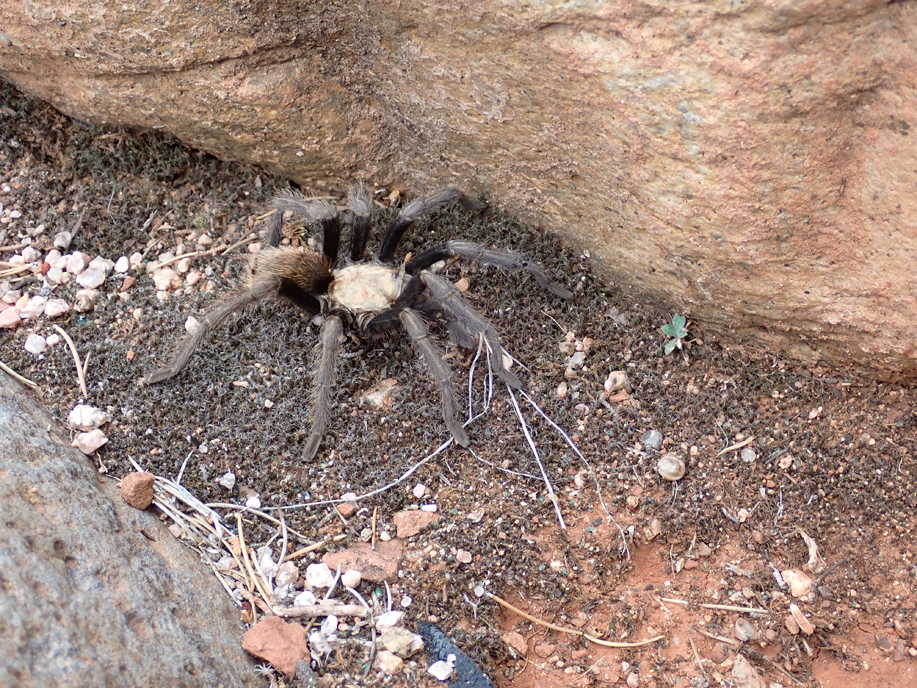
    We had another outdoor enthusiast join us—Mrs. Furry—who scurried off to her secret spot in the rocks.

    Left to right: Wendy, Karen, Betty, Dan, Pete, Michelle, Gail, Janel. Not shown: Mrs. Furry. Next week we’ll meet again at the Heritage Museum at 8:00. Hope to see you there!

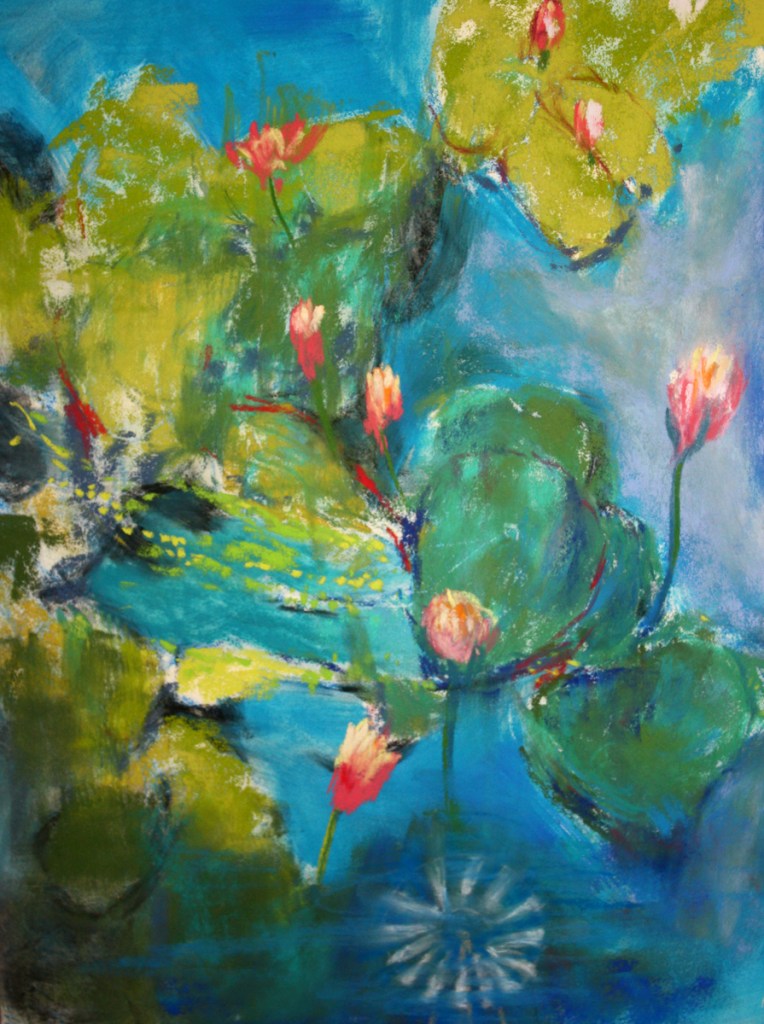
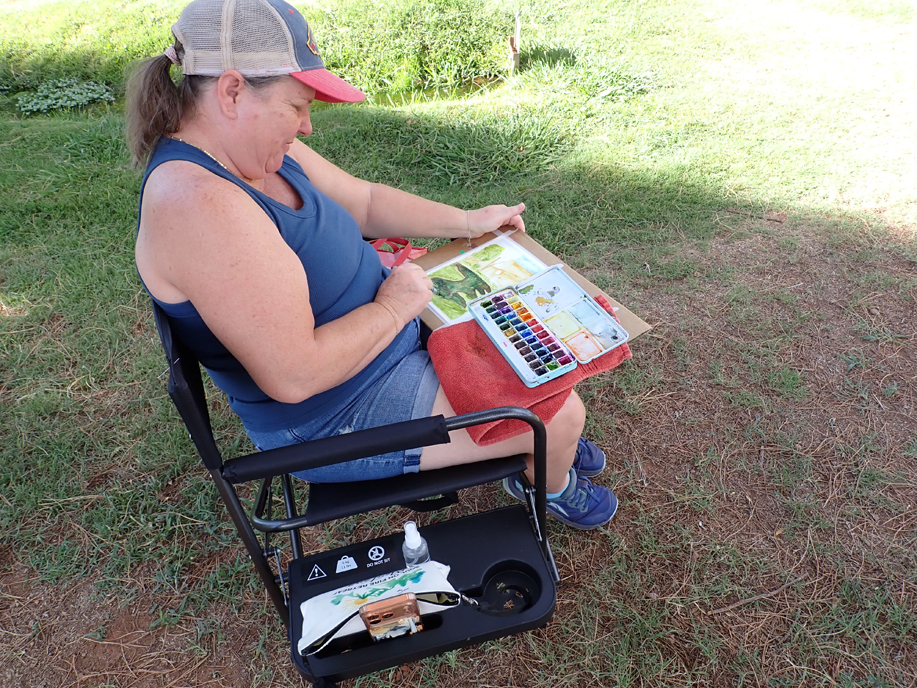
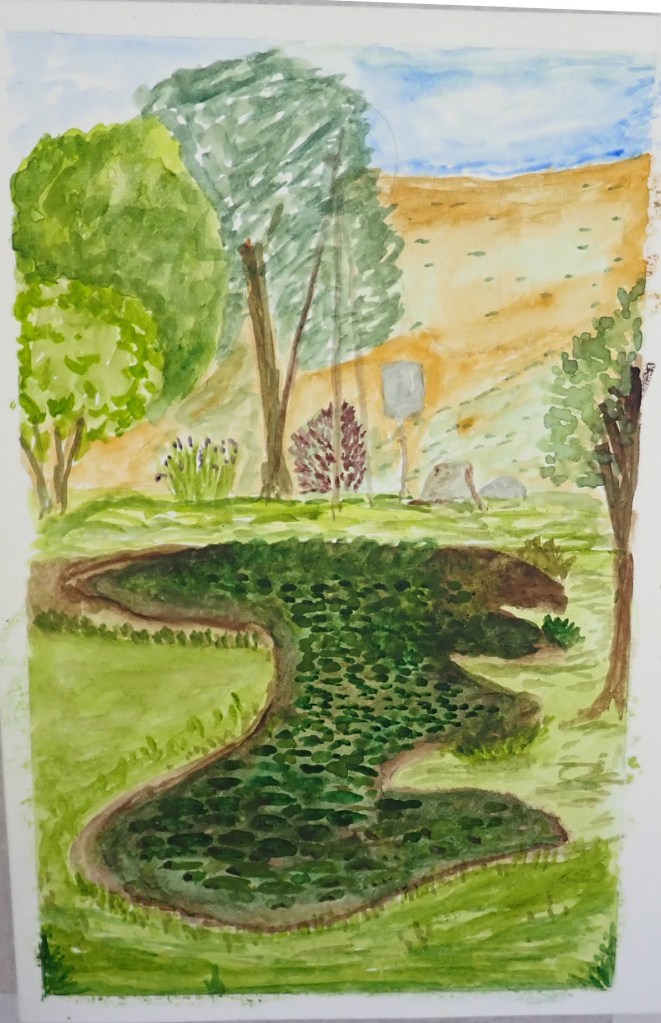
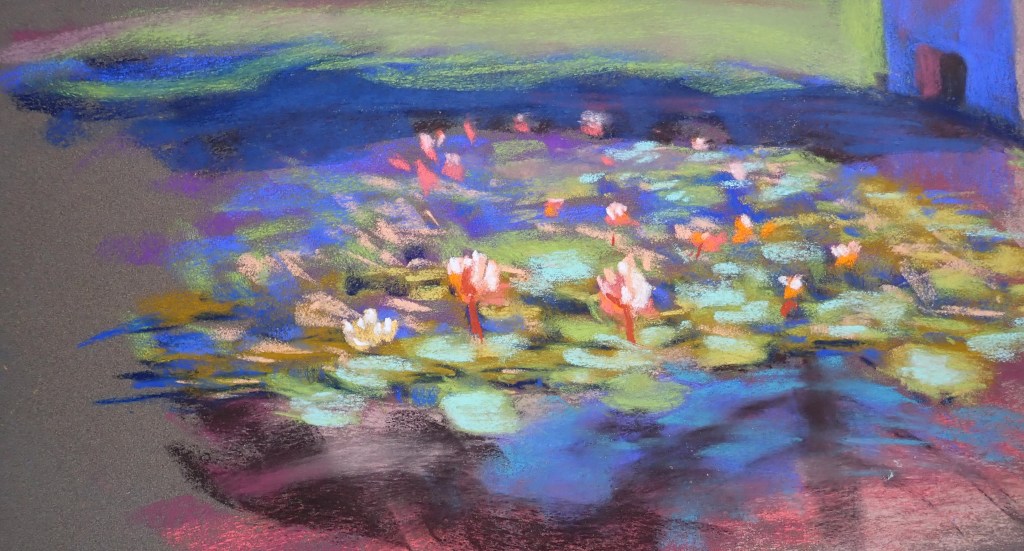
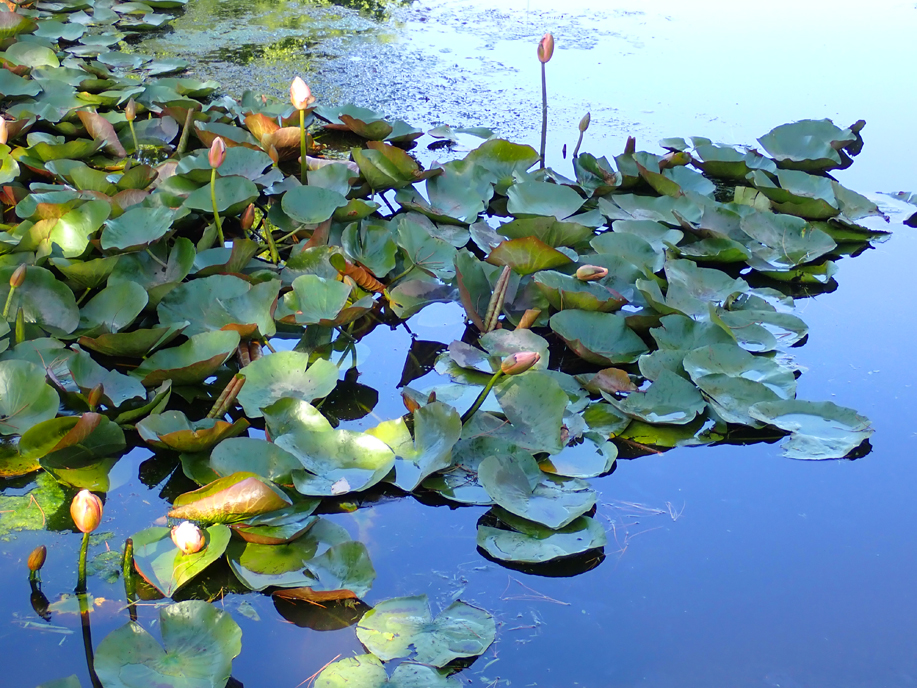
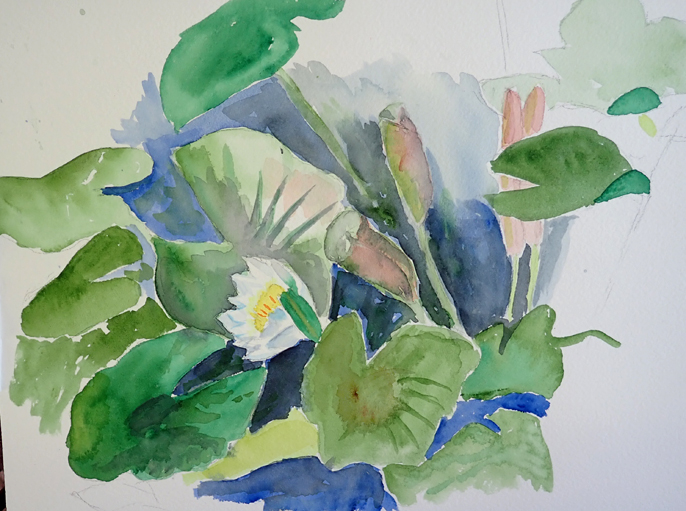
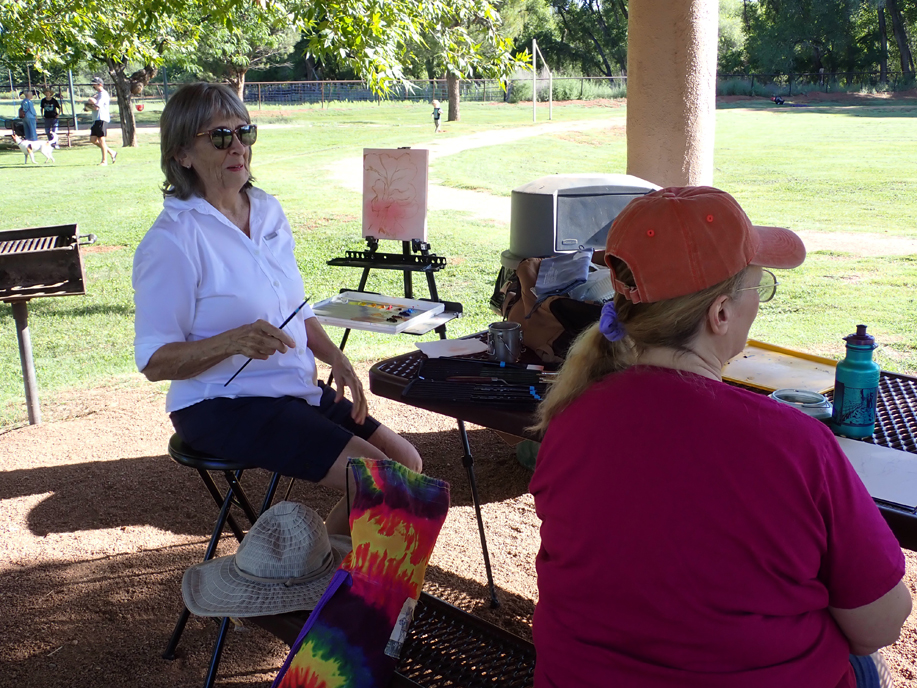
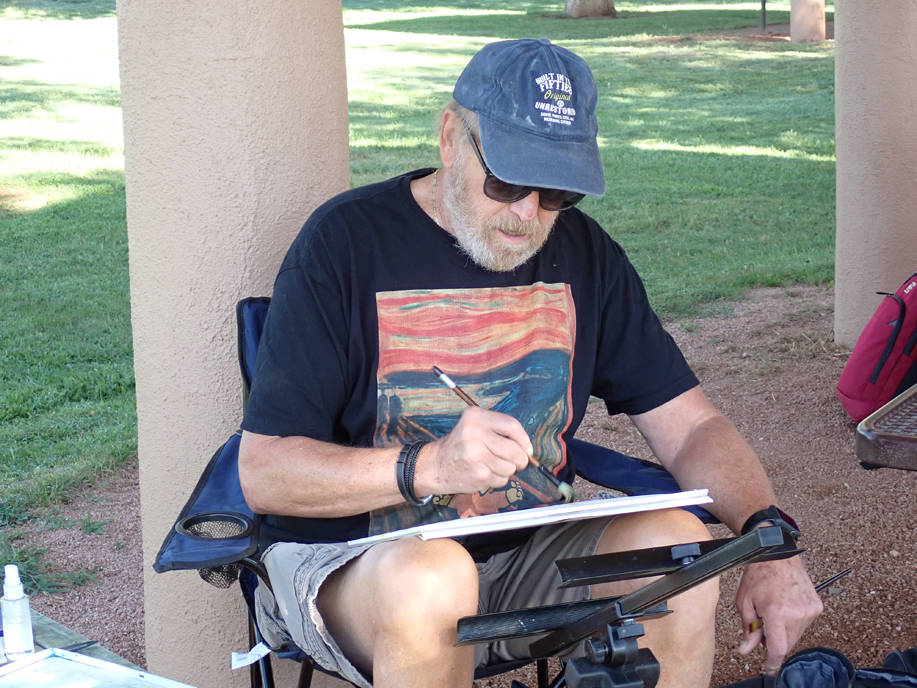
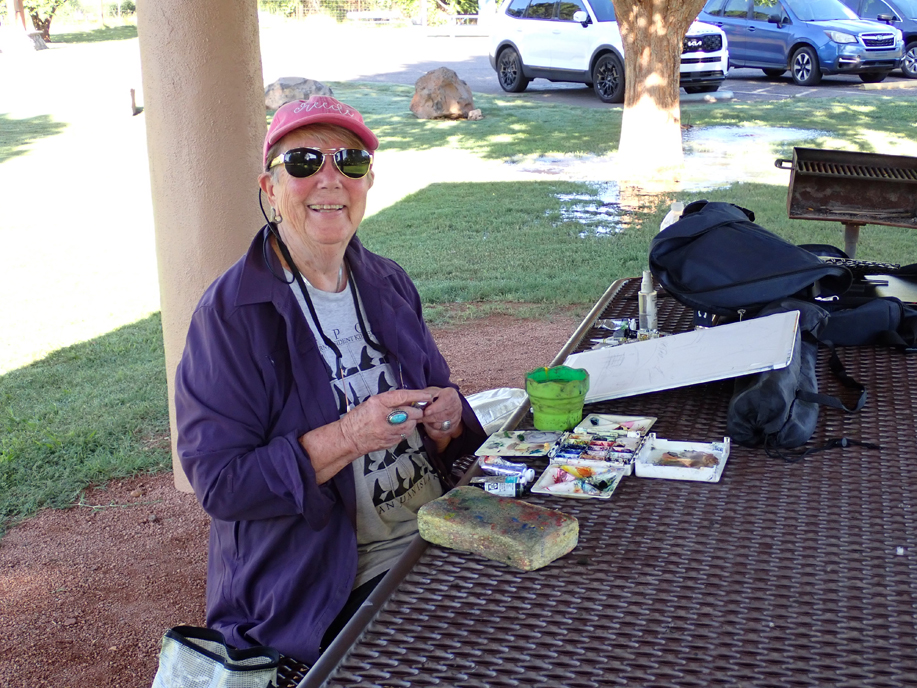
  • The temperature was perfect and the sun was making lovely shadows on the lily pond, but some of us were just not quite feeling it.  Mike and Best-in-Show hung out—no watercolors in sight but gave us a masterclass in how to approach a plein air watercolor painting.  I was feeling lazy and overwhelmed by all those confounding lily pads, and my painting showed it.

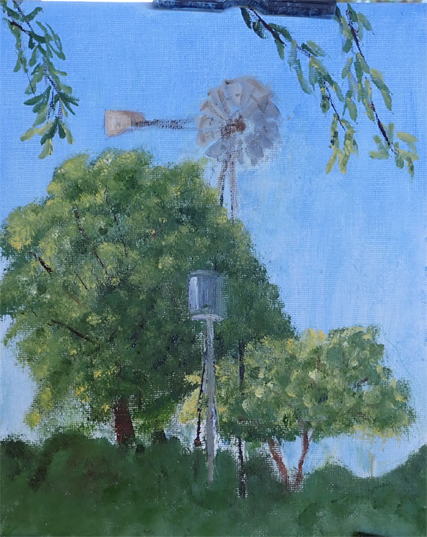
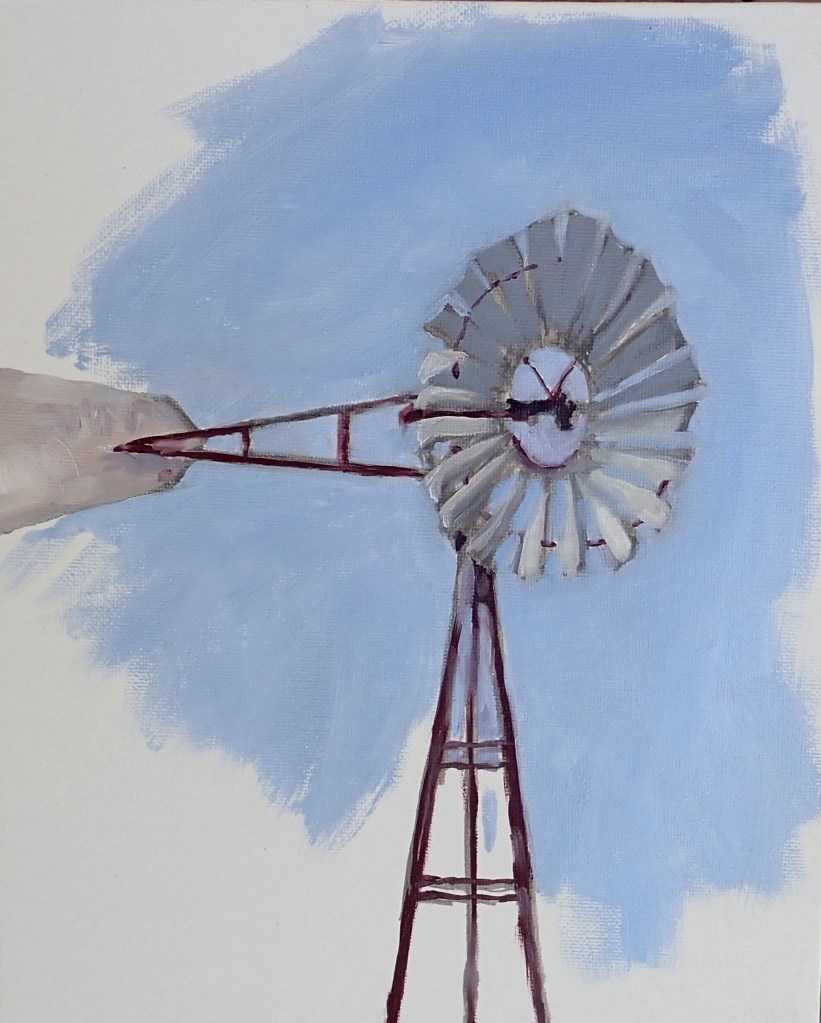
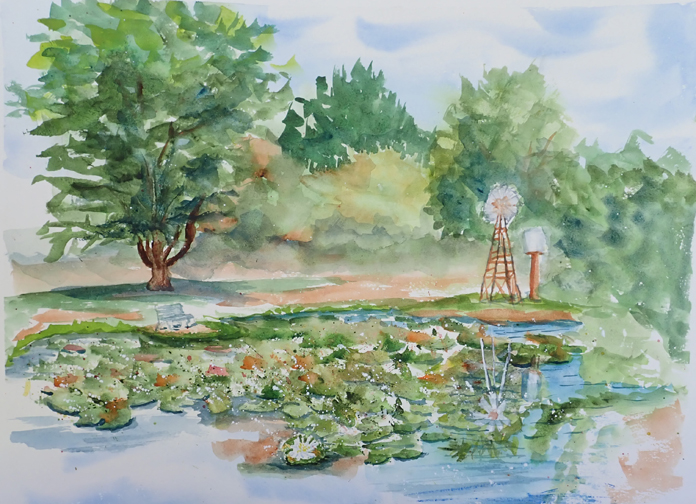
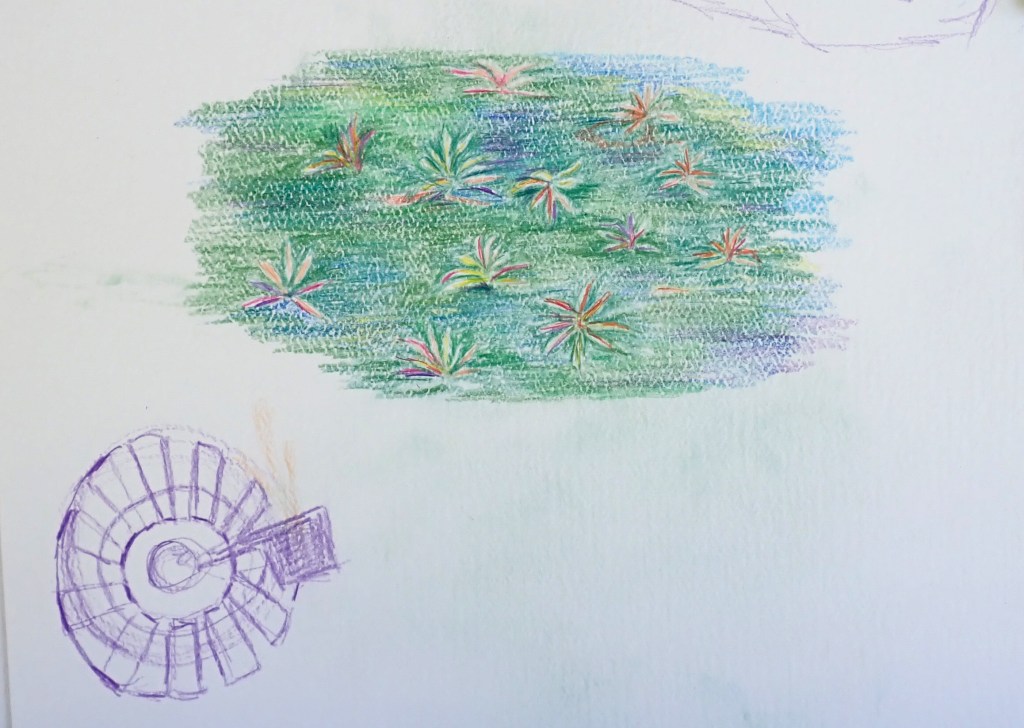
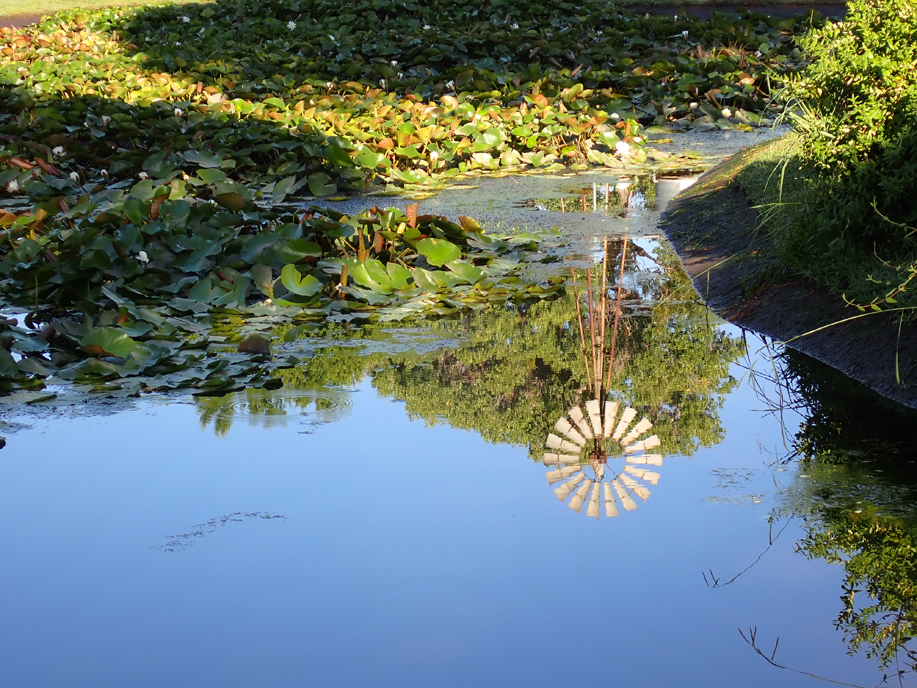
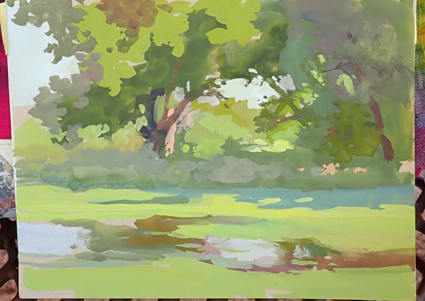
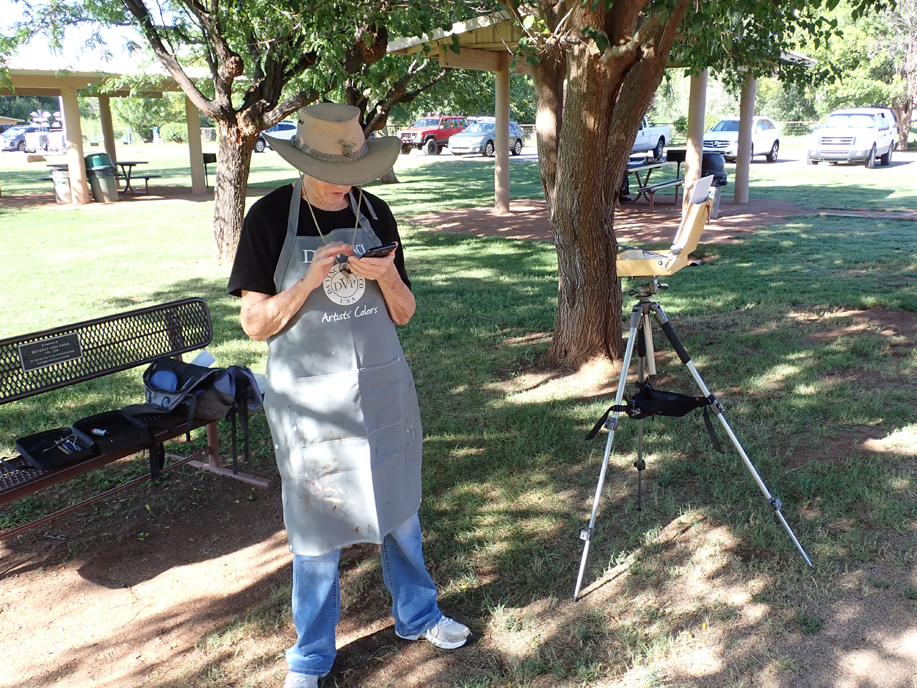
    Dona, Janel and Gail painted the park’s namesake windmill, and I painted its reflection (does that count?)

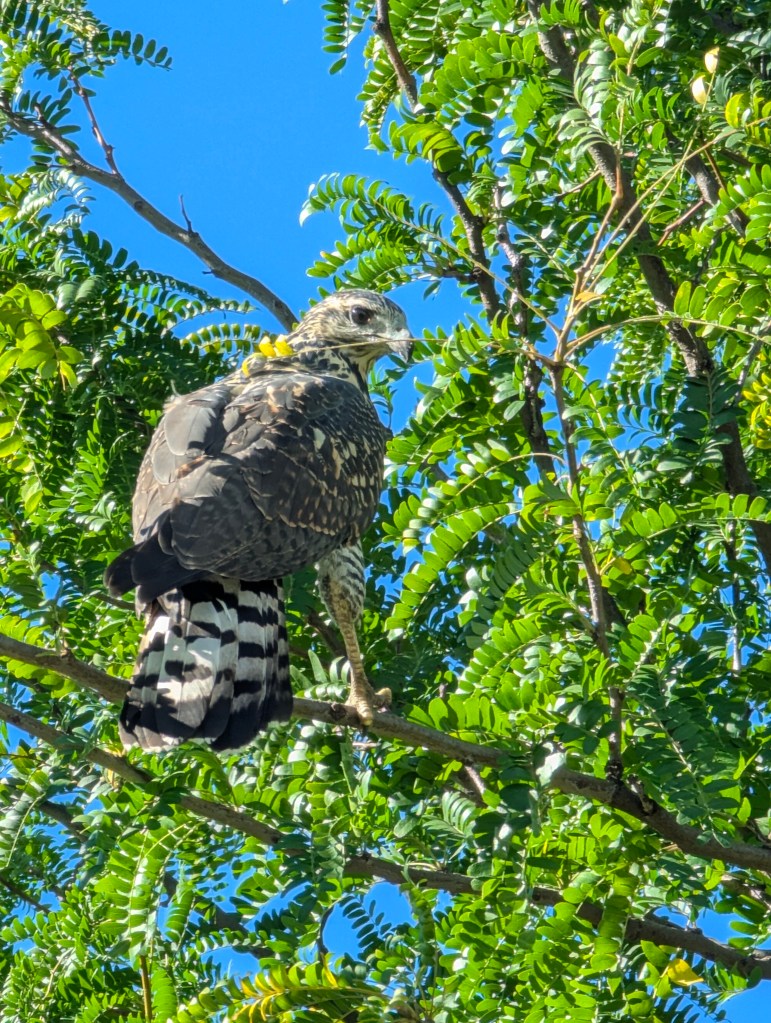
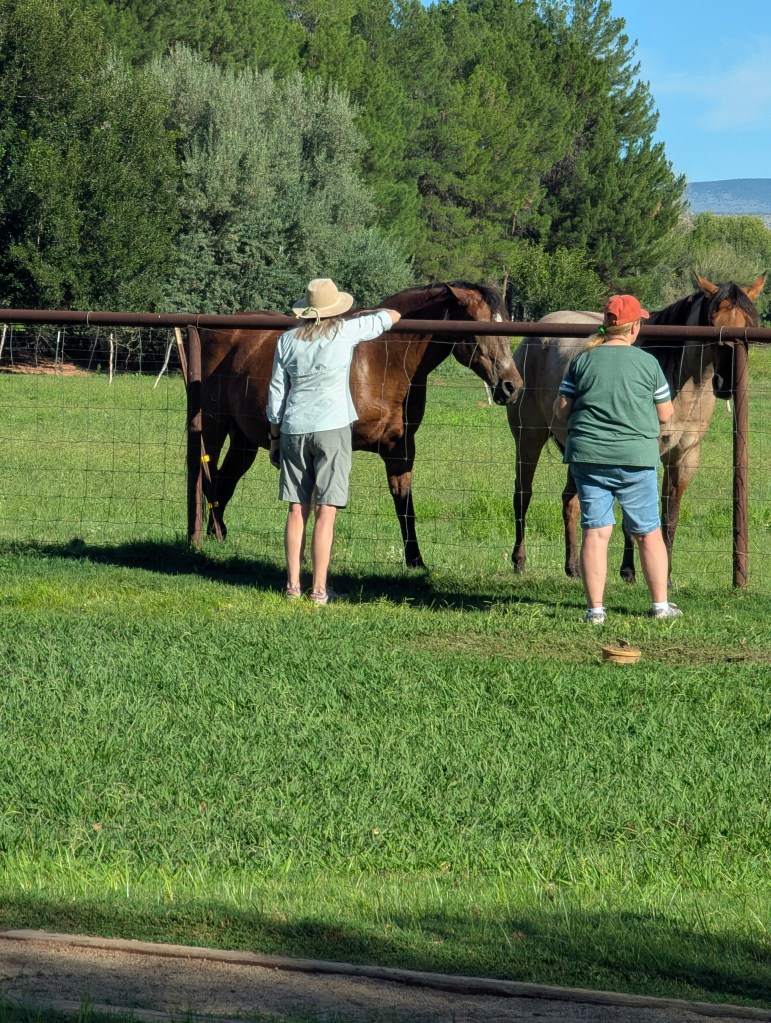
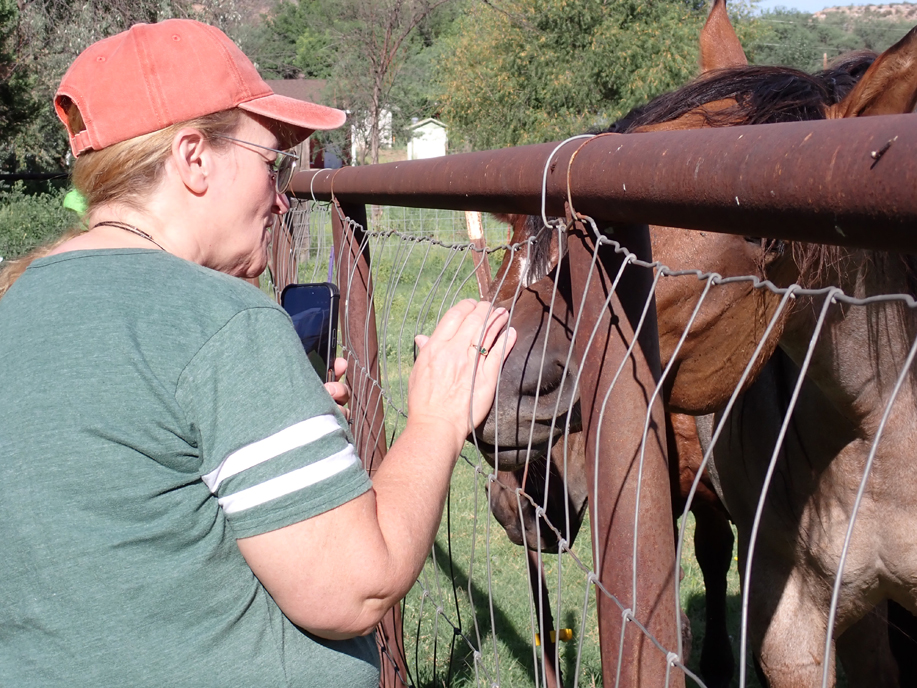
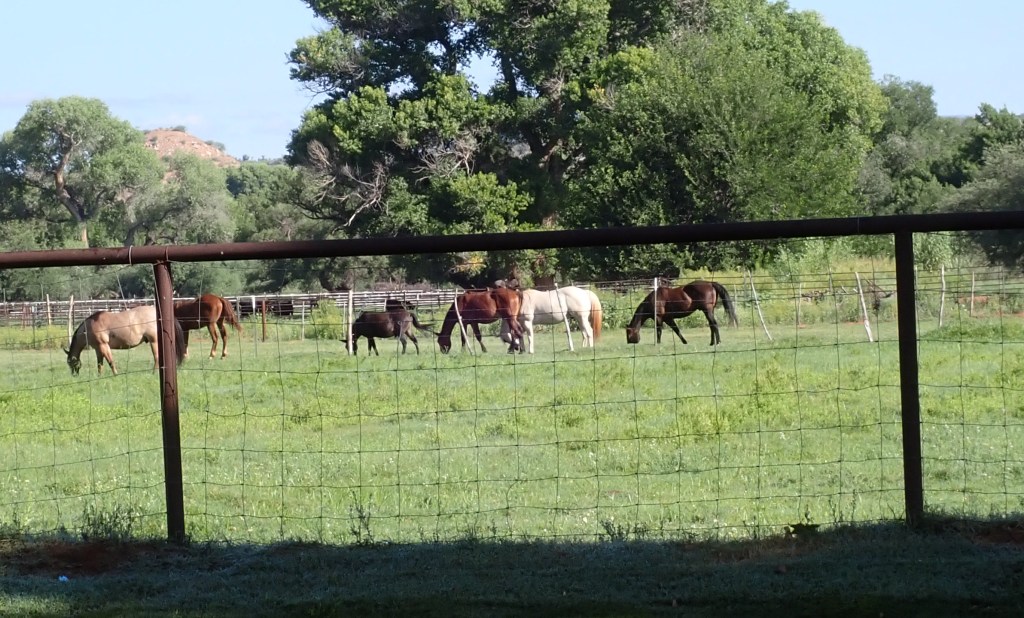
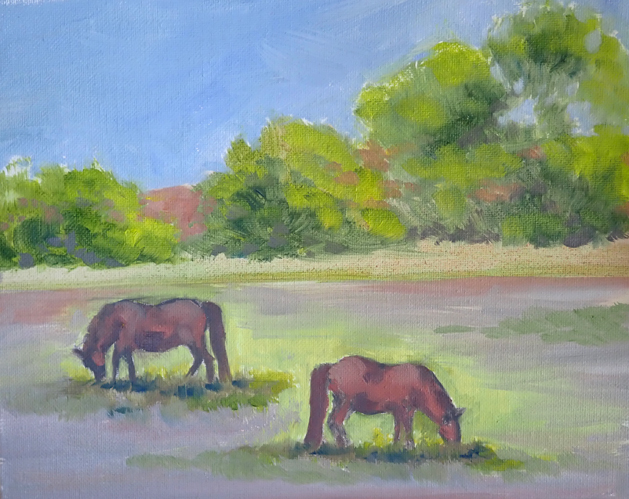
    Karen painted the grazing quarterhorses, while LeAnne teased them with imaginary apples.  An indignant Cooper’s hawk flew down and criticized Gail, Janel and LeAnne’s paintings of trees.

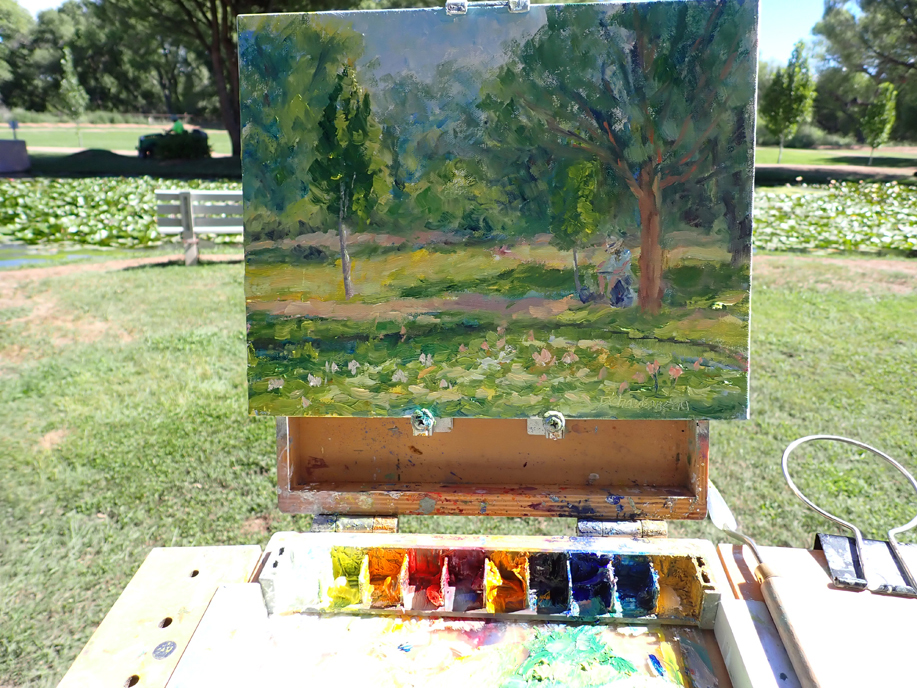
    Debborah, a fellow Arizona Pastel Artists Association painter, up for the day, set up in the shade to paint a charming oil of the landscape with Betty hidden in the foliage.  Betty and Wendy took in a wider view of the pond and park, while Sophie focused on a small vignette of the lilies, slowly unfurling in the sunlight. We tried to analyze the color of the algae oozing across the top of the water.

    Kathi experimented with colored pencils, a new medium for her, and created a tiny treasure of white blossoms amid dark green pads. Karen, overly ambitious, completed a second gorgeous pastel of the pond.

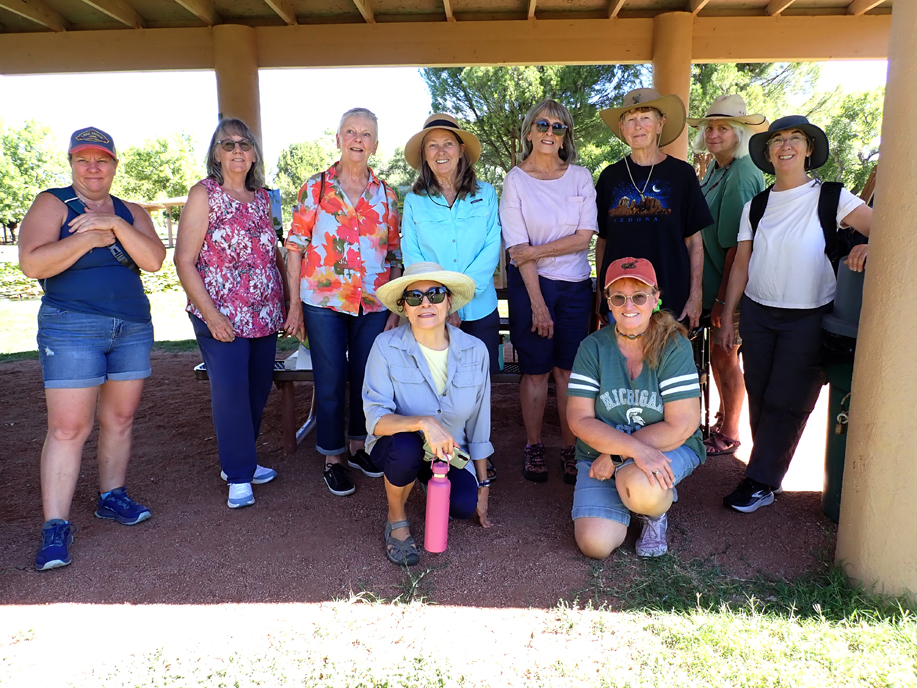
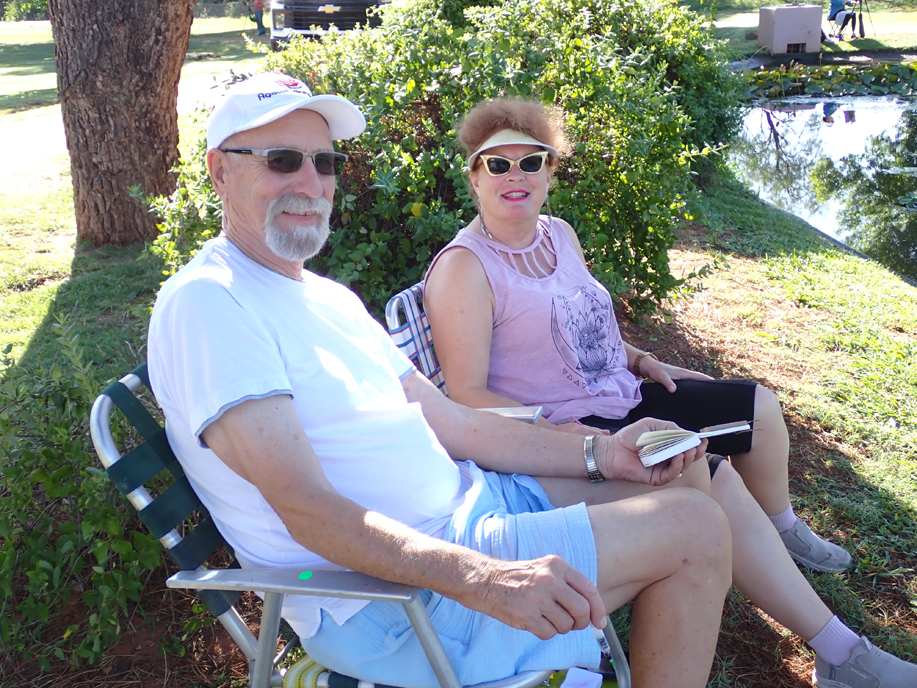
    Left to right: Wendy, Debborah, Kathi, Janel, Betty, Gail, Dona, LeAnne, Karen, Sophie

    Next week we’re meeting at 8:00 at the Sedona Heritage Museum in Sedona at 735 Jordan Rd.  Link to the website is HERE: https://sedonamuseum.org/.  There’s plenty to paint on the grounds of the museum, including great red rock views, old barns and buildings, and plenty of shady trees.  Directions HERE: https://sedonamuseum.org/visit#shmdirect

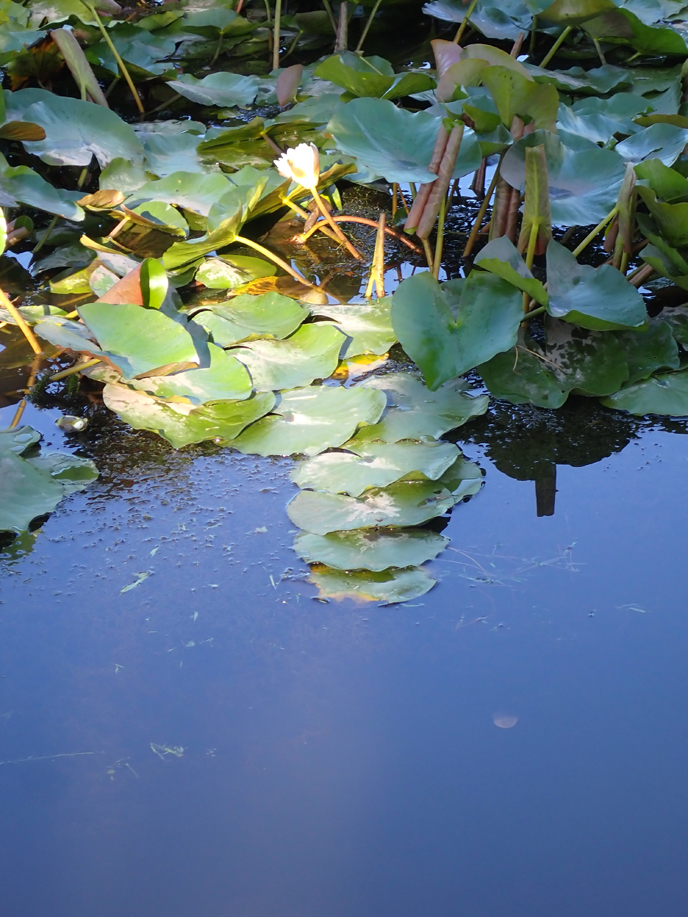
  • The reflection of the pale three-quarters moon in the still waters of Windmill Park’s lily pond called for a haiku poem:

    Moon lies belly up
    Blushing pink waterlilies
    Look the other way

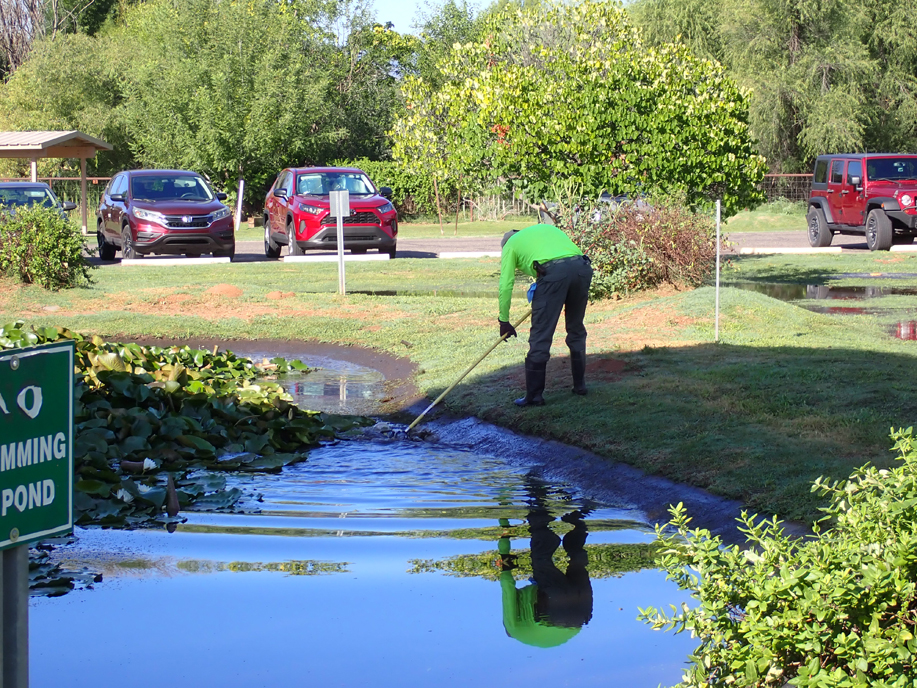
    On Tuesdays the park is flooded with water and everyone comes with their dogs and kids to splash and frolic in the shallow, grassy pools.  I wanted to jump in and roll around, too, but I haven’t had a recent hepatitis shot.

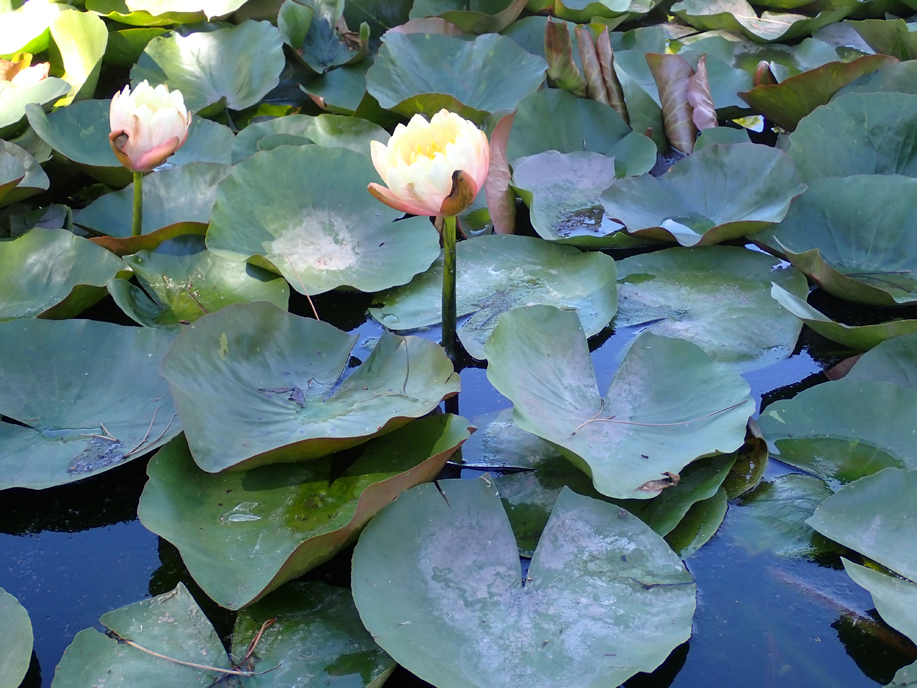
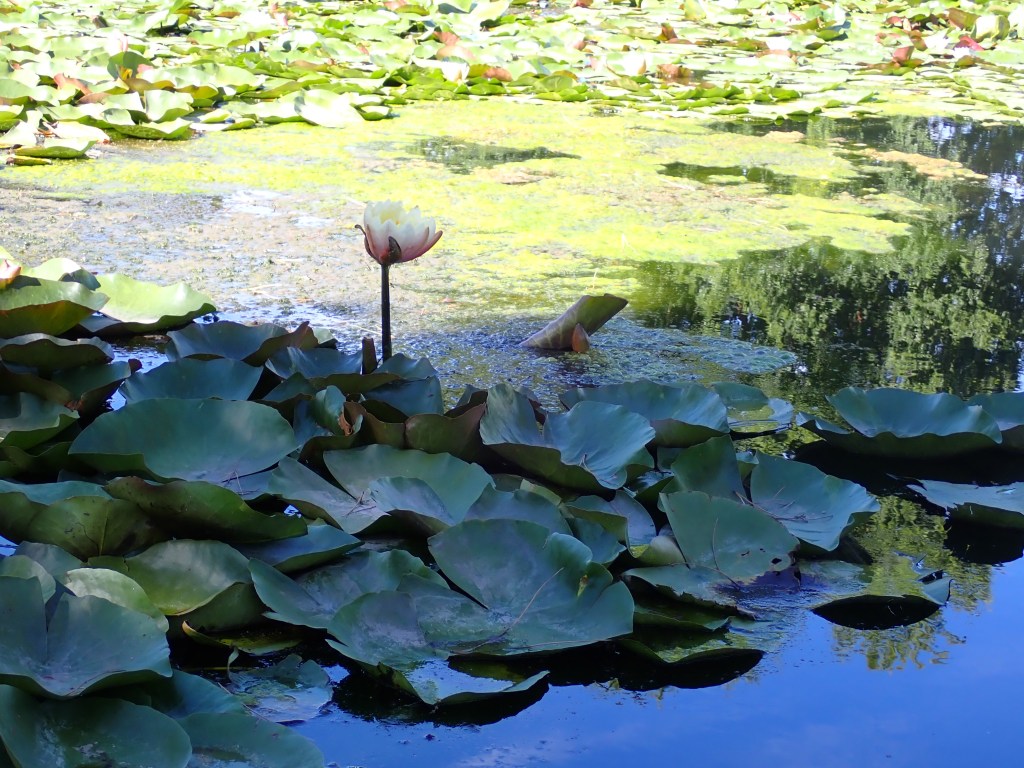
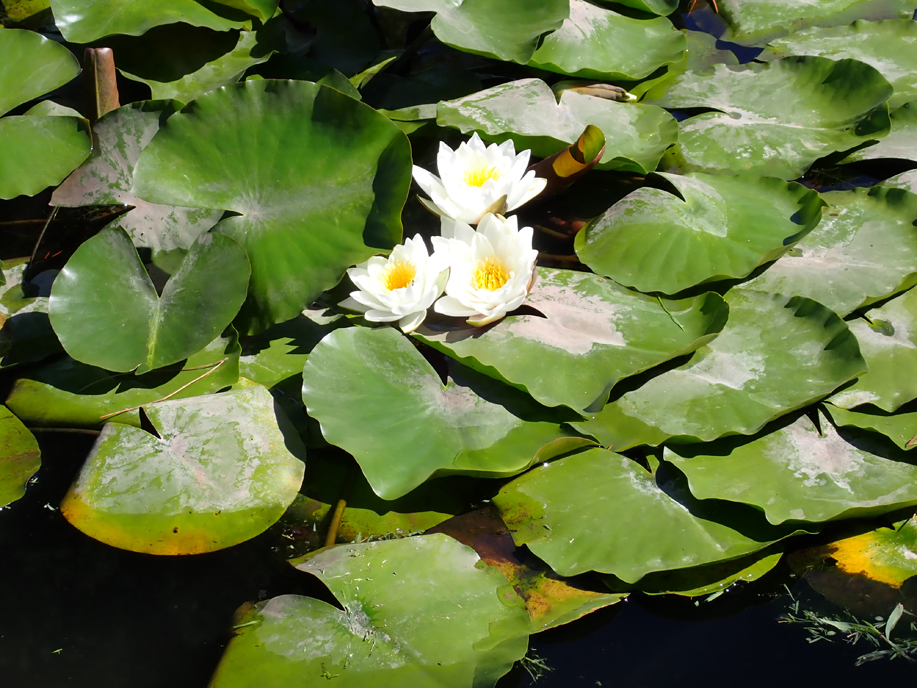
    The pink and white waterlilies were all looking up and smiling for their photographs, and in the still water was the perfect reflection of the old windmill and the moon—until our international-yellow-shirted park worker created a tsunami with his push broom.

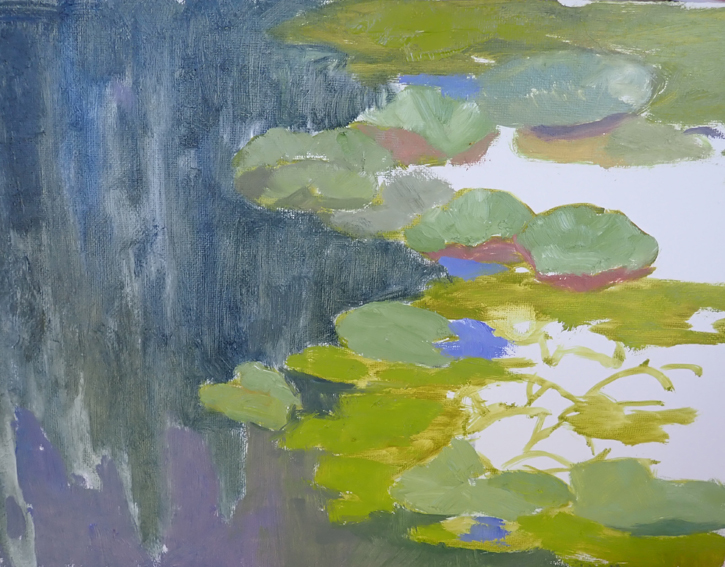
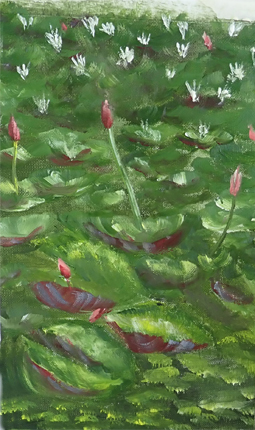
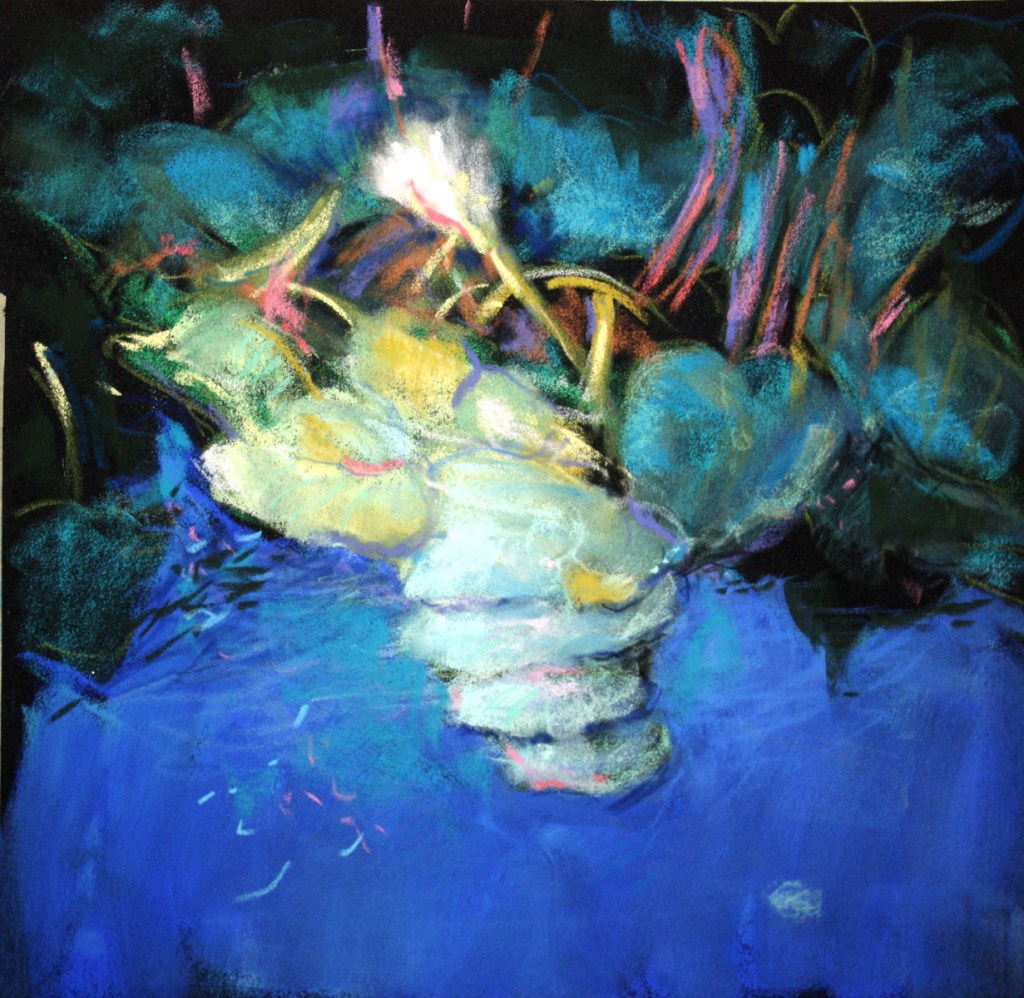
    To prepare for the water lilies, I looked at Monet’s wonderful paintings, but his spirit refused to channel for me.  Janel caught the striking reddish underbelly of the lily pads in her painting, while LeAnne captured the character of a single flower and pad.

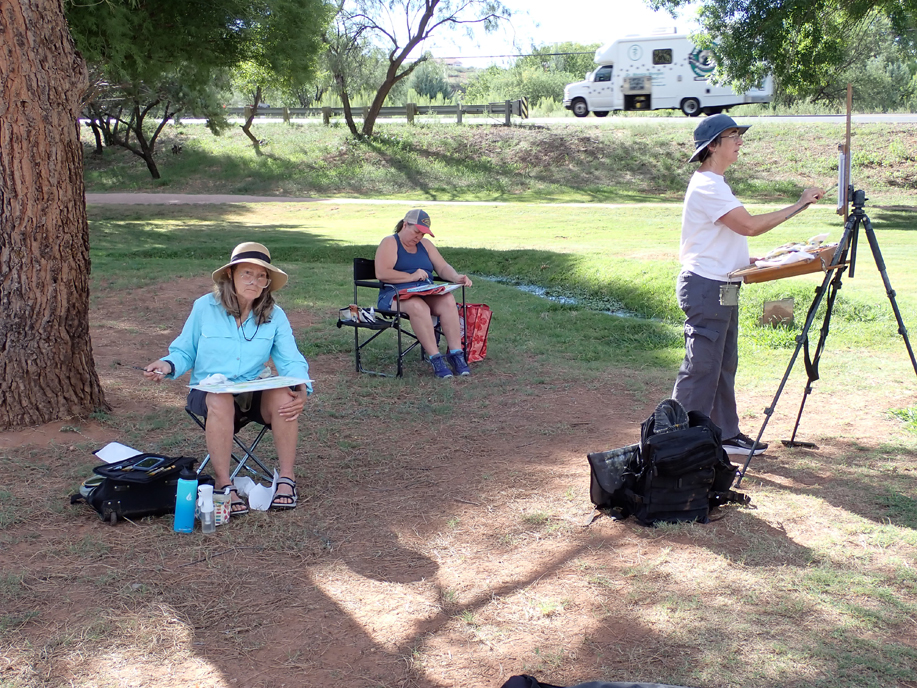
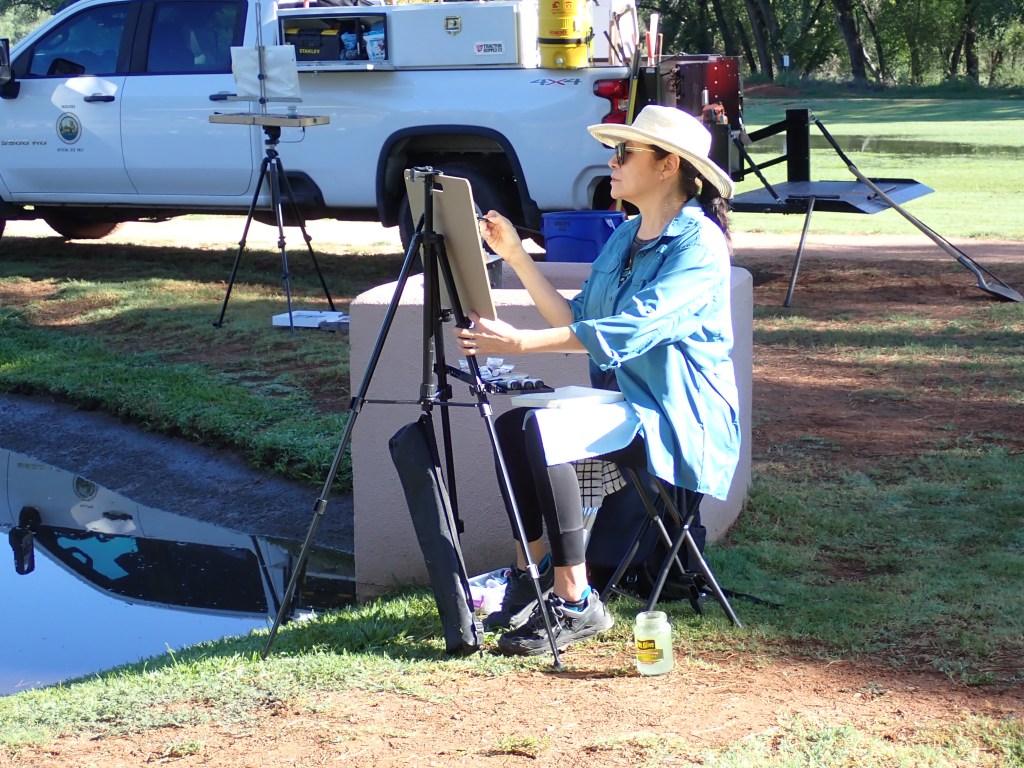
    The Rylands set up in a nice shady spot on the edge of the lily pond with their watercolors.

    Pat, Christine, Mike, and Gail opted for the view of trees and flooded grassy fields.  Karen got a late start with her pastel because her little dog, a terrible bully, forced her to throw his ball into the grass over and over and over and barked cuss words at her when she was slow.

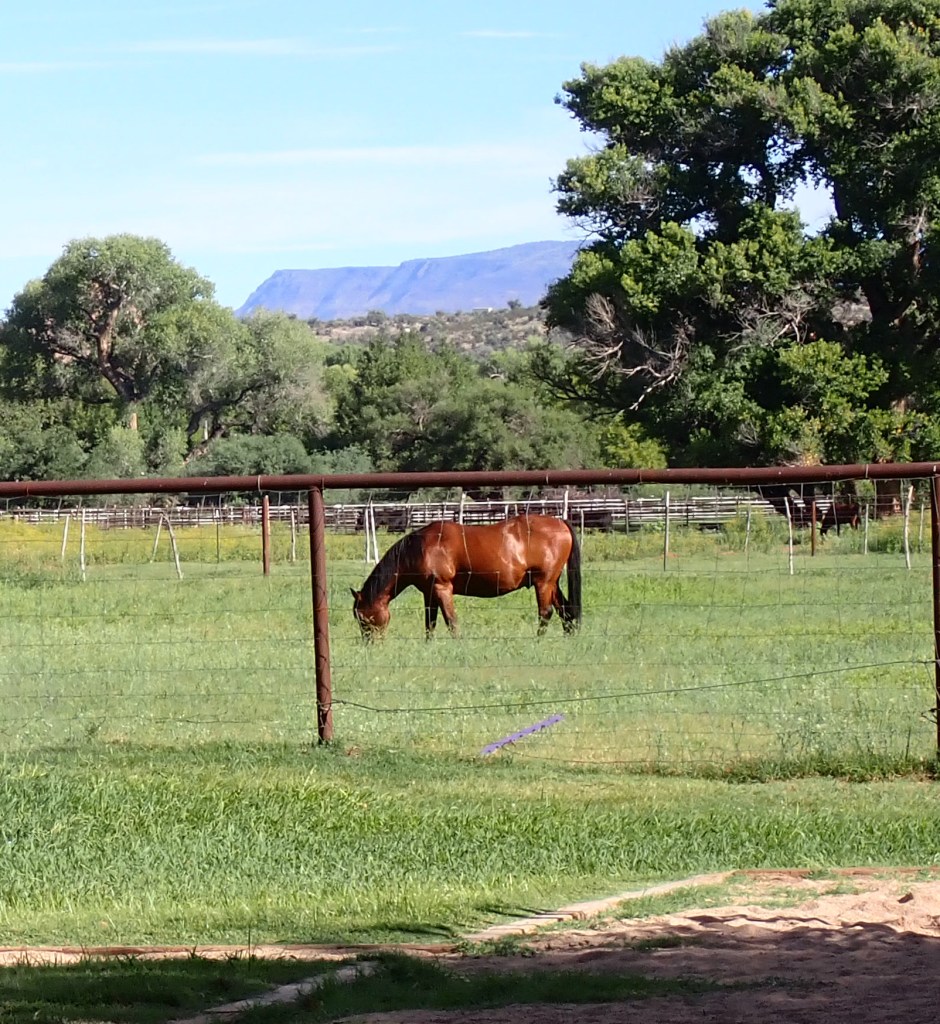
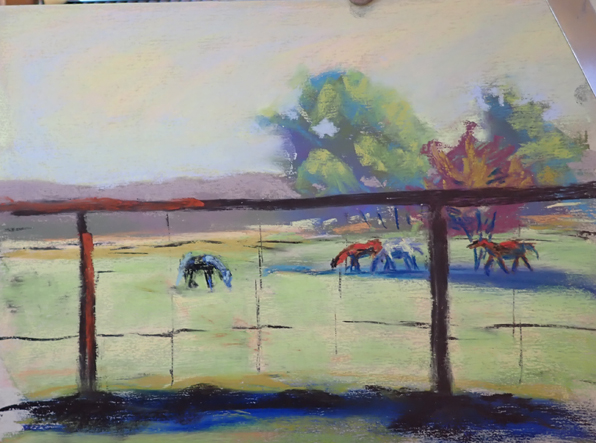
    Dona ordered the grazing horses to stand perfectly still (and they did).

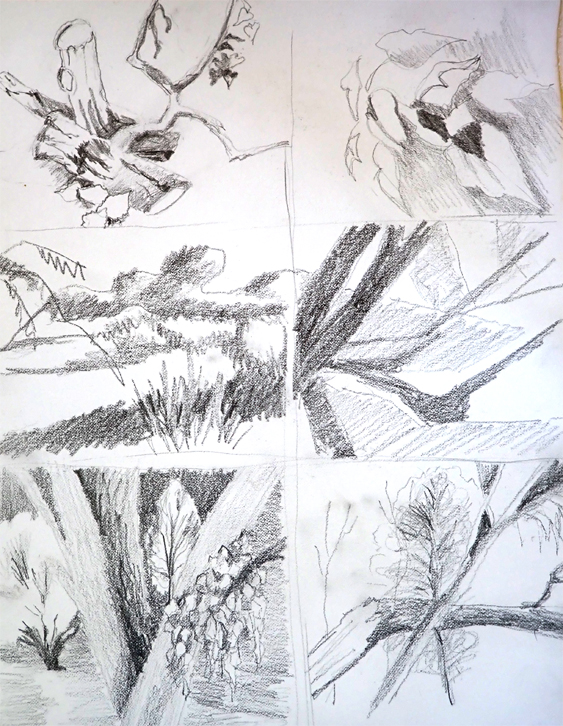
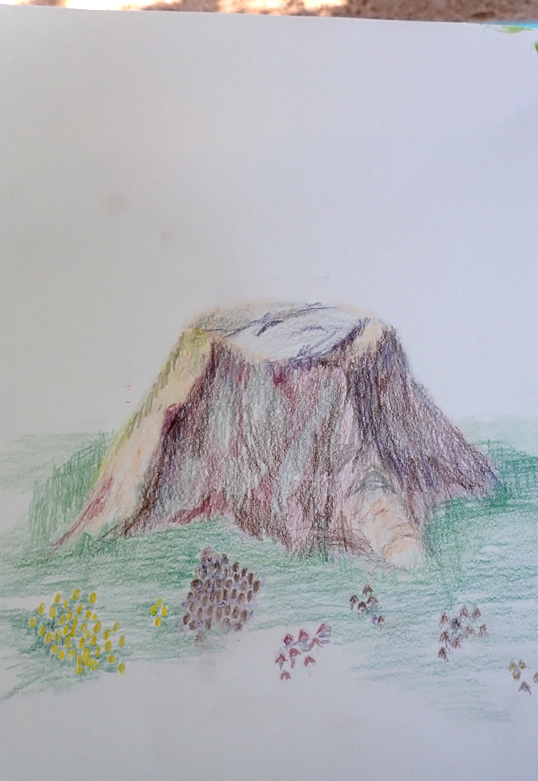
    Kirsten went further afield and drew six charming nature studies.  Finding beauty in grossity, Kathi sketched a massive clump of mushrooms.

    Next week we’re going back again while the flowers are still blooming.

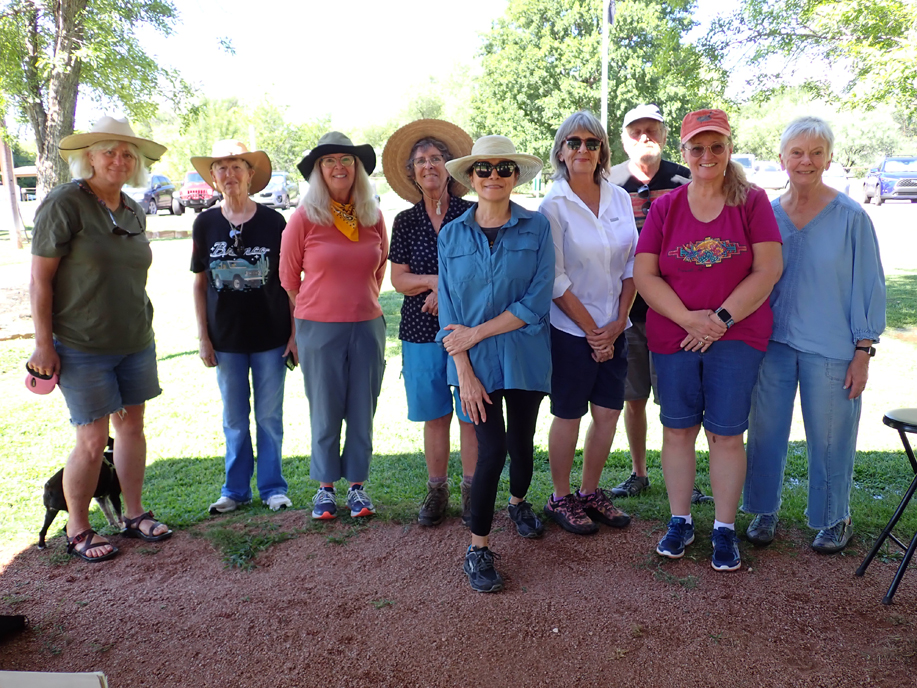
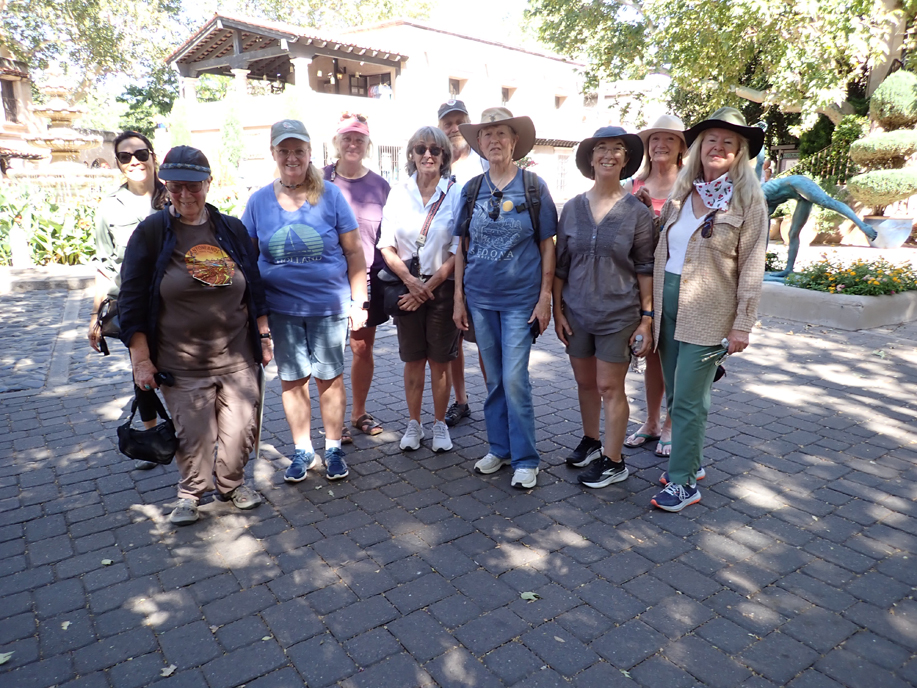
    Left to right: Smelly (gnawing on Karen’s leg), Karen, Dona, Christine, Kristen, Janel, Gail, Mike, LeAnne, Kathi.

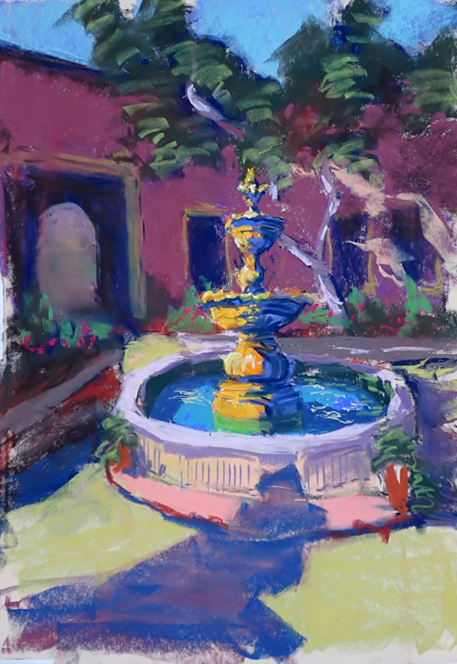
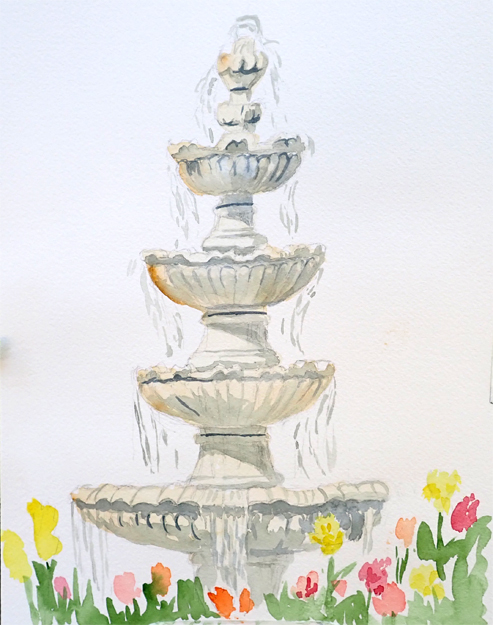
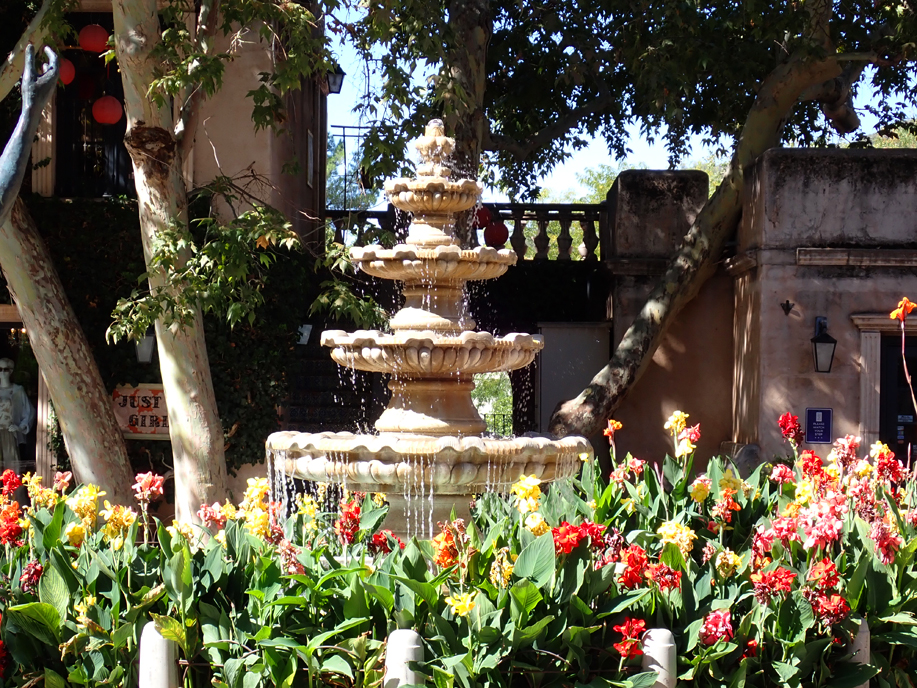
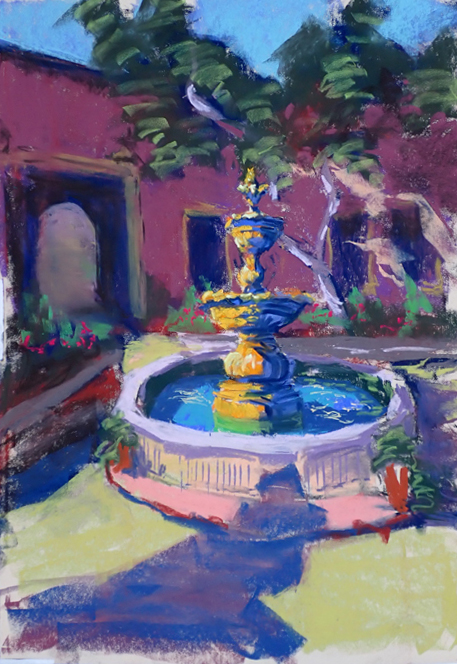
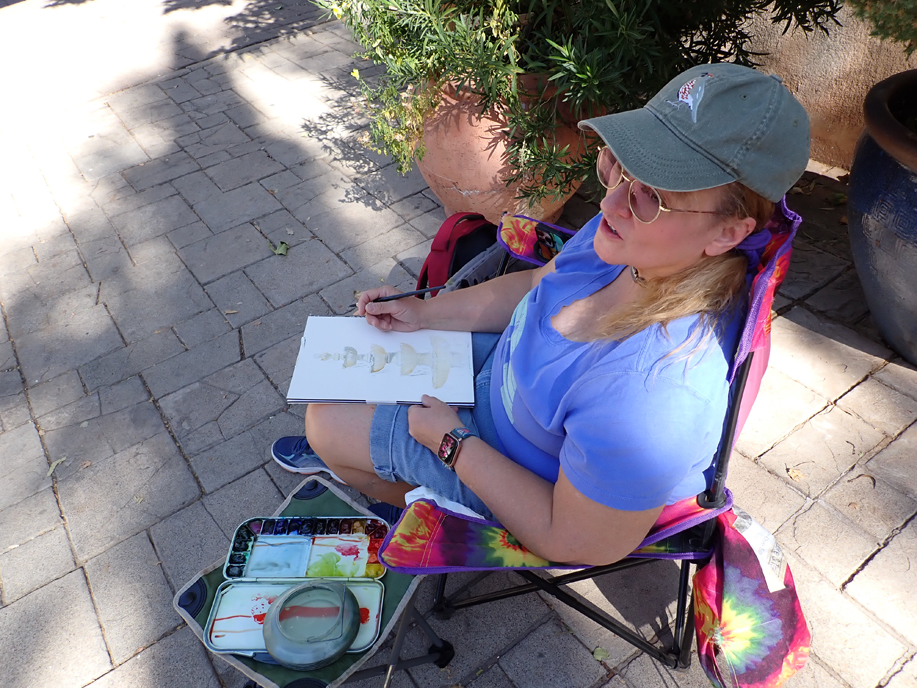
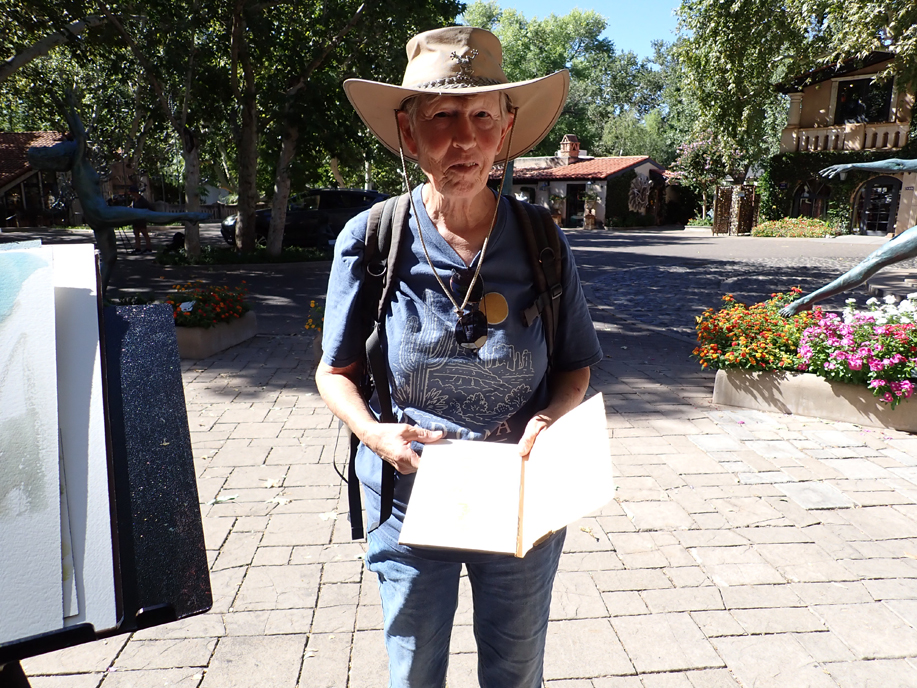
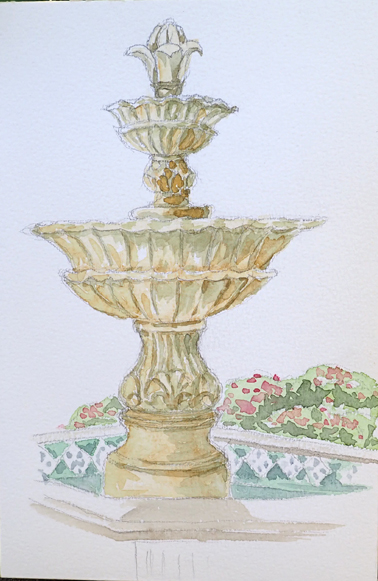
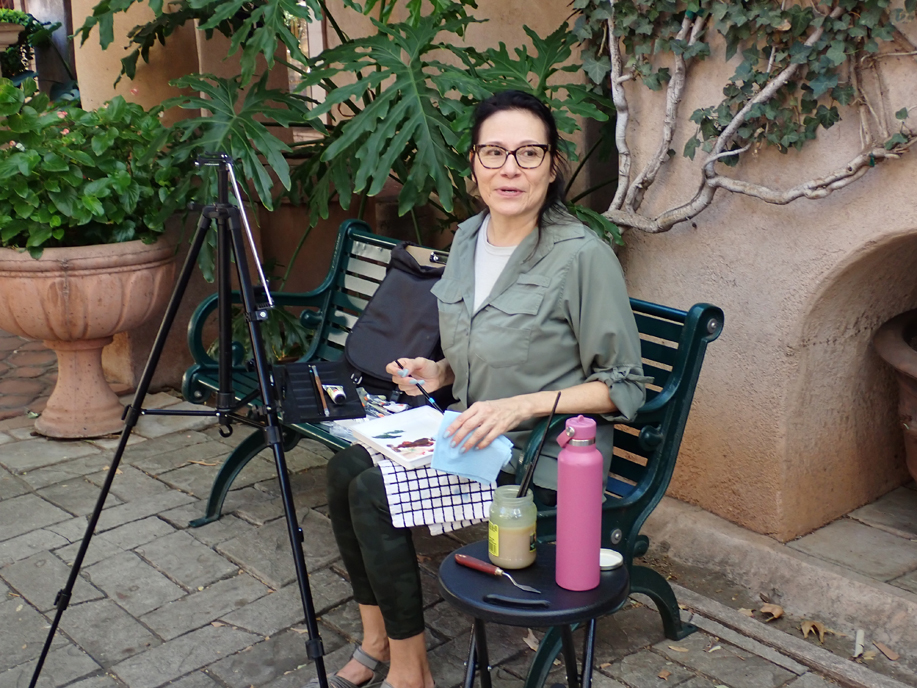
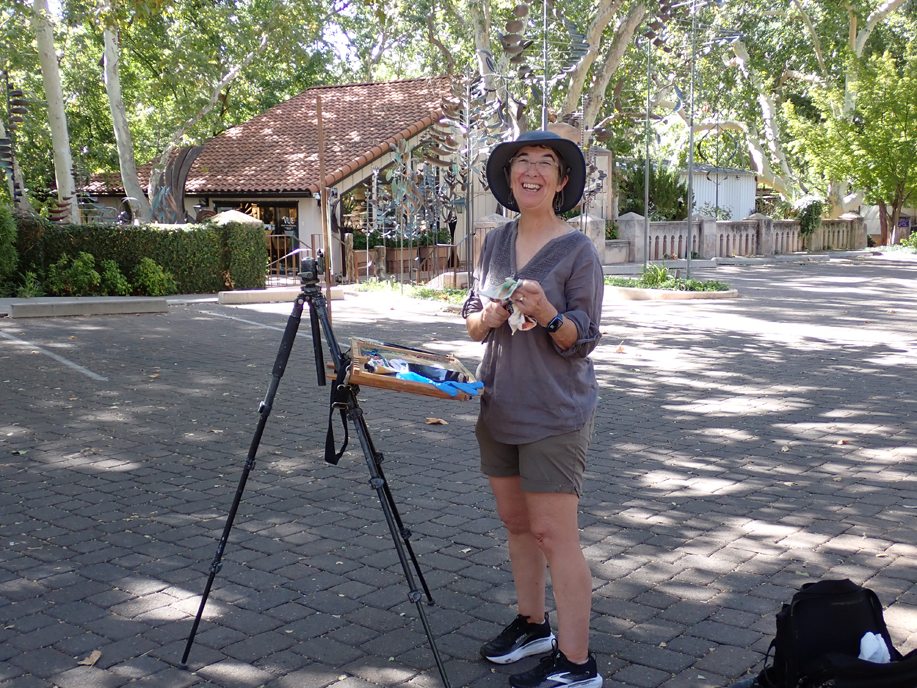
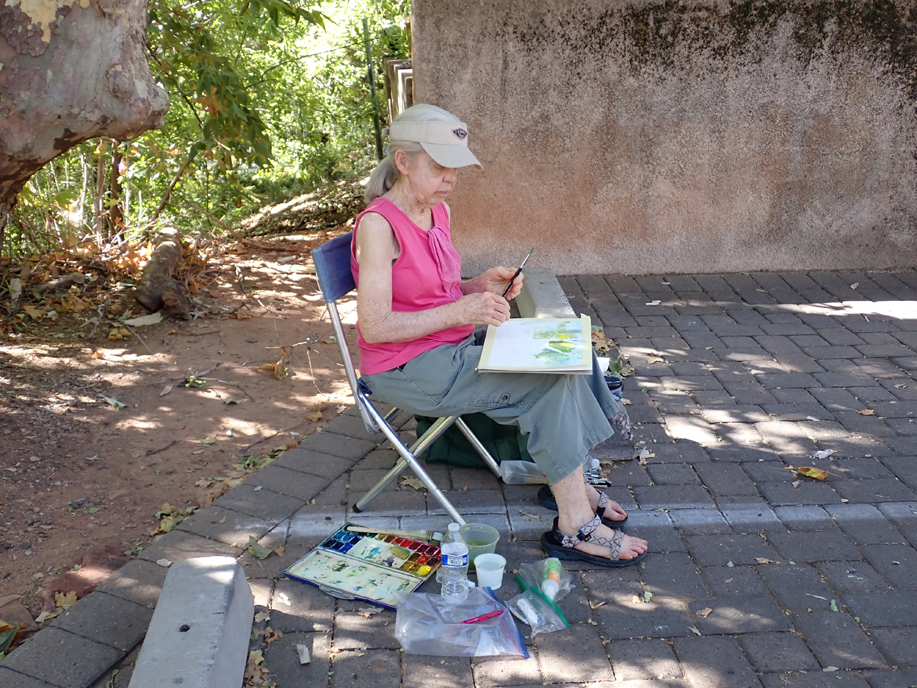
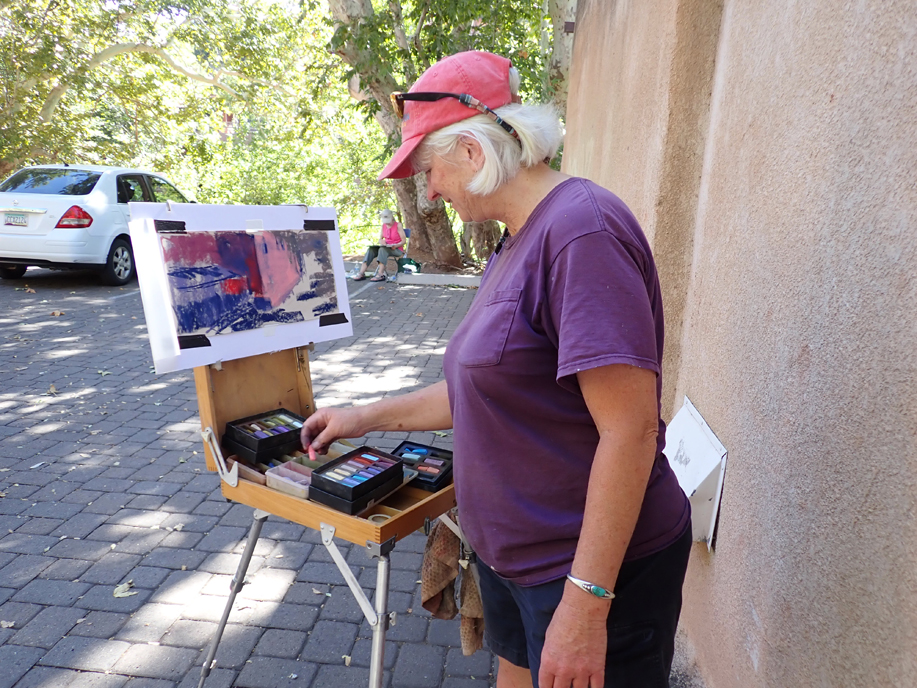
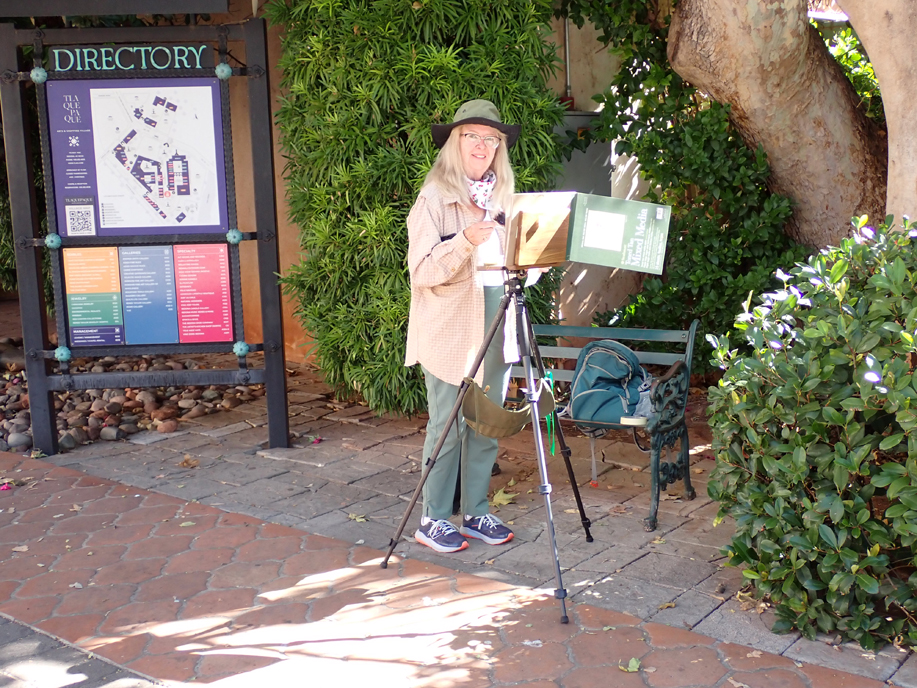
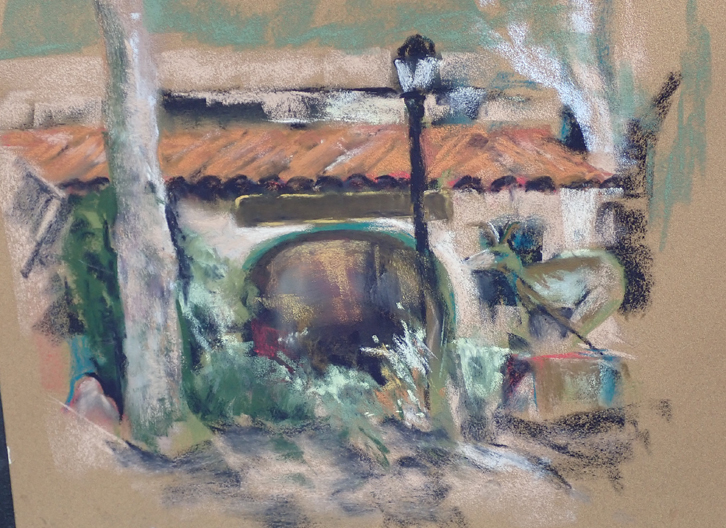
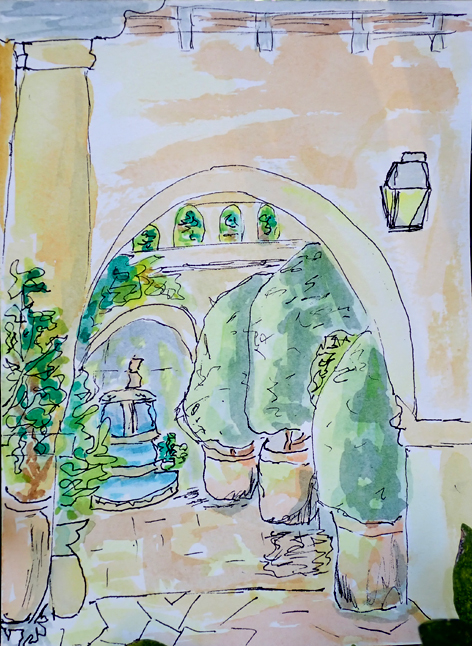
  • We painted in the cool shade of Tlaquepaque’s sycamores and courtyards, lulled by the splashing fountains and birdsong. LeAnne, Karen and Dona painted the fountains with and without water.

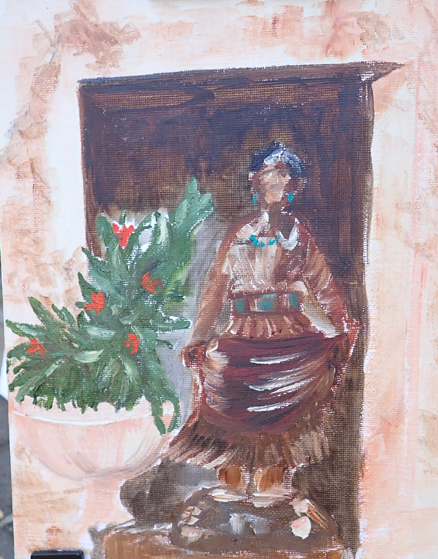
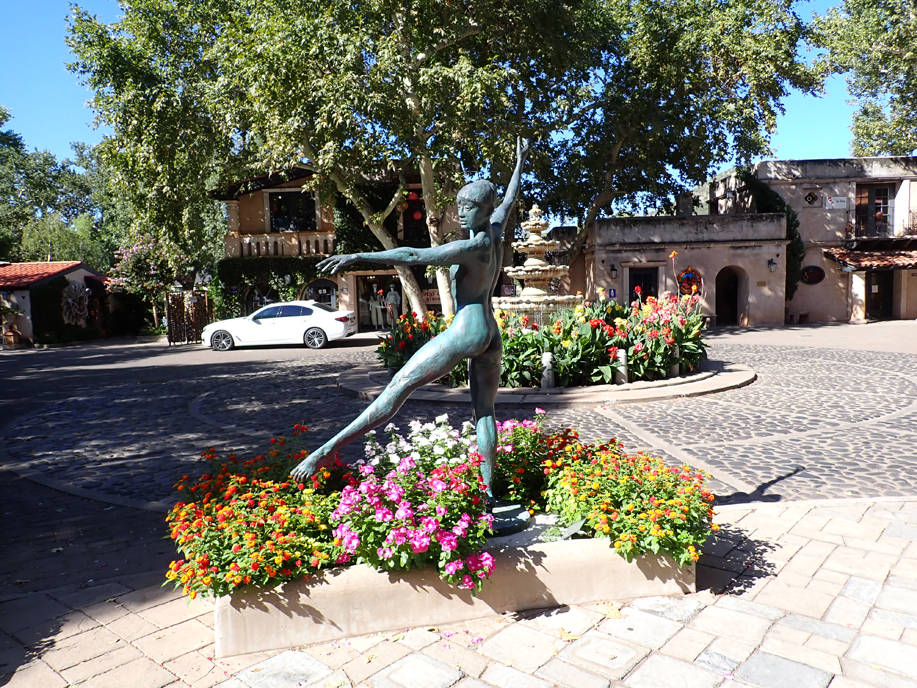
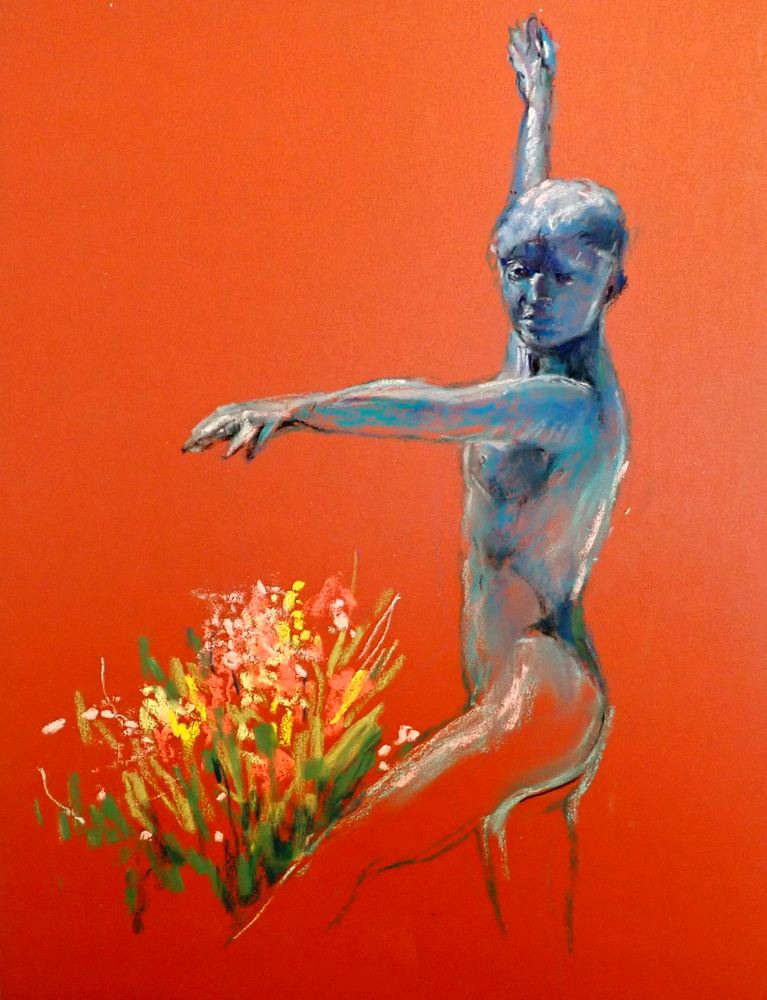
    Janel found a charming Susan Kliewer bronze of a little Navajo girl to paint, while I attempted one of Waddell’s dancers.

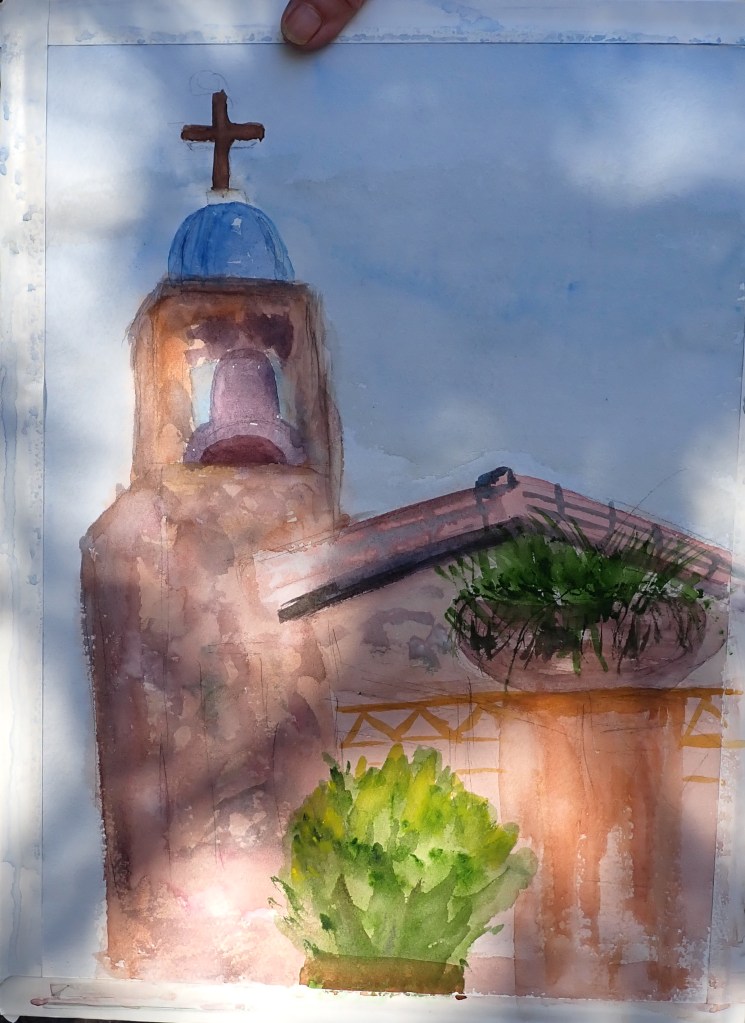
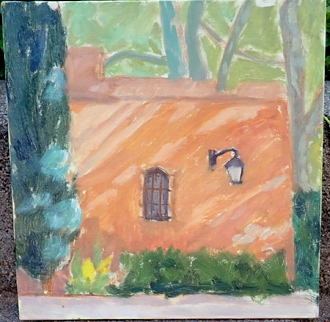
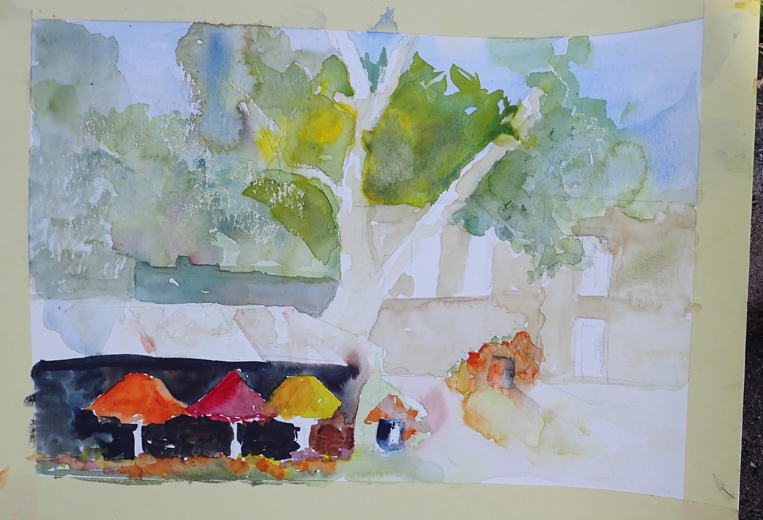
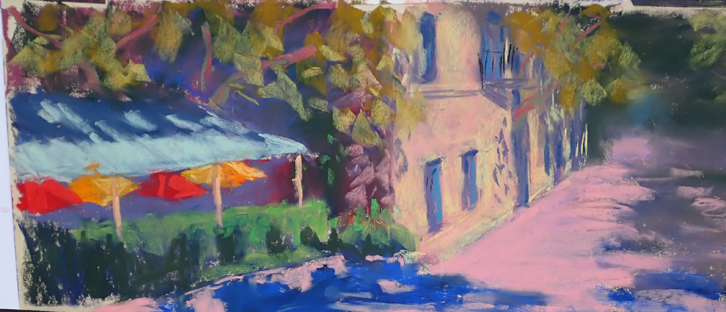
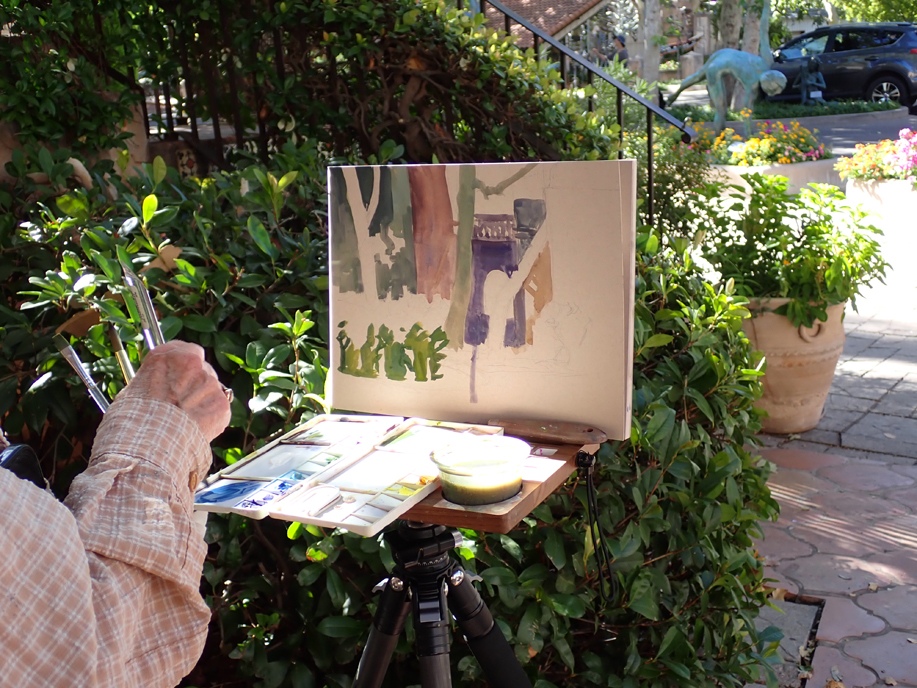
    Sophie caught the glancing sunlight and shadow on an old adobe wall, while Karen and Tecla captured Tlaquepaque’s Rincon corner, with its colorful umbrellas.  Tlaquepaque’s Spanish Colonial architecture is a challenge for me, but Pat rendered the chapel, with its bell and turquoise dome. Christine worked her magic in goache, depicting the flower-filled alleyway.

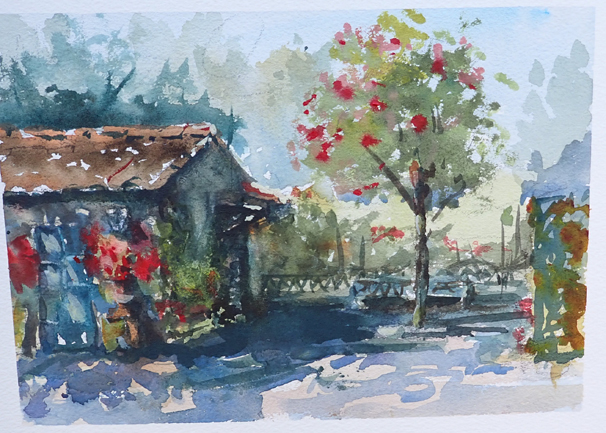
    Mike caught the red tile roof of one of the shadowy old art studios while Nita and Gail focused on other street scenes.

    Pat suggested painting the blooming waterlilies at Windmill Park next week since they are at their perfect peak, so we’re heading to Cornville at 8:00.  The Heritage Museum in Sedona may be on our agenda for a September paintout—stay tuned.

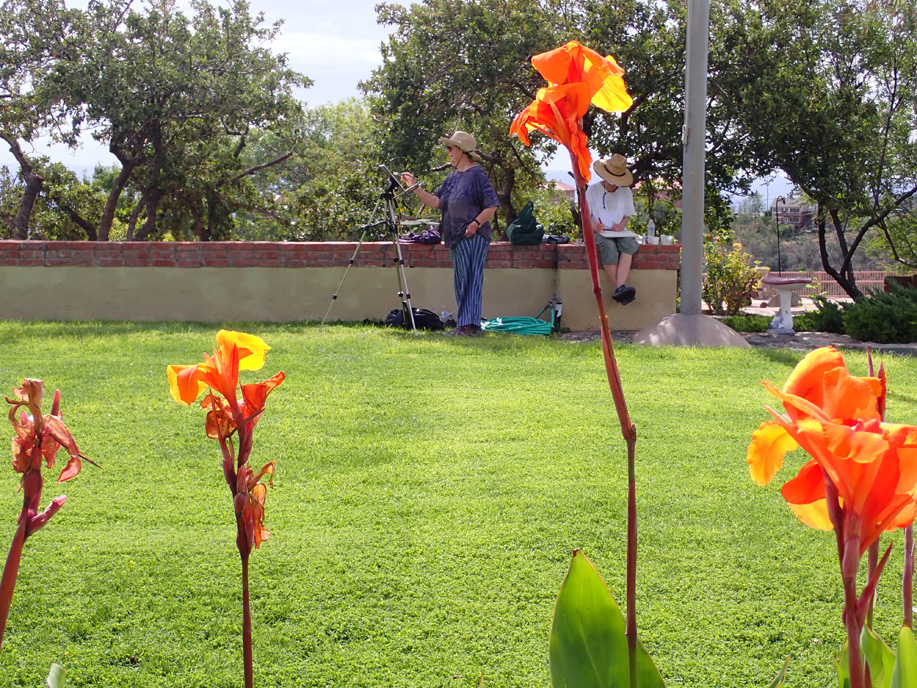
  • Dona New, “Guesthouse”

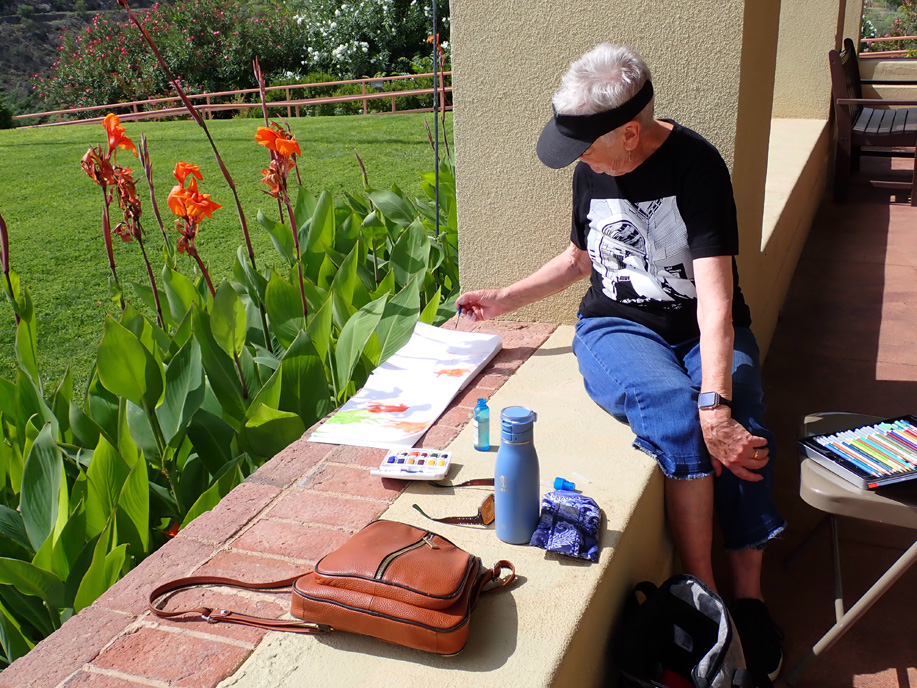
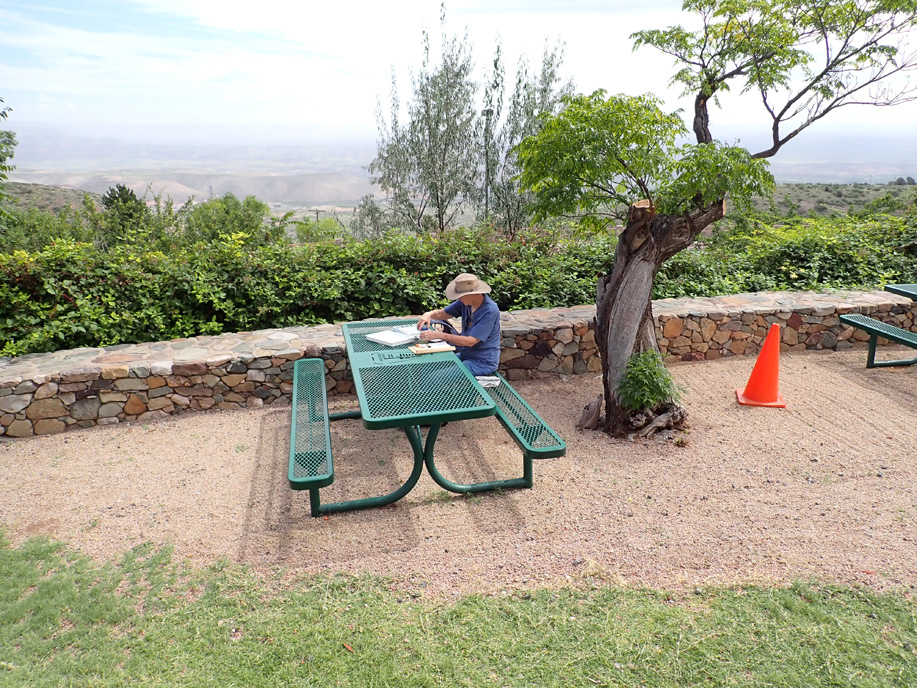
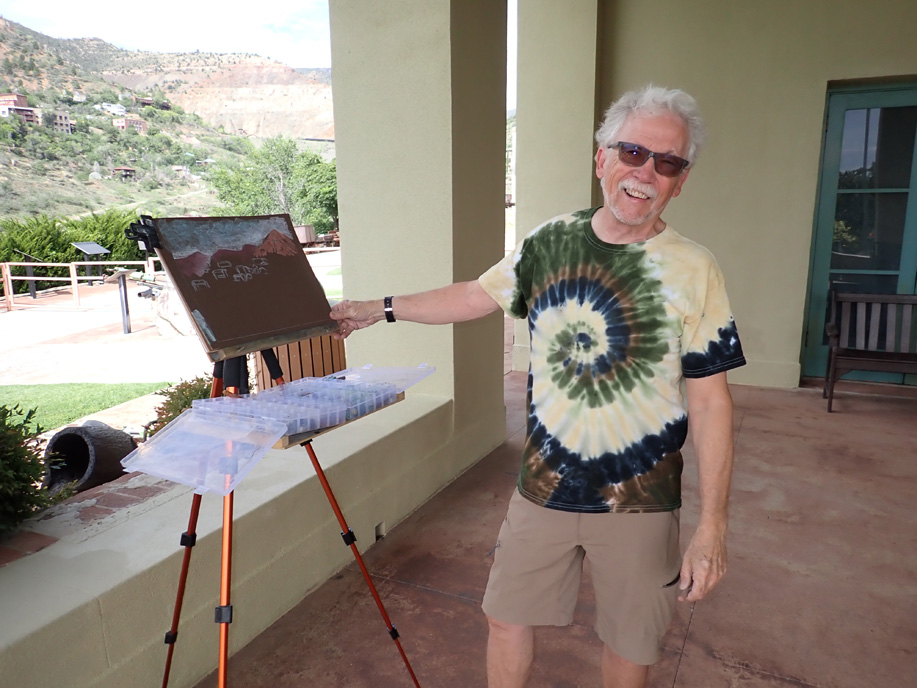
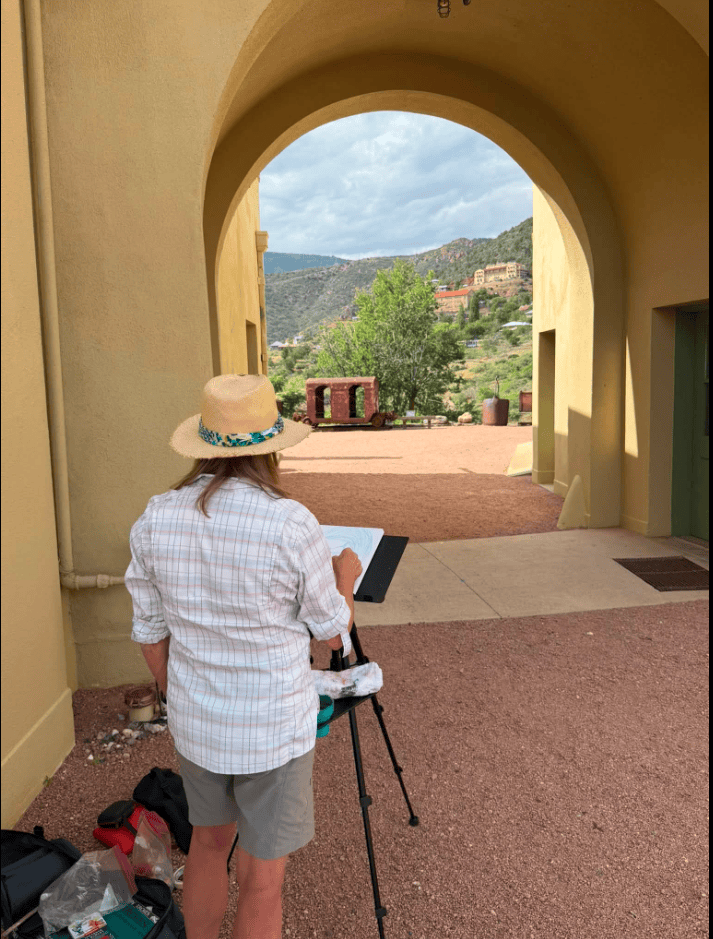
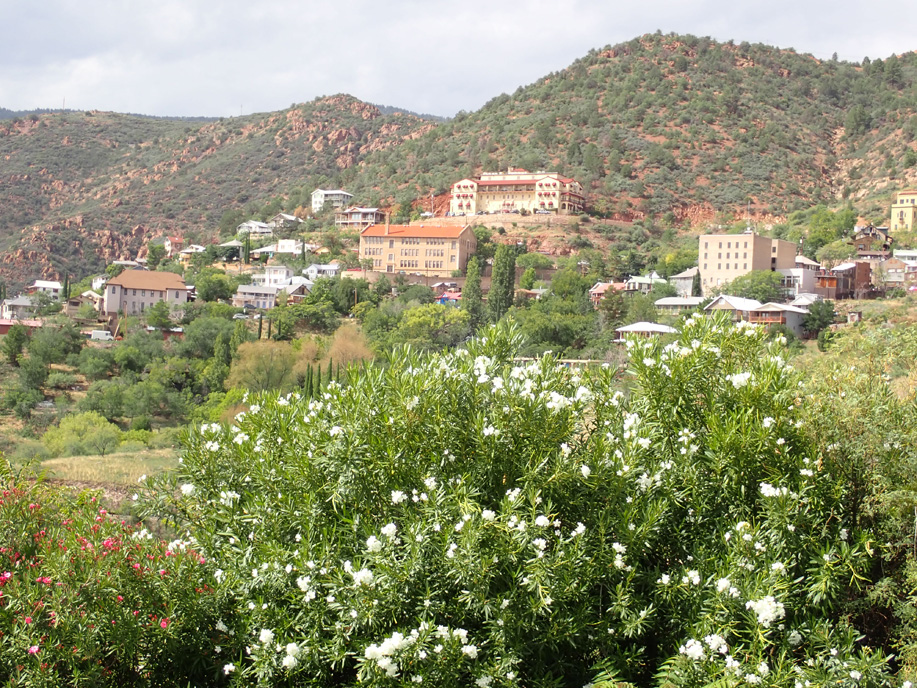
    Kathi F. received permission from Jerome State Park rangers to paint on the grounds of the historic Douglas Mansion, a Jerome landmark since 1916, when James S. Douglas built it on the hill just above his Little Daisy Mine. Dona sketched one of his daughters’ homes high on the opposite hill. Pat and Tecla found a shady spot on the lawn, while Kathi traced the shadows of flowers.

    Pliny the Elder tells the story of Kora, who falls in love with a young soldier on the eve of his departure. Faced with impending separation, Kora tries to preserve her lover’s beautiful features by tracing the silhouette of his shadow, cast by the light of an oil lamp. The soldier sails at dawn, leaving Kora as empty as the outline she drew on the wall. Unlike poor Kora’s sketch, Kathi’s shadow tracing of vibrant orange gladiolas burst off the page in abstract splendor.

    I attempted the Jerome landscape as seen through the lovely Spanish Colonial archway. James, painting from the patio, promises to bring a cheater tool to help with my sadly wanting perspective. I’ve never understood Renaissance painter Paolo Uccello who said, “what a sweet mistress is perspective.” If he wasn’t so dead I’d like to kick him right in his vanishing point.

    Big thanks to the generosity of the Jerome State Park rangers.